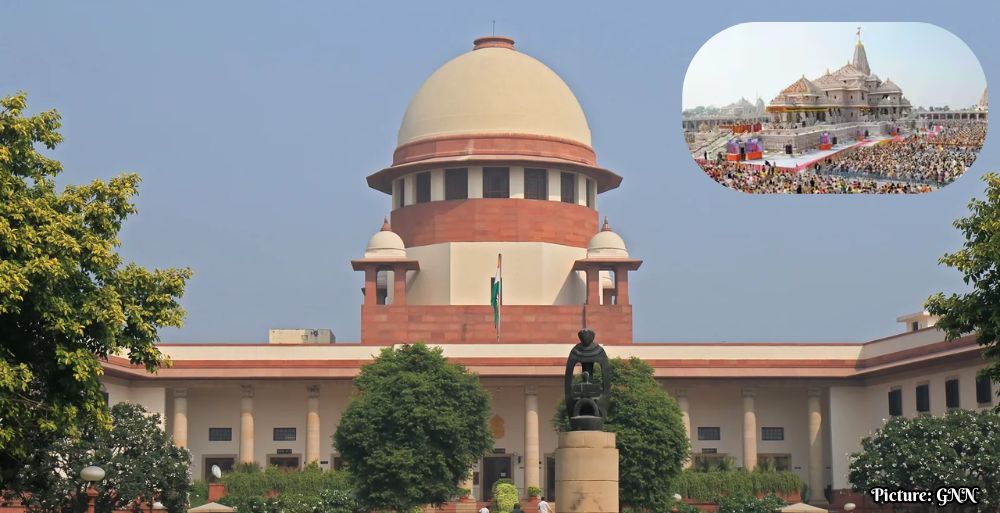
The Supreme Court of India will hear multiple petitions on July 13, 2026, regarding allegations of embezzlement related to donations made for the Ram Temple in Ayodhya, a case that raises significant public interest and concerns over transparency.
A three-judge bench of the Supreme Court of India, led by Chief Justice Surya Kant, is scheduled to hear several petitions on July 13, 2026, concerning allegations of embezzlement tied to donations made for the construction of the Ram Temple in Ayodhya, Uttar Pradesh. This hearing marks the court’s resumption of activities after the summer recess, during which multiple petitions were filed highlighting concerns about the management of funds collected from devotees.
Background of the Case
The Ram Temple has been a focal point of cultural and religious significance for many Hindus, and its construction has been a subject of intense political and social discourse. The Supreme Court’s ruling in November 2019, which granted the land for the temple’s construction following a protracted legal dispute, ignited renewed interest in the transparency and management of the funds associated with the temple’s development. Following this ruling, the Shri Ram Janmabhoomi Teerth Kshetra Trust was established to oversee the construction and management of the temple, and it has since received substantial donations from devotees both domestically and abroad.
Petitions Seeking Transparency
Among the petitions set for hearing is one filed by Rashtriya Janata Dal (RJD) Member of Parliament Sudhakar Singh. He is calling for a complete disclosure of the financial details of the Shri Ram Janmabhoomi Teerth Kshetra Trust, including all forms of contributions—cash, digital payments, foreign donations, and other valuables. Singh’s petition emphasizes the necessity for a detailed accounting of the Trust’s financial practices since its inception, asserting that this matter is of “exceptional public importance.”
Singh’s petition further underscores the importance of maintaining public confidence in this prominent religious institution and argues for constitutional safeguards to ensure that investigations into the handling of donations are conducted fairly and independently. He has requested that the court mandate the preservation of various forms of evidence, including physical and electronic records, to prevent any potential destruction or alteration during the investigation.
Calls for Forensic Audit
In addition to transparency measures, Singh has advocated for a comprehensive forensic audit of the Trust’s financial records to be conducted by an independent agency recognized for its credibility. He has requested that the findings of this audit be submitted to the Supreme Court and that the Trust regularly publishes transparent accounts of donations received to ensure ongoing public scrutiny. This push for accountability reflects a broader concern about the trustworthiness of financial management practices within significant religious institutions in India.
Protection of Electronic Evidence
Another petition, submitted by Supreme Court advocate N.K. Goswami, focuses specifically on the protection of electronic evidence relevant to the case. Goswami has raised alarms about the potential loss of critical data, highlighting that electronic evidence is particularly vulnerable to being erased, overwritten, or corrupted. “Electronic evidence is unlike a stone inscription,” he noted, emphasizing the need for immediate protective measures to secure this vital information before it can be compromised.
Demand for Investigation
The third petition, jointly filed by advocates Ajay Kumar Rai and Dinesh Kumar Yadav, urges the Supreme Court to either order a Central Bureau of Investigation (CBI) probe or establish a multi-disciplinary Special Investigation Team to investigate the embezzlement allegations. This petition identifies the need for a thorough examination of the circumstances surrounding the Trust’s financial management and the allegations of wrongdoing.
Implications and Public Interest
The Supreme Court’s upcoming hearing on these petitions is anticipated to draw significant public interest, as it addresses critical questions regarding the transparency and accountability of the Trust. The outcome could have far-reaching implications for the Trust’s operations and its relationship with donors and devotees alike. As the case unfolds, it highlights the importance of transparency in financial dealings, particularly within institutions that hold profound cultural and religious significance.
The Ram Temple’s construction not only represents a religious aspiration for many but also serves as a reminder of the intricate relationship between faith, politics, and governance in India. The ongoing legal proceedings may potentially influence public trust in religious institutions, as well as the broader discourse on financial ethics and accountability in the management of donations.
As the Supreme Court prepares to deliberate on these petitions, the implications for the future of the Shri Ram Janmabhoomi Teerth Kshetra Trust and its financial practices are poised to be closely scrutinized. The balance between reverence for religious institutions and the demand for accountability will be a key theme as the court navigates the complexities inherent in this case.