
As the United States conducts a new wave of military strikes against Iran, President Trump’s mixed signals about the potential for further conflict have raised concerns about the direction of U.S.-Iran relations and the implications for global oil markets.
The United States launched a series of military strikes against Iran on Wednesday, marking the second consecutive night of offensive actions. The announcements were made by U.S. Central Command (Centcom) shortly after 4 p.m. EDT, following President Trump’s earlier statements indicating that he would likely order such measures in response to attacks on oil tankers in the strategically significant Strait of Hormuz, which were attributed to Iranian forces.
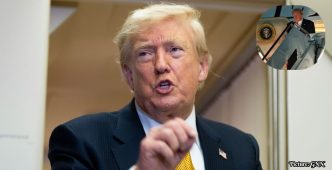
In a press briefing, President Trump asserted, “We’re going to hit them hard tonight.” Centcom characterized the strikes as necessary to “further degrade Iran’s ability to threaten freedom of navigation in the Strait of Hormuz,” emphasizing a commitment to holding Iran accountable for what it termed “unjustified aggression against commercial shipping and civilian crews freely navigating a vital international waterway.”
The current military actions have ignited debate over whether the U.S. is on the brink of full-scale war with Iran or if the hostilities represent mere skirmishes that could ultimately pave the way for diplomatic resolutions. President Trump’s statements have been particularly contradictory, oscillating between aggressive rhetoric and indications of a desire for negotiation.
Mixed Messages from the White House
Speaking at a NATO summit in Ankara, Turkey, Trump suggested that Iran’s actions had effectively nullified a ceasefire established in a controversial memorandum of understanding (MOU) last month. He stated, “For me, I think it’s over,” while also expressing strong criticisms of Iranian leadership, labeling them as “scum” and “cuckoo,” and asserting that their word could not be trusted.
Trump implied that Iran had exploited the informal agreement that the U.S. would avoid targeting its leaders during the ceremonial mourning of the late Supreme Leader Ali Khamenei, who was killed in a U.S.-Israeli airstrike on February 28. Khamenei’s death has created a power vacuum in Iran, with his son, Mojtaba, reportedly injured in the strikes and not seen publicly since.
At a news conference prior to his departure from Turkey, Trump appeared to dismiss the idea of pursuing a comprehensive peace agreement with Iran, stating, “I’m not sure I want to make a deal with them,” and suggesting he might “just finish the job.” Such remarks have raised concerns about the potential for escalation, especially as the implications of military action could entail significant costs, both in human lives and economic impacts.
Economic Implications and Domestic Pressure
The ramifications of the military strikes extend beyond geopolitical tensions, as they have already begun to affect global oil markets. Following the strikes and Trump’s aggressive comments, the price of benchmark West Texas Intermediate crude oil surged by more than 6 percent, reflecting fears of a prolonged conflict that could disrupt oil supplies from a region critical to the global economy.
Historically, U.S. military engagements in the Middle East have faced considerable public scrutiny, and support for military action against Iran has not gained traction among the American populace. Polling data consistently indicate that a majority of Americans disapprove of Trump’s handling of the situation. With midterm elections approaching, Republican lawmakers are wary of rekindling a conflict that could prove politically damaging.
In addition to public opinion, Trump faces criticism from different factions within his own political base. Some influential conservative commentators have accused him of being manipulated into military action by Israeli Prime Minister Benjamin Netanyahu, while hawkish voices argue that the MOU was too lenient and questioned the rationale behind the conflict.
Future of U.S.-Iran Relations
The MOU, while establishing a temporary ceasefire, left many critical issues unresolved, including the future of Iran’s nuclear program and the governance of shipping through the Strait of Hormuz. The document did not address Iran’s support for proxy groups in the region, a key concern for the Trump administration, despite earlier assertions that this was a primary objective of military engagement.
Iranian officials have responded defiantly to the recent strikes and the perceived U.S. violations of the MOU. Mohammad Bagher Qalibaf, the Speaker of the Iranian Parliament, accused the U.S. of “major” violations, including the reinstatement of sanctions on Iranian oil sales and continued military aggression. He concluded his remarks by stating, “The era of bullying and extortion is over. It leads nowhere. We don’t fold.”
As the situation develops, President Trump appears to find himself in a precarious position, navigating a complex landscape of military, political, and economic factors that will shape the future trajectory of U.S.-Iran relations.