Pope Leo XIV urged all Christian denominations to unite in anticipation of the Year 2033, which marks two millennia since Christ’s Redemption, emphasizing the need for credible witnesses amid global conflicts and societal divisions.
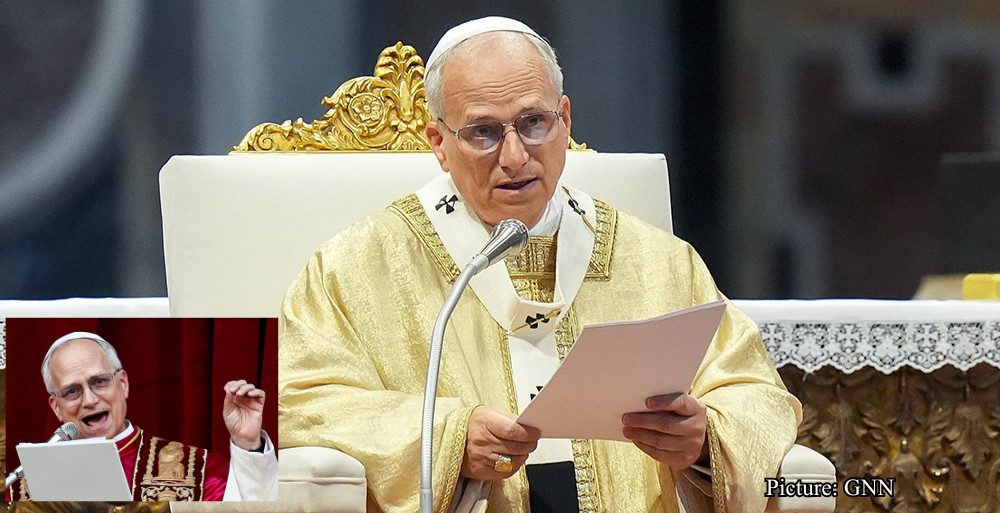
Pope Leo XIV addressed a delegation from the Ecumenical Patriarchate of Constantinople at the Vatican on June 27, 2023, calling for all Christian denominations to collaborate in celebrating the Year 2033, which will commemorate the 2,000th anniversary of Christ’s Redemption. His address, delivered on the Solemnity of Saints Peter and Paul, comes at a time marked by significant global conflicts, cultural polarization, and social divisions.
“May the journey towards the celebration of the second millennium of the Redemption in 2033 be undertaken together by all the Christian denominations of the world, rediscovering the gift and the call to be witnesses to the Risen One,” the Pope stated. His remarks highlight the urgency and importance of unity among Christians in the face of contemporary challenges.
Significance of the Delegation’s Visit
Pope Leo expressed his gratitude for the presence of the Ecumenical Patriarchate delegation, describing it as a testament to the fraternal relationship between the Roman Catholic Church and the Ecumenical Patriarchate. He acknowledged the leadership of His All Holiness Bartholomew I, the Ecumenical Patriarch, in fostering closer ties between the two churches. The Pope recalled his participation in the Feast of Saint Andrew in 2022, underscoring a shared commitment to dialogue and cooperation.
“I am deeply grateful to the Ecumenical Patriarch and all the members of the Holy Synod for sending the delegation to Rome to continue the traditional exchange of visits on the feasts of the patron saints of our respective Churches,” he said. This exchange of visits reflects the ongoing desire for reconciliation and unity among Christian communities.
Commemorating Historical Milestones
Pope Leo also referenced the recent commemoration of the 1,700th anniversary of the First Council of Nicaea, held in 2022. The Council is historically significant as it established the Nicene Creed, which serves as a foundational statement of faith for many Christian denominations. The Pope emphasized that this event offers a vital testimony to the communion that already exists among those who share faith in God.
“That commemorative event made clear that the Nicene Creed must be the foundation and guiding principle of this ecumenical journey, offering the model of true unity within legitimate diversity: Unity in the Trinity, Trinity in Unity,” he articulated, framing the Nicene Creed as a crucial element in collaborative efforts among Christians.
The Role of Christians in Modern Society
In light of prevailing global strife and rising societal divisions, Pope Leo called upon Christians to act as credible signs of peace. He highlighted the pressing need for cooperation among Christians to address contemporary challenges—including the quest for peace, the responsible use of technology, and environmental stewardship. He stated, “In an age marked by wars and growing polarization, as well as cultural and social divisions, Christians—reconciled amongst themselves and united in their profession of the one faith—are called to be a credible sign of peace.”
The Pope further articulated that the credibility of the Christian message is intrinsically linked to the future of humanity. He suggested that how the church responds to modern issues will significantly influence both current societal conditions and future developments. “Our responsibility for the life and dignity of every human being, beginning with the youngest and most needy, is the criterion that will determine our present and eternal destiny,” he emphasized, reflecting the moral imperative for Christians to advocate for the vulnerable and marginalized.
Encouragement for Continued Dialogue
Concluding his address, Pope Leo reiterated his gratitude for the delegation’s visit and reaffirmed his commitment to promoting Christian unity. He expressed his assurance of prayers for the delegates and for the ongoing relationship between the Roman Catholic Church and the Ecumenical Patriarchate. “Through the intercession of the holy Apostles Peter and Andrew, brothers in the flesh and in faith, may God our Father accompany us always with His blessing,” he remarked, reinforcing the call for collaborative efforts leading up to the significant anniversary in 2033.
This call for unity not only reflects the Pope’s theological perspective but also underscores a broader ecclesiastical movement towards reconciliation among Christian denominations. The anticipated celebration of the 2033 anniversary serves as a pivotal moment for Christians worldwide to reflect on their shared heritage and collective mission in a world increasingly characterized by division and conflict.
As the Christian community approaches this milestone, the emphasis on unity, peace, and cooperation becomes ever more pertinent, inviting all denominations to engage in meaningful dialogue and collaborative action for the betterment of society.