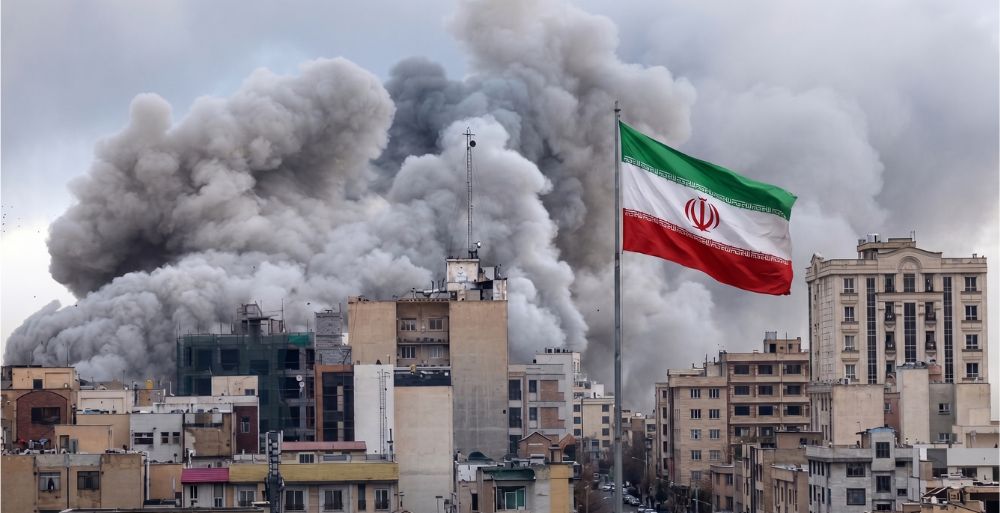
The United States and Iran have reached a preliminary agreement to cease hostilities and engage in discussions aimed at resolving their ongoing disputes, particularly concerning the crucial Strait of Hormuz, as tensions remain high following recent military exchanges.
The United States and Iran announced on June 29, 2026, that both nations agreed to halt military operations against each other, with plans for negotiations scheduled to take place in Qatar on June 30. This development follows a series of strikes exchanged between the two countries, raising concerns about stability in the Persian Gulf, a region vital for global energy transportation.
Details of the Agreement
A senior U.S. official confirmed to American media outlets that both parties have decided to “stop all the kinetic activity,” a military term that refers to armed strikes. The official noted that this agreement allows for the free movement of commercial vessels in the strategically vital Strait of Hormuz, which handles about a fifth of the world’s oil supply. This represents a significant diplomatic shift as the two countries navigate their fraught relationship.
The agreement follows a fragile memorandum of understanding established on June 17, which aimed to de-escalate the ongoing conflict that erupted in February. Both countries have engaged in military actions that have disrupted shipping through the Strait of Hormuz, thus exacerbating tensions in an already volatile region. This memorandum was seen as a first step towards mitigating the hostilities that have characterized U.S.-Iran relations in recent months.
Statements from Iranian Leadership
In a related development, Iranian President Masoud Pezeshkian announced that $6 billion in frozen Iranian assets would be released by Qatar, as part of ongoing negotiations. This announcement, reported by the state-run IRNA news agency, is viewed as a significant step towards thawing relations between the nations, although U.S. officials have stated that no assets have yet been returned. Pezeshkian emphasized that Iran’s priority remains the full implementation of the memorandum of understanding, indicating Tehran’s cautious optimism regarding the diplomatic process.
Despite optimistic reports from U.S. sources about potential talks, Iran’s Foreign Ministry spokesperson Esmaeil Baghaei stated that there are currently no scheduled talks with U.S. officials. Baghaei indicated a cautious approach from Tehran, suggesting that an Iranian technical delegation is set to visit Qatar this week, but clarified that this visit is not related to discussions with U.S. representatives. This statement highlights Iran’s traditional reticence in negotiating under pressure, reflecting its historical approach to diplomacy.
Regional Developments and Reactions
In light of the ongoing tensions, Qatar has advised a temporary suspension of sailing and fishing activities in its waters, although commercial shipping remains exempt. This precautionary measure follows a reported incident where a Qatari national was killed during military operations linked to the regional conflict. The suspension is an indication of the heightened security concerns in the area and illustrates Qatar’s role as a mediator amidst rising tensions.
In Lebanon, discussions took place between the Lebanese Army Chief and a senior U.S. military commander about implementing a U.S.-brokered agreement aimed at halting hostilities between Lebanon and Israel. However, this agreement has faced criticism from Lebanese officials, including Parliament Speaker Nabih Berri, who warned that it could lead to divisions within Lebanon. Berri’s comments reflect the complexity of Lebanese politics, where alliances are often fluid and contentious.
In Iraq, the government set a deadline of September 30 for pro-Iran armed groups to disarm, coinciding with the conclusion of the U.S.-led anti-jihadist coalition’s mission in the country. This move signifies increasing pressure from the United States on Iraq to rein in these factions, highlighting the broader geopolitical dynamics at play in the region as the U.S. seeks to limit Iranian influence.
Market Reactions and Global Implications
As the diplomatic landscape shifts, international financial markets have reacted to the unfolding situation. On June 29, Indian financial markets exhibited steady performance, reflecting investor optimism amid renewed U.S.-Iran diplomacy. The benchmark Nifty 50 index held its ground, while Brent crude prices experienced an uptick following the recent military exchanges, signaling potential repercussions for global energy markets. This reflects a broader concern among investors regarding the stability of oil supplies, which could have significant implications for global economic conditions.
The international community remains watchful as both countries prepare for the impending talks in Qatar. The outcome of these discussions may determine not only the future of U.S.-Iran relations but also the broader stability of the Middle East. Analysts are particularly focused on how these developments may impact energy prices and geopolitical alliances in a region that has long been fraught with tension.
Looking Ahead
As both nations engage in this critical juncture, the effectiveness of these negotiations will depend on their ability to address underlying issues that have historically fueled conflict. The complexities of the regional landscape, including relationships with other nations and internal political dynamics, will play a crucial role in shaping the future of U.S.-Iran relations. The coming days will be pivotal as diplomatic efforts continue to unfold, and the world watches closely to see if a lasting resolution can be achieved.