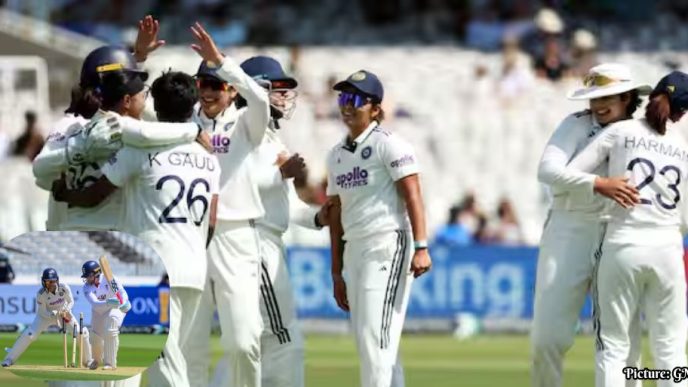
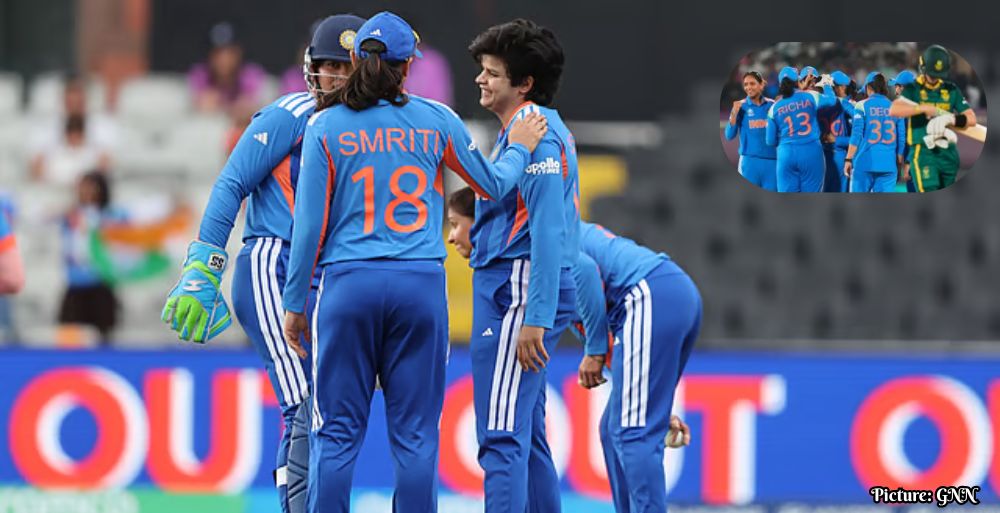
A high-stakes Thursday at the ICC Women’s T20 World Cup saw both India and South Africa secure pivotal victories at Old Trafford, ensuring that the race for semi-final qualification from Group 2 remains entirely undecided heading into the final round of matches. India comfortably chased down a target of 137 against Bangladesh, winning by five wickets with 19 balls to spare, courtesy of a rapid half-century from opener Shafali Verma. Meanwhile, South Africa’s commanding 88-run victory over the Netherlands has set up a complex qualification matrix involving net run-rates, leaving India facing a must-win scenario against the undefeated reigning champions, Australia, at Lord’s on Sunday.
MANCHESTER — The landscape of Group 2 in the ICC Women’s T20 World Cup was blown wide open on Thursday following successive victories by India and South Africa at Old Trafford. The results ensure that the battle for the top two knockout spots will go down to the final day of the group stage, with multiple permutations still mathematically viable for three of the group’s competing nations.
India’s five-wicket victory over Bangladesh was defined by a stark contrast between a brilliant, aggressive batting display and a surprisingly uncharacteristic, error-strewn performance in the field. Chasing a modest target of 137, Indian opener Shafali Verma set a blistering tempo, striking 53 runs from just 34 deliveries. Her contribution allowed India to reach 139-5 in 16.5 overs, securing two valuable points but leaving questions unanswered regarding their defensive execution ahead of their critical clash with tournament favorites Australia.
A Sloppy Start on the Field
Opting to bowl first on a surface that offered early variable bounce, India’s tactical blueprint was heavily reliant on their spin-heavy bowling attack. However, the plan was nearly derailed in the opening exchanges by unforced errors. The Indian fielding unit appeared visually unsettled under the afternoon sky, dropping a total of four catches within the first five overs of the powerplay. Misfields in the deep allowed Bangladesh to accumulate runs that high-quality opposition would have restricted.
Despite the recurring defensive lapses, Bangladesh’s batting order lacked the structural depth and power to fully capitalize on the extra lives they were granted. The quality gap between the two sides remained evident throughout the first innings. Juairiya Ferdous anchored the Bangladesh effort, top-scoring with a resilient 33 from 31 balls. She was supported by captain Nigar Sultana Joty, who contributed a steady 32, but the team struggled to find the boundary consistently, failing to accelerate during the middle overs against India’s disciplined slower bowlers.
India’s slow bowlers eventually reasserted control over the run rate. Left-arm spinner Radha Yadav was the pick of the bowlers, returning figures of 3-28 from her four overs by continuously varying her pace and drawing false shots. Sree Charani provided vital support from the other end, finishing with efficient figures of 2-21, effectively neutralizing Bangladesh’s lower-middle order as they collapsed to finish on 136-8 after their allotted 20 overs.
Verma Leads the Counter-Attack
India’s chase began with an early setback when premier opener Smriti Mandhana was dismissed cheaply, caught at mid-on off the bowling of Ritu Moni, who finished with figures of 2-29. Mandhana’s early departure briefly quieted the traveling Indian supporters in the stands, but the setback only served to accelerate Shafali Verma’s aggressive counter-offensive.
Verma dismantled the Bangladesh powerplay bowling strategy, finding the boundary with regularity and neutralizing the spin threat by tracking down the pitch. She reached her half-century in just 32 balls, effectively breaking the back of the required run rate. When Verma was eventually dismissed in the ninth over for 53, caught attempting a lofted drive off a slower ball, India’s scoring rate dropped visibly, and a brief period of stagnation followed.
The middle-order rebuild was anchored by Jemimah Rodrigues. Walking into a tense situation with the scoreboard reading 92-3, Rodrigues played with calculated aggression. Her brisk 26 from 15 balls injected momentum back into the innings, ensuring that the required run rate never threatened to escalate. India comfortably crossed the line at 139-5 with more than three overs to spare, a margin of victory that significantly aids their net run-rate calculations.
The Qualification Matrix and the Road Ahead
The victory puts India in a strong position, but their path to the semi-finals remains blocked by a formidable obstacle. On Sunday, they travel to Lord’s to face Australia, the six-time T20 World Cup champions who currently sit undefeated at the top of Group 1. Due to the competitive nature of the group, India will almost certainly need to defeat Australia to guarantee automatic progression to the knockout stages.
Concurrently, South Africa remains a potent threat in the qualification race. Their comprehensive 88-run demolition of the winless Netherlands earlier on Thursday dramatically altered the group’s net run-rate balance. To qualify, South Africa must defeat Bangladesh in their final group fixture and rely on Australia defeating India. If both India and South Africa win their respective final matches, the second semi-final spot behind Australia will be decided entirely by net run-rate margins. Mathematically, Bangladesh also retains a highly improbable, slim chance of progression, requiring an immense mathematical swing in external results alongside a massive victory in their final match.
Following the match, Indian camp insiders noted a mix of relief and intense focus. While the batting unit proved its capability under pressure, coaching staff members were seen engaging in lengthy animated discussions regarding the team’s catching drills, signaling an acute awareness that a repeat of Thursday’s fielding display against Australia will likely result in tournament elimination.