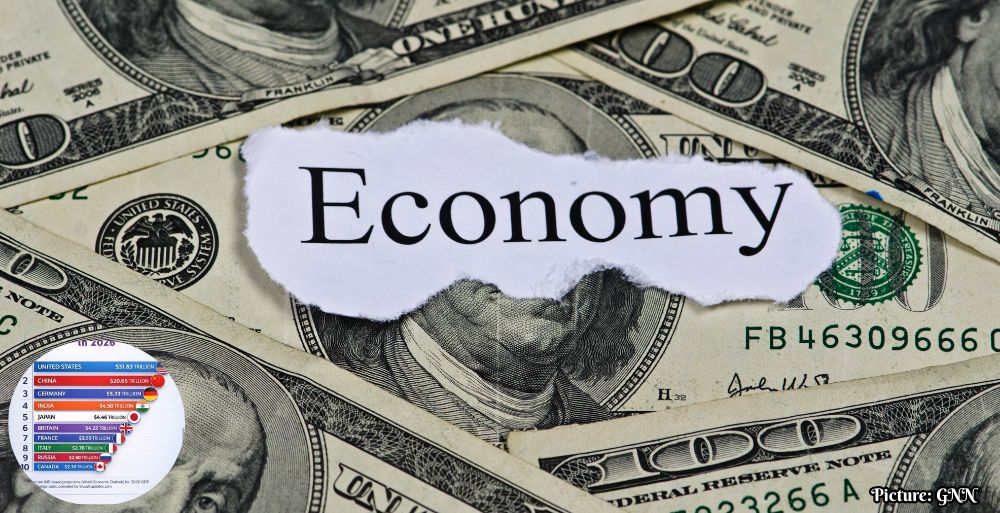
The International Monetary Fund (IMF) forecasts that the United States will continue to lead as the world’s largest economy in 2026, followed closely by China and Germany, highlighting significant trends in global trade and investment.
The International Monetary Fund (IMF) has released its projections for the largest economies in the world heading into 2026. This data reaffirms the dominance of a select group of nations that significantly influence global output, trade, and consumption. According to the IMF’s estimates, the United States will maintain its position as the largest economy, with an estimated Gross Domestic Product (GDP) of $29.2 trillion. This information is vital for businesses, investors, and policymakers, as GDP serves as one of the most commonly used indicators of economic health and activity.
Top Ten Economies: Overview
The following is a detailed overview of the ten largest economies by nominal GDP projected for 2026:
- United States – GDP: $29.2 Trillion
The United States remains the world’s largest economy, driven by consumer spending, technological innovation, finance, healthcare, and professional services. The dominance of the U.S. dollar as the leading reserve currency further bolsters its economic power, facilitating international trade and investments. In recent years, the U.S. economy has shown resilience despite global economic challenges, benefiting from a robust labor market and significant consumer demand.
- China – GDP: $18.7 Trillion
China stands as the world’s second-largest economy, with a projected GDP of approximately $18.7 trillion. Key components of its economic structure include manufacturing, exports, and substantial infrastructure investments. China has ascended to become the largest trading nation for goods globally, although its policymakers are actively working to stimulate domestic consumption to shift the economy towards a more sustainable model. The strategic Belt and Road Initiative continues to enhance its influence in global supply chains.
- Germany – GDP: $4.7 Trillion
Germany ranks third among the world’s largest economies, with an estimated GDP of $4.7 trillion. Renowned for its industrial production, engineering expertise, and significant exports, Germany plays a crucial role within the European Union. The country is particularly strong in the automotive and chemical sectors, and its economic policies significantly impact EU economic strategies, especially in times of economic uncertainty.
- Japan – GDP: $4.4 Trillion
Japan remains the fourth-largest economy worldwide, with a GDP of around $4.4 trillion. Known for its advanced technology and manufacturing capabilities in automobiles and electronics, Japan faces challenges related to an aging population. Despite these demographic hurdles, Japan continues to be a major player in global investment and innovation, with strong ties to both Western and Asian markets.
- India – GDP: $3.9 Trillion
India ranks fifth, with a projected GDP of approximately $3.9 trillion. The country has recorded some of the fastest economic growth rates among major economies in recent years, driven by a large population, expanding digital infrastructure, and a burgeoning consumer market. Analysts view India as a critical growth market for the coming decade, particularly in sectors like technology and renewable energy, which are poised for significant expansion.
- United Kingdom – GDP: $3.5 Trillion
The United Kingdom holds the sixth position with an estimated GDP of $3.5 trillion. Its economy is bolstered by financial services, professional services, and creative industries, with London recognized as one of the world’s leading financial centers. The UK’s post-Brexit landscape continues to evolve, impacting its trade relationships and economic policies.
- France – GDP: $3.2 Trillion
France ranks seventh globally, with a GDP of about $3.2 trillion. The French economy is diverse, supported by sectors such as aerospace, agriculture, finance, tourism, and luxury goods. The emergence of Paris as a growing hub for technology companies and startups adds a modern layer to its economic landscape, reflecting broader trends in innovation and entrepreneurship.
- Italy – GDP: $2.4 Trillion
Italy occupies the eighth position with a GDP of approximately $2.4 trillion. The country’s economy is characterized by a strong manufacturing base, particularly in the fashion and automotive sectors. Northern Italy remains a vital area for industrial production, with numerous specialized manufacturers contributing to the country’s economic output.
- Brazil – GDP: $2.3 Trillion
Brazil is the largest economy in Latin America, ranking ninth globally with a GDP of around $2.3 trillion. The nation’s economy plays a crucial role in global agriculture and commodity exports, including leading exports of soybeans, coffee, and beef. Brazil’s large domestic market also supports growth across several industries, though it faces challenges related to political stability and economic inequality.
- Canada – GDP: $2.2 Trillion
Completing the top ten is Canada, with a projected GDP of approximately $2.2 trillion. The Canadian economy benefits from abundant natural resources, a robust financial services sector, technology innovation, and agricultural output. Strong economic ties with the United States and a proactive immigration policy have contributed to Canada’s long-term growth prospects, positioning it as a stable economy within North America.
Implications of Economic Rankings
The rankings of the world’s largest economies provide crucial insights into broader trends in global trade and investment. Larger economies often present more substantial consumer markets and opportunities for businesses seeking international expansion. The continued prominence of the United States and China highlights the competitive dynamics between these two economic giants, which have far-reaching implications for international relations and global markets. As these economies evolve, understanding their growth trajectories and the challenges they face will be essential for investors and policymakers alike. The interplay between domestic policies and global economic conditions will likely shape the landscape of international commerce in the years to come.