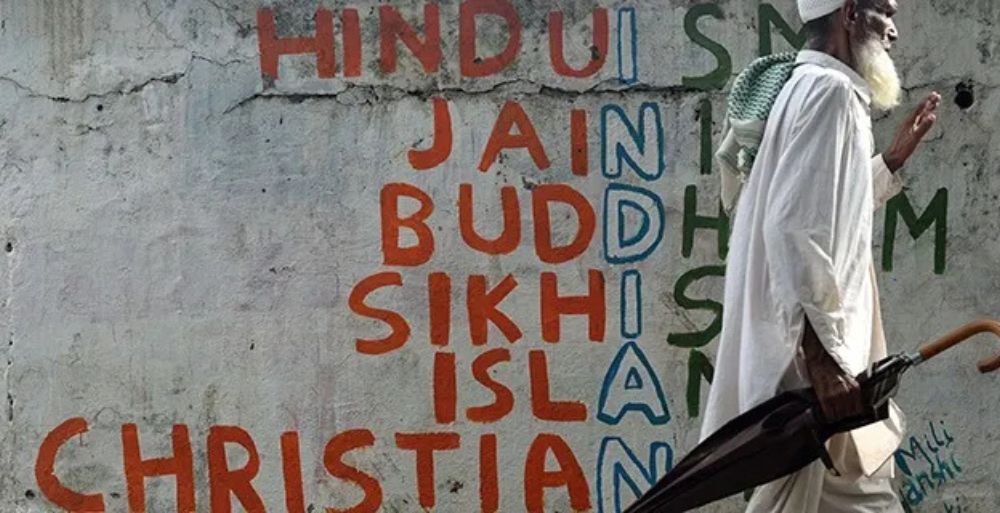
“Religiously motivated harassment and violence increased sharply in 2023, pushing the number of countries experiencing high levels of social hostilities involving religion to its highest point in more than a decade,” the Pew Research Center report found.
Religiously motivated harassment and violence increased sharply around the world in 2023, pushing the number of countries experiencing high levels of faith-related social hostilities to its highest point in more than a decade, according to a new study released by the Pew Research Center.
The report found that 55 countries recorded high or very high levels of social hostilities involving religion in 2023, up from 45 countries the previous year.
“The increase was driven in part by growing harassment of religious minorities and by the global repercussions of the Israel-Hamas war,” the report noted.
Although the figure remains below the peak of 65 countries recorded in 2012 following the Arab Spring uprisings, it represents one of the largest year-to-year increases since Pew began tracking religious restrictions in 2007.
The study examined religious conditions in 198 countries and territories using two measures: the Government Restrictions Index (GRI), which assesses laws and policies limiting religious freedom, and the Social Hostilities Index (SHI), which tracks religiously motivated harassment and violence carried out by private individuals and groups.
The study drew on reports from the U.S. State Department, the United Nations and other international organisations to assess religious freedom conditions in 198 countries and territories.
According to the report, approximately 78 percent of the world’s population now lives in countries with high or very high levels of religious restrictions, largely because several of the most populous nations, including China and India, fall into those categories.
Government restrictions on religion remained near historic highs. Fifty-eight countries recorded high or very high levels of government restrictions in 2023, only slightly below the record 59 countries reported in 2022.
Countries identified as having very high government restrictions included China, Iran, Afghanistan, Indonesia, Syria and Uzbekistan. Countries with very high levels of social hostilities included Nigeria, India, Israel, Syria, Bangladesh and Pakistan.
Despite the rise in the number of countries classified as highly hostile, the median global social hostilities score remained unchanged at 1.6 out of 10 for the third consecutive year. The median score for government restrictions remained at a record-high 3.0.
The report noted that 12 countries moved from moderate to high levels of social hostilities during 2023, including Belgium, Norway, Russia, Spain, Sweden, Turkey, Sudan and several countries in Africa and Latin America. Meanwhile, Ethiopia and the Philippines moved from high to moderate levels.
Researchers highlighted several examples behind the increase. In Spain, attacks on Jehovah’s Witnesses, anti-Muslim discrimination and a rise in antisemitic incidents contributed to higher hostility levels. In Norway, Jewish, Muslim and Jehovah’s Witness communities reported increased harassment, particularly after the outbreak of the Israel-Hamas war.
In Russia, incidents including an antisemitic mob protest at an airport in Dagestan contributed to rising tensions. In Tanzania, researchers recorded an increase in attacks on individuals accused of witchcraft, while Thailand experienced growing violence linked to a long-running insurgency in its Muslim-majority southern region. In Sudan, the ongoing civil war resulted in damage to houses of worship and religious sites, contributing to one of the largest increases in social hostilities.
Government actions also remained a major source of religious restrictions. The study found that government harassment of religious groups occurred in 185 countries, representing 93 percent of those examined. Interference in religious worship reached a record high, occurring in 175 countries and territories.
Detentions linked to religion were reported in 89 countries. Governments were responsible for such detentions in 85 countries, while private individuals or groups were involved in 24 countries.
The report cited continued restrictions in countries such as Iran, where religious figures who supported protests following the death of Mahsa Amini reportedly faced imprisonment and other punishments. According to the U.S. State Department, at least 10 Kurdish Sunni clerics were sentenced to “imprisonment, exile, flogging, and revocation of clerical status” after speaking in support of the protests.
In Saudi Arabia, researchers noted that women continued to face restrictions on religious freedom despite broader legal reforms in recent years.