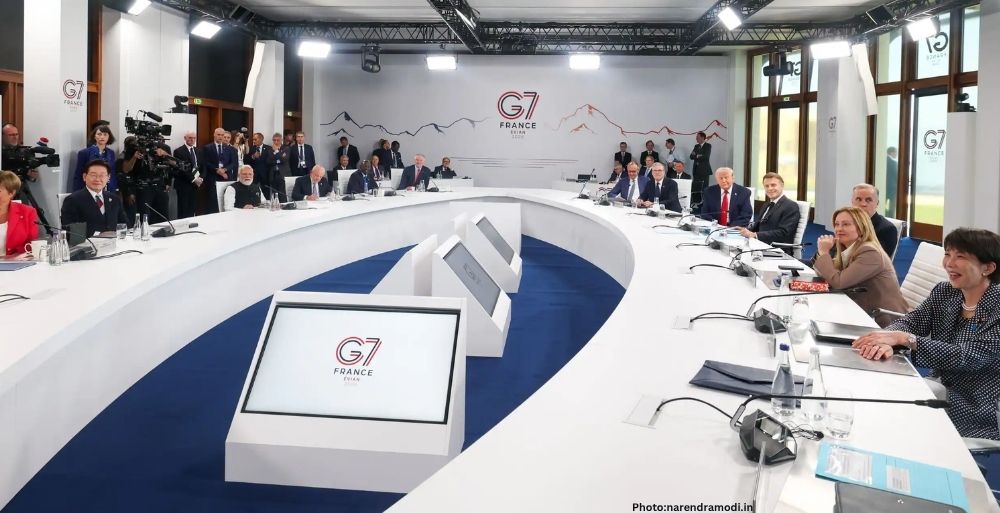
A bilateral meeting at the G7 summit between US President Donald Trump and Indian Prime Minister Narendra Modi has indicated a cautious thaw in the historically complex relationship between the two nations, with Trump committing to a future visit to India.
In a significant diplomatic engagement on the sidelines of the G7 summit held in France, US President Donald Trump announced his intention to visit India during a meeting with Indian Prime Minister Narendra Modi on Wednesday. This meeting marked their first scheduled interaction since February 2025, a period characterized by rising tensions between the two countries.
Trump characterized the anticipated visit as occurring “sometime in the future,” which he described as part of broader efforts to fortify ties between the two nations. The discussions also included ongoing negotiations regarding a trade deal, which have faced setbacks due to recent US announcements about new import tariffs targeting nations perceived as inadequately addressing forced labor practices, including India. This backdrop of strained relations has been exacerbated by various geopolitical challenges, including recent conflicts in the Middle East that have directly impacted Indian citizens.
Historical Context of US-India Relations
The relationship between the United States and India has experienced notable fluctuations over the past few years, particularly under the Trump administration. Diplomatic ties began to fray after Trump proposed tariffs on Indian imports last year, which were viewed by India as detrimental to its economic interests. Initially, these tariffs reached as high as 50% before being negotiated down to 18%, following the establishment of an interim trade agreement in February. Currently, tariffs on specific goods stand at 10% after a ruling by the US Supreme Court deemed many of Trump’s tariffs illegal.
The bilateral relationship has been further complicated by security issues in the Gulf region. During their meeting, Modi raised concerns regarding the safety of Indian sailors operating in the Strait of Hormuz, particularly in light of recent incidents involving attacks on vessels in the Gulf of Oman. The US military’s actions against tankers allegedly violating the blockade on Iranian ports have heightened maritime security risks, prompting Modi to express his commitment to ensuring the safety of Indian nationals abroad. This includes addressing the tragic loss of several Indian seafarers in recent maritime conflicts.
Trade Negotiations and Diplomatic Context
The ongoing US-India trade negotiations reflect a complex and challenging process. Modi emphasized the necessity of building trust in international partnerships during his address to G7 leaders, stating, “Today the world does not suffer from a shortage of resources; it suffers from a shortage of trust. And the future of our partnerships depends on building this trust.” His remarks were interpreted by some analysts as a direct reference to his discussions with Trump, underscoring the need for cooperation amid rising tensions.
Next week, officials are set to meet in Delhi to finalize negotiations on the trade deal, which India was among the first countries to initiate in discussions with the US last year. India’s commerce secretary has characterized these upcoming discussions as focusing on the “final touches” to the agreement, signaling a proactive approach to resolving outstanding issues that have complicated trade relations.
Security Concerns and Regional Implications
During their meeting, Trump reiterated the US’s commitment to support India in the event of an attack, stating, “If anybody attacks that man, we’re going to be there… Now, if there’s a new leader, I’m not sure about it.” This statement emphasizes the strategic importance the US places on its relationship with India, particularly in light of regional security dynamics involving neighboring Pakistan and China. Trump’s comments were indicative of the US’s desire to solidify its alliance with India, especially as both nations navigate a complex geopolitical landscape.
However, the relationship has not been without its challenges. Modi has faced criticism from opposition parties for his government’s handling of US military actions that have resulted in the loss of Indian lives. Critics argue that Modi’s administration should more vocally condemn US actions that have negatively impacted Indian citizens, particularly in the context of ongoing conflicts in the Middle East.
Modi’s previous visit to Washington in February last year was marked by a more amicable tone, but subsequent months have seen a deterioration in relations due to various geopolitical factors. The complex interplay of trade, security, and diplomatic negotiations will remain central to the US-India relationship as both nations seek to navigate their mutual interests.
Looking Ahead
As the US continues to recalibrate its foreign policy interests in South Asia, both Trump and Modi appear to recognize the necessity of collaboration to address shared challenges. Their meeting at the G7 summit represents a critical juncture for both leaders to reset their approach and foster a more cooperative relationship in the years ahead. The future visit by Trump to India could serve as a pivotal moment for deepening ties, contingent upon the successful resolution of ongoing trade negotiations and addressing security concerns in the region.
In conclusion, while the meeting at the G7 summit suggests a potential thaw in relations, the US-India partnership remains complex and multifaceted. Both nations will need to navigate a landscape marked by economic negotiations and security challenges to forge a stronger alliance moving forward.