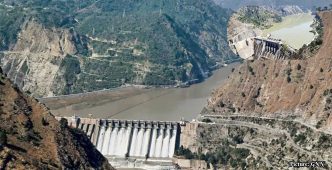
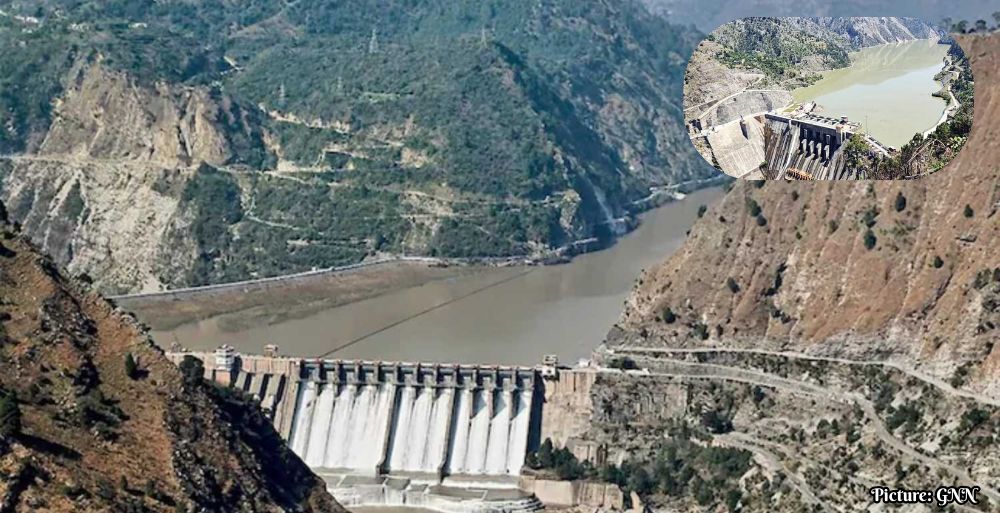
In a significant escalation of tensions between India and Pakistan, Indian officials have confirmed that the country is actively working to prevent water from flowing into Pakistan following the suspension of the Indus Water Treaty, a crucial agreement governing water rights between the two nations.
New Delhi, India – In a move that may further inflame tensions between India and Pakistan, Indian officials announced that efforts are underway to ensure that “not a single drop of water” flows into Pakistan after the suspension of the 1960 Indus Water Treaty—a key agreement regulating water distribution from rivers originating in India. This announcement was made by CR Patil, India’s Minister of Water, during a press briefing on Tuesday.
The Indus Water Treaty, brokered by the World Bank and established to manage the water resources of the Indus River Basin, has been a cornerstone of water-sharing arrangements between the two countries. Under this treaty, the rights to the waters of the three western rivers—Indus, Jhelum, and Chenab—were granted to Pakistan, while India received rights to the three eastern rivers—Ravi, Beas, and Sutlej. The treaty stipulates that India must allow 43 million acre-feet of water to flow into Pakistan annually, which constitutes approximately 80% of Pakistan’s total surface water supply, vital for its agriculture and hydropower generation.
India’s decision to suspend the treaty follows a series of escalating tensions, particularly after a terrorist attack in Kashmir in 2025 that resulted in 26 fatalities. The Indian government attributed the attack to cross-border militant activities, prompting it to reassess its diplomatic relations with Pakistan. Following this incident, Prime Minister Narendra Modi directed that India would halt its obligations under the treaty until Pakistan ceases its support for what India terms “cross-border terrorism.”
Historical Context of the Indus Water Treaty
The Indus Water Treaty was signed in 1960, following a period of conflict between India and Pakistan over water rights stemming from the partition of British India. The treaty was designed to promote peace and cooperation, allowing for the equitable distribution of water resources in a region where water scarcity is a critical issue. However, over the decades, the treaty has come under strain due to political hostilities and military conflicts, including wars in 1947, 1965, and 1971, as well as numerous skirmishes in the Kashmir region.
India’s recent actions may signal a shift in its approach to water sharing, with officials asserting that the treaty is currently in abeyance. Minister Patil emphasized that under the current government directives, the Ministry of Home Affairs, led by Amit Shah, is closely monitoring the situation, reinforcing India’s commitment to halt water flow to Pakistan.
Implications for Pakistan
For Pakistan, the suspension of the treaty poses severe implications. The water flowing from the Indus Basin is a lifeline for millions of Pakistanis, crucial for drinking water, agricultural irrigation, and energy production. As Pakistan’s economy remains heavily reliant on agriculture, any disruption in water supply could exacerbate food security issues and hinder economic growth.
Pakistan has reacted strongly to India’s actions, accusing New Delhi of “weaponizing” water. Pakistani officials have stated that any unilateral changes to the flow of cross-border waterways would be considered an “act of war.” The Pakistani government maintains that the Indus Water Treaty remains intact and that India cannot unilaterally withdraw from it without proper negotiations.
Recent Developments and Future Prospects
In recent months, tensions have escalated, with accusations exchanged between both nations. Earlier this month, Pakistan accused India of further attempts to manipulate water resources following New Delhi’s announcement of two new projects on the section of the Chenab River under its control. Such developments indicate that the already fragile relationship between the two nuclear-armed neighbors is at a precarious juncture.
As the international community watches closely, the future of the Indus Water Treaty hangs in the balance. The ongoing diplomatic standoff, fueled by security concerns and historical grievances, raises questions about the potential for renewed conflict over shared resources. The situation underscores the urgent need for dialogue and cooperation to address not only water-sharing issues but also broader security concerns in the region.
In conclusion, the suspension of the Indus Water Treaty by India marks a significant turning point in the longstanding tensions between the two countries. The implications of this decision extend beyond mere water rights, affecting millions of lives and the broader geopolitical landscape in South Asia.