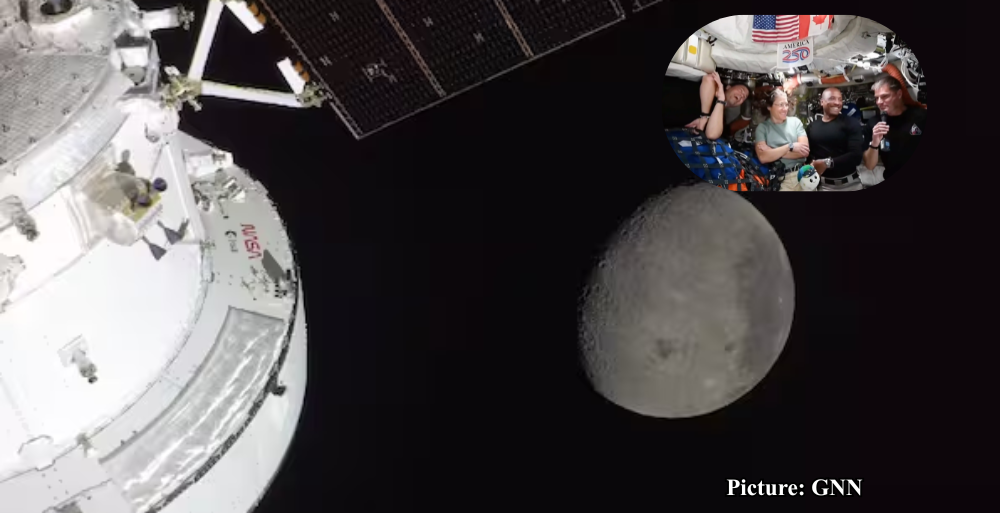
Nasa has announced the four astronauts who will participate in the Artemis III mission, which aims to advance preparations for future lunar landings despite recent setbacks, including the explosion of a Blue Origin rocket.
NASA officially introduced its Artemis III crew on June 6, 2026, at the Johnson Space Center in Houston, Texas. The mission marks a crucial step toward returning humans to the lunar surface, with an ambitious goal of achieving this by 2028. The selected astronauts include Randy Bresnik, who will serve as commander; Luca Parmitano, the pilot from the European Space Agency; and mission specialists Frank Rubio and Andre Douglas.
The announcement comes less than two weeks after Blue Origin’s New Glenn rocket suffered a catastrophic failure during a ground test at Cape Canaveral, Florida. This incident has raised questions about the viability of the timeline for Artemis III. NASA’s administrators, however, remain optimistic about the mission’s prospects. Jared Isaacman, the NASA administrator, expressed confidence in the program, stating, “We’re going to return to the moon before the end of 2028.”
Mission Objectives and Structure
The Artemis III mission is designed to test essential docking maneuvers with one or two lunar landers in low-Earth orbit. This approach simplifies the mission’s complexity compared to previous plans that aimed for a direct lunar landing. The mission will involve the Blue Origin lander launching first, followed by the crewed Orion capsule atop NASA’s Space Launch System (SLS) rocket, which is designed to carry astronauts to and from lunar missions.
NASA has adjusted the mission’s objectives to focus on orbital operations rather than a lunar landing, which officials believe will reduce risks and improve the likelihood of success in subsequent missions. Jeremy Parsons, the Artemis program manager, detailed the mission’s timeline, indicating that the crew will spend approximately two weeks in space, with operations planned for a period of docked activities between the Orion capsule and the Blue Origin lander.
Challenges and Recent Developments
The recent explosion of Blue Origin’s New Glenn rocket has compounded challenges for NASA’s Artemis program. The rocket’s failure damaged Blue Origin’s only launchpad, raising concerns about the company’s ability to meet the projected timelines for the Artemis III mission. John Couluris of Blue Origin acknowledged the setback but assured that efforts are underway to repair the launchpad swiftly.
Despite these challenges, NASA officials maintain that they will provide transparent updates about the mission’s progress. The Artemis program has faced scrutiny regarding its pace and complexity, particularly as it relies heavily on private contractors such as SpaceX and Blue Origin for critical components of lunar transportation.
Profile of the Artemis III Astronaut Crew
Randy Bresnik, the mission commander, is a veteran NASA astronaut with a background as a fighter pilot in the U.S. Marine Corps. His experience includes a previous space shuttle mission and extended time aboard the International Space Station. Luca Parmitano brings his expertise as the first Italian commander of the ISS, while Frank Rubio holds the record for the longest continuous stay in space by a NASA astronaut, having spent 371 days aboard the ISS after an unexpected coolant leak forced him to extend his mission. Andre Douglas, a relatively new astronaut, will be making his first journey into space as a mission specialist.
Interestingly, the Artemis III crew is composed entirely of men, a departure from NASA’s recent practices of promoting gender diversity in its astronaut selections. This has drawn attention and criticism, especially considering NASA’s previous commitments to include a more diverse range of astronauts in its missions.
Historical Context and Future Implications
The Artemis program is viewed as a critical initiative in the United States’ goal to re-establish a human presence on the Moon, aiming to explore its resources and serve as a stepping stone for future manned missions to Mars. Artemis III serves as a precursor to the planned Artemis IV and V missions, which are expected to include actual lunar landings.
Historically, the U.S. space program has faced numerous challenges during its ambitious undertakings. The Apollo missions, which successfully landed astronauts on the Moon, were preceded by extensive testing and simulations, similar to the current approach being employed by NASA. The shift to focus on low-Earth orbit activities in Artemis III is reminiscent of the Apollo 9 mission, which did not land on the Moon but was integral in testing procedures that laid the groundwork for future lunar missions.
As NASA continues to pursue its lunar ambitions, significant external factors—such as the performance of private contractors and the overall political and financial support for the space program—will play a crucial role in determining the program’s success. Experts have noted the inherent risks of depending on a limited number of private entities for essential components of the lunar exploration strategy.
Conclusion
While the Artemis III mission faces substantial challenges, including logistical hurdles due to the Blue Origin rocket explosion, NASA remains steadfast in its commitment to returning humans to the Moon. As the agency prepares for this next step in its lunar exploration efforts, the focus will be on ensuring a successful mission that can pave the way for future lunar landings and the establishment of a sustained human presence on the Moon.