
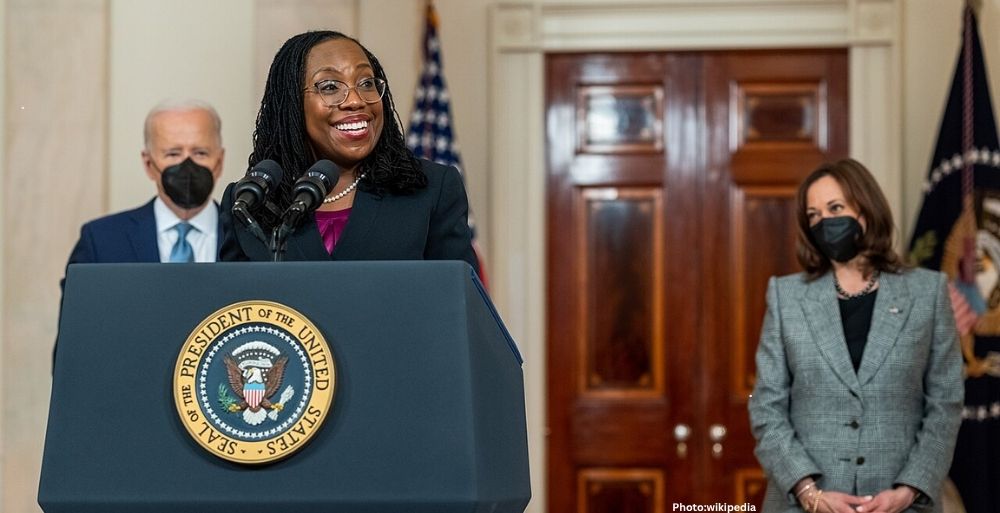
Justice Ketanji Brown Jackson called for public support to uphold judicial independence during her recent appearances at Southern Methodist University, highlighting the increasing political pressures faced by the judiciary.
Justice Ketanji Brown Jackson, during her recent appearances at Southern Methodist University (SMU) on Tuesday, emphasized the vital importance of judicial independence, urging the public to actively support the autonomy of the judiciary as it faces increasing political scrutiny and pressure. Her remarks come amid heightened tensions between the judiciary and certain political figures, notably former President Donald Trump, who has suggested the impeachment of judges whose rulings he disagrees with.
Context of Political Pressure
Former President Trump’s calls for impeachment have raised significant concerns regarding the potential erosion of judicial independence in the United States, a cornerstone of the country’s democratic framework. Trump specifically criticized district court judges for their decisions against his administration, particularly regarding the deportation of alleged gang members to an anti-terrorism prison in El Salvador. This situation prompted Chief Justice John Roberts to publicly assert that judges should not face impeachment for their rulings, emphasizing the necessity for judicial independence free from political influence.
In a conference held in Puerto Rico last year, Justice Jackson cautioned federal judges about the dangers of intimidation directed at the judiciary. However, her recent comments at SMU were not merely directed at her peers within the judicial system; instead, they aimed to mobilize public support to safeguard judicial independence against external pressures.
Judicial Tensions and Recent Supreme Court Opinions
Jackson’s remarks come on the heels of a particularly contentious session in which the Supreme Court released a series of opinions marked by sharp exchanges among justices. Recently, Jackson expressed concern over the Court’s decision to expedite a ruling related to the Voting Rights Act. She suggested that some justices seemed to prioritize political power over established legal principles, stating, “principles [should] not give way to power.” This assertion was met with stern criticism from conservative justices, including Samuel Alito, Neil Gorsuch, and Clarence Thomas, who labeled her claims as “baseless and insulting,” asserting that her charge was “groundless and utterly irresponsible.”
Despite the tumultuous nature of recent judicial opinions, Jackson maintained a stance of camaraderie among the justices during her appearances at SMU. When asked about the atmosphere at the Supreme Court, Jackson responded, “Yeah, no, it’s fine,” prompting laughter from the audience. Jackson elaborated, indicating that the justices are skilled at compartmentalizing professional disagreements from personal relationships. She stated, “In the world of law and the world of writing your opinions, you’re going to disagree, and you have the opportunity to express your views in the context of your opinions, but in our day-to-day interactions, none of us takes it personally, and we get along just fine.”
Reflections on Her Role as a Justice
During a subsequent lecture aimed at an older audience, Jackson reflected on the surreal nature of her swearing-in ceremony, indicating that she had to remind herself that the event was indeed real. This moment not only illustrates her personal journey but also resonates with the broader public discourse on the importance of judicial integrity and independence. It highlights the weight of her responsibilities as a Supreme Court Justice and the critical role she plays in upholding the Constitution.
In the current political climate, where the judiciary faces unprecedented scrutiny and potential subversion from political actors, Justice Jackson’s calls for public support in preserving judicial independence are timely and crucial. Her advocacy underscores the essential need for a balanced and independent judicial system that can effectively uphold democratic principles.
The Broader Implications for the Judiciary
The implications of Jackson’s concerns extend beyond her personal experiences and the current political landscape. The politicization of the judiciary has been a growing concern among legal scholars and practitioners, who warn that undermining judicial independence could have dire consequences for the rule of law. As judges become targets of political retribution, the integrity of the judicial system is at risk, potentially leading to a judiciary that is less willing to make impartial decisions.
Historically, the independence of the judiciary has been a fundamental principle of American democracy, designed to protect individual rights against potential governmental overreach. The calls for impeachment and public intimidation directed at judges threaten this principle, raising questions about the future of judicial independence in the United States.
In conclusion, Justice Ketanji Brown Jackson’s emphasis on the importance of judicial independence and her call for public support come at a critical juncture in American political history. As discussions surrounding the judiciary’s role in upholding democratic principles continue, her advocacy highlights the essential need for a judiciary that operates free from political influence. The future of judicial independence may well depend on the public’s willingness to defend this crucial aspect of American democracy.