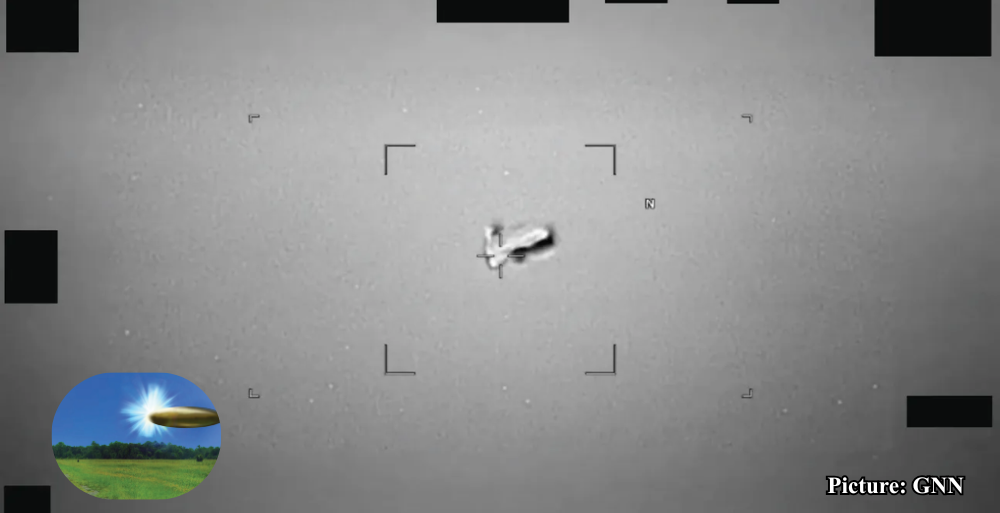
The Pentagon has unveiled 161 declassified files concerning UFOs and unidentified aerial phenomena, with President Donald Trump characterizing the release as a significant step toward governmental transparency.
On May 8, 2026, the United States Department of Defense made public a collection of 161 declassified files that pertain to unidentified flying objects (UFOs) and potential extraterrestrial life. President Donald Trump has framed this release as part of his administration’s commitment to transparency about government knowledge of unidentified aerial phenomena. In a post on his social media platform, Truth Social, Trump stated, “In an effort for complete and maximum transparency… the people can decide for themselves, ‘what the hell is going on?’” This statement underscores Trump’s position that previous administrations have not adequately addressed public curiosity regarding UFOs.
The released documents encompass a range of materials, including military reports, astronaut accounts, and civilian sightings that span several decades. The files are accessible on the Pentagon’s official website, marking an unprecedented level of public access to historically classified information about UFO encounters.
Historical Context of UFO Reports
The publication of these files occurs during a period of heightened interest and scrutiny regarding UFOs. In recent years, both the public and various members of Congress have increasingly demanded transparency on the subject, prompting hearings and discussions focused on unidentified aerial phenomena. The growing public fascination with UFOs is not a new phenomenon; it dates back to the mid-20th century and has influenced popular culture, scientific inquiry, and even governmental policy.
Among the notable contents of the released files are transcripts from NASA’s Apollo missions, in which astronauts reported seeing unusual lights in space. Buzz Aldrin, who was part of the Apollo 11 mission in 1969, noted during the flight that he observed “a fairly bright light source.” Similarly, Apollo 12 astronaut Alan Bean recounted seeing particles and flashes of light moving in space. During the Apollo 17 mission, astronaut Jack Schmitt famously remarked, “It’s like the Fourth of July out there,” referring to the flashing lights observed during their lunar exploration. These accounts have sparked discussions regarding the nature of the phenomena witnessed by these astronauts, with some suggesting that the lights may have been reflections rather than alien objects.
Public and Legislative Reactions
The release of the files has elicited a mixed response from lawmakers and the public. Republican Congressman Tim Burchett characterized the move as a “great start,” while Congresswoman Anna Paulina Luna described it as “a massive first step” toward greater transparency regarding extraterrestrial phenomena. Their comments reflect a segment of Congress that views the dissemination of such information as crucial for understanding and addressing public curiosity regarding UFOs.
Conversely, some critics have expressed skepticism about the timing and implications of the release. Former Congresswoman Marjorie Taylor Greene suggested that this disclosure could serve to distract from pressing issues facing the nation, implying that the focus on UFOs might divert attention from more immediate concerns such as economic or social challenges. This perspective highlights the ongoing debate regarding governmental priorities and transparency, particularly in a politically charged environment.
The released files also contain numerous civilian accounts of unidentified objects. One noteworthy report from 1957 detailed a sighting of a large circular object rising from the ground, while more recent accounts from 2023 described metallic objects emerging from bright lights. Videos captured during U.S. military operations in regions including Iraq, Syria, and the United Arab Emirates feature objects described as “unresolved unidentified anomalous phenomena,” further contributing to the discussion surrounding UFOs.
The Path Forward for UFO Disclosure
The release of these files marks a significant moment in the ongoing dialogue between the U.S. government and the public regarding UFOs. As more records are anticipated to be declassified, the implications of these findings could influence public perceptions and policy discussions surrounding national security, scientific inquiry, and governmental transparency.
The Pentagon has indicated that additional documents related to UFO sightings are expected to be released in the future, potentially providing further insight into this mysterious subject that has captivated human curiosity for generations. The government continues to face the challenge of balancing transparency with national security concerns, as the implications of this information release resonate with both supporters and skeptics alike.
In the broader context, the release of these files could contribute to a shift in how UFOs and extraterrestrial phenomena are perceived, not only by the public but also within scientific and governmental institutions. As society grapples with the implications of potential extraterrestrial life and unidentified aerial phenomena, the importance of transparency and open dialogue in addressing these inquiries remains paramount.