
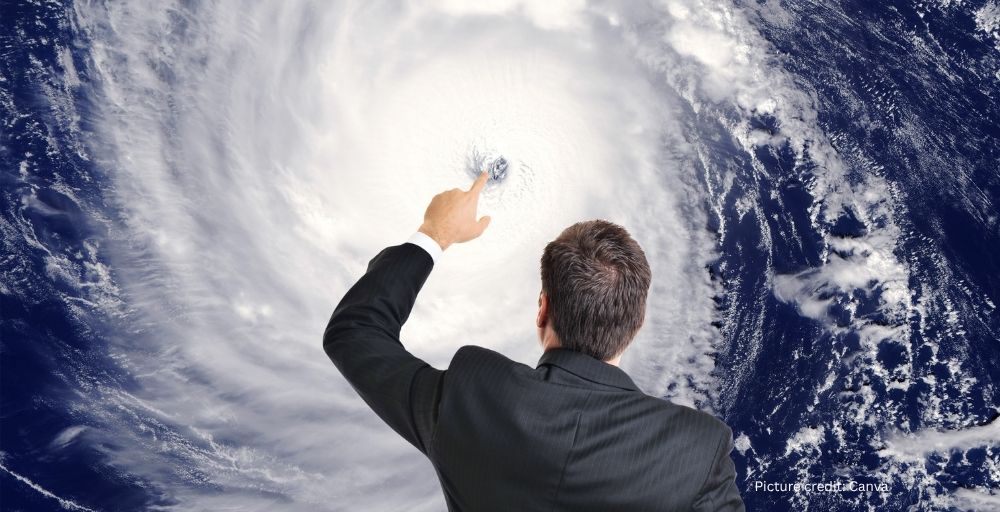
The tropical Pacific is showing signs of a developing El Niño, with forecasters predicting a 62% chance of formation between June and August 2026, raising concerns over extreme weather patterns worldwide.
The tropical Pacific Ocean is exhibiting early signs of a potential El Niño event, which meteorologists warn could lead to significant global weather impacts by late 2026. The latest outlook from the U.S. National Oceanic and Atmospheric Administration (NOAA), released on April 9, 2026, indicates a 62% probability of El Niño conditions developing between June and August of this year. This phenomenon could persist through the end of 2026, with forecasters noting a one-in-four chance that it will reach the “very strong” category, often referred to as a “super El Niño.”
Understanding El Niño and Its Implications
El Niño is characterized by warmer-than-average surface waters in the tropical Pacific, which can significantly alter weather patterns across the globe. This phenomenon is part of a larger climate oscillation known as the El Niño Southern Oscillation (ENSO), which alternates with its cooler counterpart, La Niña. Historically, these events occur every two to seven years and typically last between nine to twelve months, although some can extend beyond that timeframe.
When El Niño conditions take hold, they can influence the position of the jet stream—a critical factor in determining storm paths. As the jet stream shifts, it can lead to increased rainfall or drought conditions in various regions far removed from the Pacific Ocean.
The Criteria for a ‘Super El Niño’
While the term “super El Niño” is not formally defined, it generally refers to an El Niño event that is particularly intense, marked by sea surface temperatures in key monitoring areas rising at least 2 degrees Celsius (approximately 4 degrees Fahrenheit) above the long-term average. Such intensity is significant because it amplifies the effects that El Niño can have on global weather patterns. According to meteorologist Ben Noll of The Washington Post, a recent model run from the European Centre for Medium-Range Weather Forecasts indicates a 98% chance of at least a moderate El Niño by August 2026, with an 80% chance of it being strong and a 22% chance of it achieving super status.
Assessing the Probability and Uncertainty
Forecasting the likelihood of El Niño development is inherently challenging. A 62% probability does not imply certainty but rather suggests it is the most likely outcome based on current oceanic and atmospheric signals. NOAA’s outlook indicates that neutral conditions are favored through April to June 2026, after which the likelihood of an El Niño event increases as summer approaches. The determination of whether a super El Niño will occur is contingent on prevailing wind conditions that facilitate the warming of ocean waters.
It is essential to approach these forecasts with caution, as uncertainty remains a fundamental aspect of climate prediction, especially during the spring months. This period, often referred to as the “spring predictability barrier,” is characterized by heightened variability in models due to transitioning Pacific conditions.
Potential Weather Impacts of a Strong El Niño
The consequences of a strong El Niño can vary significantly across different regions. Generally, it can lead to a southward shift of the Pacific jet stream, resulting in warmer and drier conditions in parts of the northern United States and Canada, while increasing rainfall—and consequently, flood risk—in the Gulf Coast and Southeastern states. Beyond the U.S., the impacts can trigger drought in some areas and exacerbate rainfall in others, affecting agricultural yields and water supply stability.
The implications of a strong El Niño are not confined to extreme weather events; they can also influence everyday life, including food prices, energy consumption, and public health. For instance, an extended heatwave during a super El Niño could lead to increased demand for electricity as air conditioning usage rises, further straining power grids.
Looking Ahead
As the Pacific Ocean enters this critical period of potential change, both national and international meteorological agencies will continue to monitor developments closely. The World Meteorological Organization has noted a convergence of forecasts pointing toward El Niño conditions following April 2026, though the variability among models suggests a cautious approach is warranted.
Overall, while the current data and models suggest a growing likelihood of significant El Niño activity later in 2026, the exact nature and extent of its impacts remain to be seen. As meteorologists work to refine their predictions, the possibility of extreme weather events looms large, compelling communities to prepare for a range of potential scenarios.