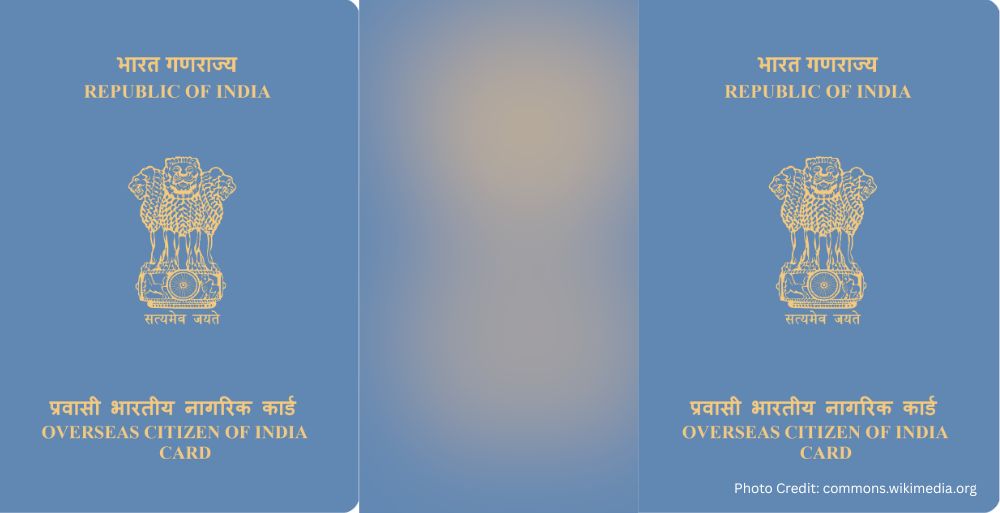
India has implemented significant changes to the Overseas Citizen of India (OCI) programme, introducing a standardized fee structure and new compliance requirements aimed at modernizing services for the Indian diaspora.
NEW DELHI – In a landmark move, the Ministry of Home Affairs of India has announced a comprehensive overhaul of the Overseas Citizen of India (OCI) programme, marking the first significant changes to the rules in over a decade. The new regulations came into effect on April 1, 2026, and are designed to enhance the services available to the Indian diaspora worldwide.
The revisions include a standardized global fee structure, stricter compliance requirements regarding passport renewals, and expanded eligibility criteria for certain communities within the Indian diaspora. According to the Ministry, the updates aim to modernize the services provided to overseas citizens, improve biometric verification processes, and streamline procedures across Indian missions and consulates globally.
Key Changes to the OCI Programme
One of the most notable changes is the introduction of a uniform global fee system, which replaces the previously existing country- and mission-specific charges. This new fee structure is intended to simplify the application process for prospective OCI applicants, ensuring transparency and consistency regardless of their location.
As part of the new compliance requirements, all OCI holders are now mandated to update their passport details within three months of receiving a new foreign passport. Failure to comply with this requirement will result in a $25 penalty if the update is not completed within the 90-day timeframe. Moreover, immigration authorities at major entry points, including Delhi and Bengaluru, may flag or question OCI records that are incomplete or outdated.
To enhance efficiency, OCI records are now more tightly integrated with biometric systems, allowing for faster verification at Indian immigration points. This change is expected to expedite the e-gate processing at airports, thanks to real-time data matching capabilities.
Additionally, existing residency requirements for certain OCI-related processes have been eliminated. For example, participation in India-based research and fellowship programmes has been made more accessible for overseas professionals, with the previous six-month residency requirement now removed. This adjustment is aimed at improving cross-border mobility for high-skilled talent.
Expanded Eligibility for Indian Diaspora
The revised rules also expand OCI eligibility to fifth- and sixth-generation Indian-origin Tamils residing in Sri Lanka. The new regulations accept government-issued records from Sri Lanka as valid proof of ancestry for these individuals, thereby broadening the reach of the OCI programme to include more members of the Indian diaspora.
Cost Implications for OCI Applicants
The financial implications of the new OCI programme are significant. The cost for fresh OCI applications filed abroad has been set at $275, or the equivalent in local currency. For those applying within India, the fee is Rs 15,000. Other fees include a $25 charge for OCI reissuance following a passport change or personal detail update, a $100 fee for a duplicate OCI card in the event of loss or damage, and a $100 charge for converting a Persons of Indian Origin (PIO) card to OCI status.
These changes come at a time when India is actively seeking to strengthen its ties with the global Indian community. By modernizing the OCI programme, the Indian government aims to facilitate better connections with its diaspora, which plays a crucial role in various sectors, including technology, business, and research.
Implications for the Indian Diaspora
The Indian diaspora, estimated to number over 30 million individuals worldwide, has long been integral to India’s economic and cultural landscape. The OCI programme was established in 2005, providing overseas Indians with a pathway to maintain ties with their homeland while enjoying certain privileges akin to those of Indian citizens. The recent changes reflect an evolving understanding of the needs and challenges faced by this diverse community.
Critics of the OCI programme have often pointed to complexities and inefficiencies in the application process as barriers to greater engagement. By standardizing fees and simplifying compliance requirements, the government aims to address these concerns. Moreover, the enhanced biometric verification system is expected to reduce instances of fraud and misrepresentation, ensuring that the programme serves its intended purpose of fostering genuine connections between India and its diaspora.
Furthermore, easing residency requirements for research and professional programmes is particularly significant in a globalized economy, where cross-border talent mobility is increasingly valued. This move may attract higher-skilled professionals back to India, fostering innovation and collaboration in critical sectors.
Conclusion
As the Indian diaspora continues to grow, these updated regulations reflect an ongoing commitment to support and engage with Indian citizens living abroad. The changes are expected to enhance the overall experience for OCI cardholders, making it easier for them to navigate the complexities of their status while fostering a stronger connection to their homeland. In an era where global connectivity is paramount, India’s efforts to modernize the OCI programme may prove pivotal in leveraging the potential of its overseas citizens.