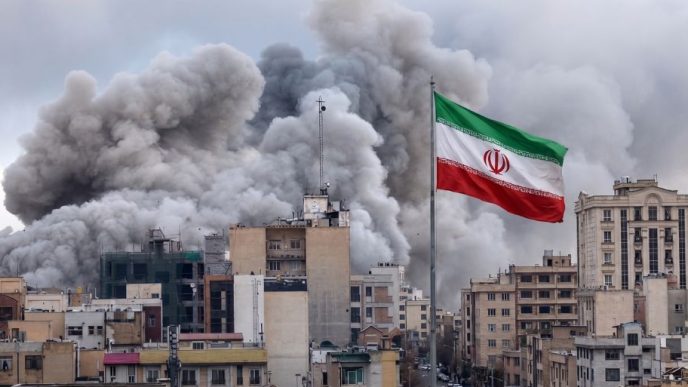
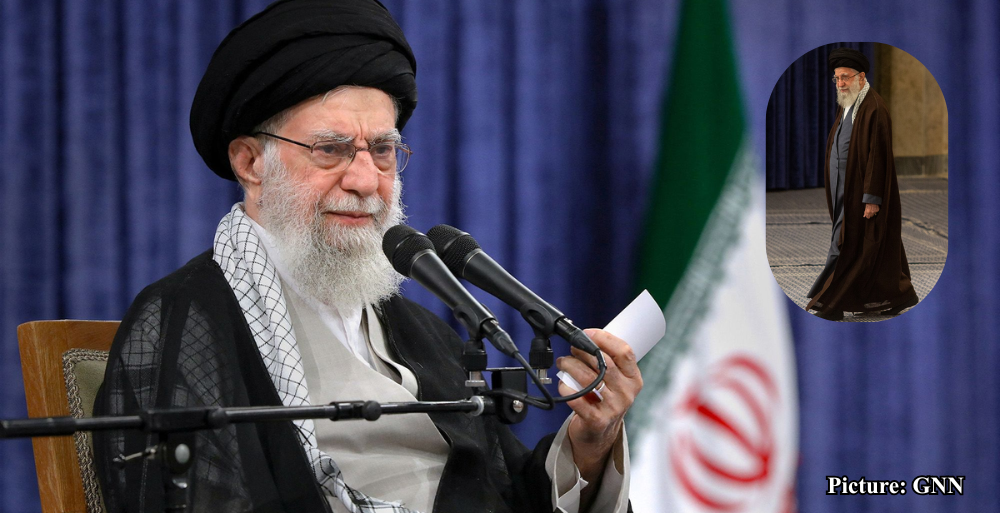
Iran’s Supreme Leader Ayatollah Mojtaba Khamenei declared on Thursday that the nation will protect its nuclear and missile capabilities as vital national assets, amidst escalating tensions with the United States and ongoing discussions about a fragile ceasefire.
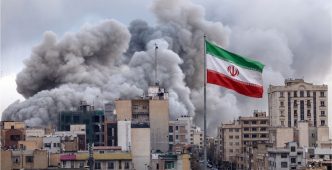
DUBAI, United Arab Emirates (AP) — In a defiant statement issued on Thursday, Iran’s Supreme Leader Ayatollah Mojtaba Khamenei reinforced the Islamic Republic’s commitment to safeguarding its nuclear and missile capabilities, emphasizing their importance as national assets. This declaration comes at a time of heightened tensions between Iran and the United States, as U.S. President Donald Trump seeks to negotiate a broader agreement in light of a precarious ceasefire that has lasted three weeks.
Khamenei has maintained a staunchly defiant stance since assuming leadership following the death of his father, former Supreme Leader Ayatollah Ali Khamenei, amidst the early airstrikes of the ongoing conflict. In a written statement read on state television, Khamenei asserted that the only place for Americans in the Persian Gulf is “at the bottom of its waters,” signaling a hardline approach to U.S. presence in the region. He characterized the current period as a time of transition, stating that a “new chapter” in the region’s history is being written.
Impact of U.S. Blockade on Iranian Oil Industry
Khamenei’s remarks were made against the backdrop of a U.S. Navy blockade that has severely restricted Iran’s oil exports, a vital source of revenue for the country. As a result, the global oil market has felt the effects, with Brent crude prices soaring to as high as $126 a barrel. This increase in oil prices puts additional pressure on President Trump, who is considering new plans to facilitate the reopening of the Strait of Hormuz, a critical waterway through which approximately one-fifth of the world’s crude oil is transported.
The proposed U.S. plan, as reported by The Wall Street Journal, would maintain the blockade on Iranian ports while coordinating with international allies to impose greater costs on Iran’s efforts to disrupt the free flow of energy. A senior administration official, speaking on condition of anonymity, confirmed that multiple diplomatic and policy options are being evaluated to compel Iran to cease its control over the strategic waterway.
Fragile Ceasefire and Ongoing Negotiations
The ongoing standoff between the U.S. and Iran over the Strait of Hormuz has cast a shadow over the fragile ceasefire that is currently in place. The U.S. blockade aims to prevent Iran from selling its oil, which has been pivotal in depriving Tehran of essential revenue. Additionally, the blockade risks forcing Iran to reduce oil production due to limited storage capacity.
The closure of the Strait of Hormuz also presents significant challenges for U.S. allies in the Gulf region, who rely on the waterway for their own oil and gas exports. Amid these tensions, Pakistan has reported that it is facilitating indirect talks between the U.S. and Iran, with hopes that direct communication could help ease existing tensions. Ministry of Foreign Affairs spokesperson Tahir Andrabi indicated that real-time conversations could potentially resolve sticking points, although he refrained from disclosing specifics about any proposals.
Iran’s Position on Nuclear Capabilities
In his remarks commemorating Persian Gulf Day, Khamenei made it clear that Iran’s nuclear program and ballistic missile capabilities are non-negotiable. He stated that “ninety million proud and honorable Iranians inside and outside the country regard all of Iran’s identity-based, spiritual, human, scientific, industrial and technological capacities — from nanotechnology and biotechnology to nuclear and missile capabilities — as national assets, and will protect them just as they protect the country’s waters, land, and airspace.”
Khamenei’s rhetoric also included a reiteration of the long-standing Iranian characterization of the United States as the “Great Satan,” a label that has been a fixture in Iranian political discourse since the 1979 Islamic Revolution. He expressed that foreign entities have no rightful place in the Persian Gulf, asserting that those who come from thousands of kilometers away act out of greed and malice.
Control Over the Strait of Hormuz
Furthermore, Khamenei suggested that Iran’s control over the Strait of Hormuz would enhance the security of the Gulf region, asserting that Tehran’s proposed “legal rules and new management” of the strait would ultimately benefit all neighboring nations. However, this claim is met with skepticism from Gulf Arab states, particularly the United Arab Emirates, which view Iran’s actions as tantamount to piracy. Historically, the Strait of Hormuz has been recognized as an international waterway, where free passage is expected without the imposition of tolls.
The ongoing tensions surrounding Iran’s military and nuclear ambitions, coupled with the U.S. blockade and the strategic significance of the Strait of Hormuz, continue to present complex challenges for regional stability and international diplomacy.