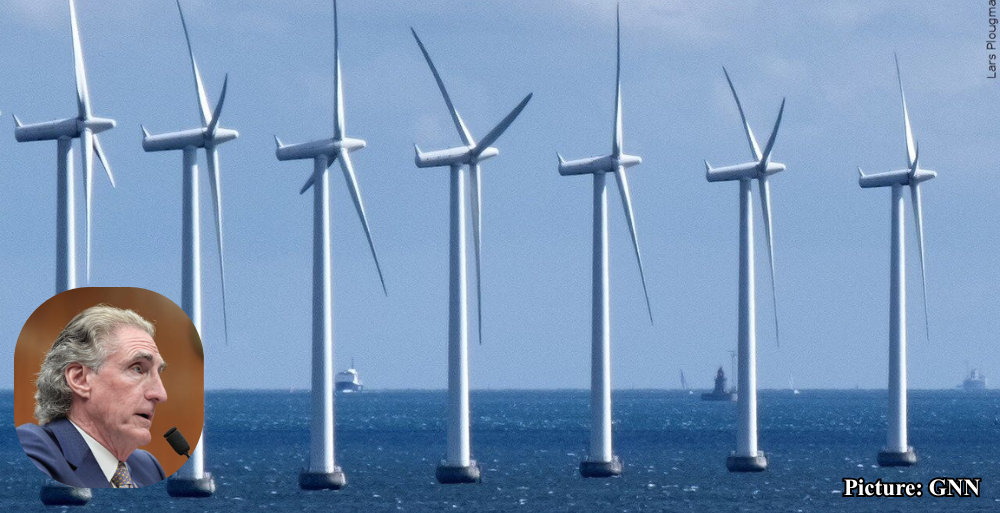
The Trump administration has initiated a controversial strategy involving payouts to energy companies to abandon U.S. offshore wind projects, totaling nearly $2 billion, drawing the attention and criticism of congressional Democrats.
The Trump administration has announced a series of agreements to compensate energy companies for relinquishing their leases for offshore wind projects, a move that has sparked significant controversy among lawmakers. As part of this initiative, nearly $2 billion is being allocated to companies in exchange for their commitment to invest in fossil fuel projects instead of renewable energy. This strategy follows a series of legal setbacks faced by the administration in its attempts to halt offshore wind development through executive orders.
U.S. Representatives Jared Huffman of California and Jamie Raskin of Maryland, both prominent Democrats, have taken the lead in investigating these agreements. They are particularly focused on the first and largest deal made public in March, which involves the French energy company TotalEnergies receiving $1 billion to abandon its leases for offshore wind projects off the coasts of North Carolina and New York. In a statement, Huffman characterized the deal as a “scam,” warning that the administration’s actions could lead to substantial waste of taxpayer money.
In a letter sent to TotalEnergies, Huffman and Raskin expressed their concerns about the legality of the agreement, demanding documents and communications related to the deal. They advised the CEO of TotalEnergies against accepting the funds, arguing that such arrangements treat public resources irresponsibly. “You can’t come into the United States and do a backroom deal like this, that just essentially treats the treasury as a slush fund, and walk away with a billion dollars,” Huffman stated.
In response to inquiries, TotalEnergies referred to its announcement regarding the payout, in which CEO Patrick Pouyanné explained that the decision to withdraw from U.S. offshore wind development was based on the conclusion that such projects were not in the country’s interest.
Recent Developments and Financial Impacts
Following the initial agreement with TotalEnergies, the administration revealed additional deals on Monday involving Bluepoint Wind and Golden State Wind, which are set to receive nearly $900 million in reimbursements for ending their leases. These companies are co-owned by Ocean Winds, a partnership between EDP Renewables and Engie. Michael Brown, the CEO of Ocean Winds North America, noted that market conditions necessitated these adaptations.
Supporters of the administration’s approach have praised the innovative strategy, with Robin Shaffer, president of Protect Our Coast New Jersey, asserting that the administration is justified in its decisions and that private businesses cannot be compelled to proceed with projects against their will.
Conversely, Senate Minority Leader Chuck Schumer criticized the initiative, labeling it as a “bailout for fossil fuel donors.” He pointed out the contradiction in the administration’s stance, noting that Trump previously condemned offshore wind subsidies as a misuse of taxpayer funds. “Now his administration is handing nearly $2 billion of those very same taxpayer dollars to companies to abandon clean energy projects that would have powered millions of American homes and created thousands of good-paying union jobs,” Schumer stated.
Long-Term Implications for Offshore Wind Development
As a result of these agreements, Ocean Winds will retain only one offshore wind project in the U.S., the SouthCoast Wind project off Massachusetts, which has faced delays under the current administration. Amber Hewett, senior director of offshore wind energy at the National Wildlife Federation, emphasized that prioritizing fossil fuels over renewable energy directly undermines efforts to combat climate change, as fossil fuel combustion remains the largest contributor to global warming.
This series of lease buyouts appears to be part of a broader campaign against offshore wind energy initiatives. Since taking office in January 2025, Trump has imposed a temporary halt on leasing and permitting for new wind energy projects, leading to the suspension of ongoing developments and additional bureaucratic hurdles for solar and wind projects.
Legal experts have noted that these lease buyouts may represent a desperate attempt by the administration to dismantle offshore wind projects following its defeats in court, where judges have reinstated the construction of wind farms and struck down various executive orders blocking such initiatives. Kristoffer Svendsen, an energy law expert at George Washington University, indicated that he was unaware of any precedent for compensating energy companies to abandon projects. “This saga never ends. They continue to surprise the industry and those of us following the industry,” he remarked.
Industry leaders have expressed concern about the future of offshore wind development in the U.S. David Carroll, CEO of Engie North America, has stated that ongoing regulatory shifts have created uncertainty that will likely drive energy companies to pursue opportunities in more favorable markets, particularly in Europe and Asia. “At this point if you’re interested in offshore wind, you’ll most likely go to a jurisdiction where they want you,” Carroll concluded.
Global Context and Future Outlook
In contrast to the U.S. situation, the global wind energy sector is thriving, having installed a record 165 gigawatts of capacity in the past year alone, according to the Global Wind Energy Council. This growth underscores the potential of wind energy to power economies sustainably, with 138 countries now utilizing wind resources to meet energy demands. The Asian market, led by China and India, accounts for a significant portion of this expansion, representing 80% of the global total.
As the U.S. grapples with its energy policy and the implications of these recent agreements, the future of offshore wind development remains uncertain, with many industry experts advocating for a shift in regulatory frameworks to foster growth and investment in renewable energy.