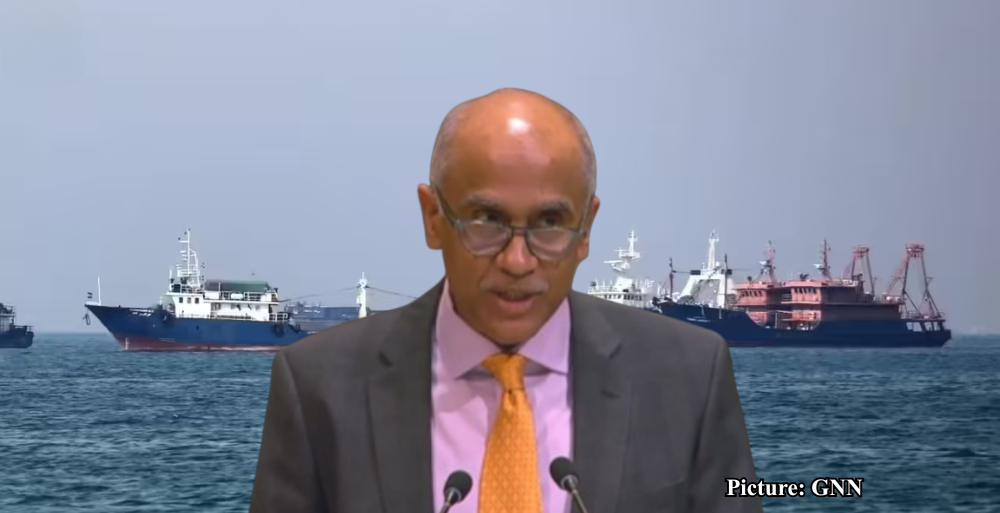
India raised concerns regarding recent attacks on commercial shipping in the Strait of Hormuz during a UN General Assembly meeting, while maintaining a neutral stance on the veto of a Security Council resolution by Russia and China aimed at Iran.
UNITED NATIONS — India expressed significant concern over the recent attacks targeting commercial shipping in the strategically vital Strait of Hormuz during a United Nations General Assembly meeting held to discuss the veto of a Security Council resolution. The resolution, which sought to address Iran’s actions in the region, was blocked by both Russia and China on April 7, prompting a wave of criticism from several nations including the United States and Israel.
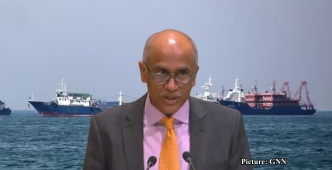
In his address to the General Assembly, India’s Permanent Representative emphasized the need for restraint and dialogue without directly taking sides in the ongoing dispute among major powers. “We have urged all states to promote dialogue and diplomacy and de-escalation of tensions, and to purposefully address underlying issues,” he stated. Furthermore, he highlighted the importance of respecting the sovereignty and territorial integrity of all nations involved.
Context of the UN Meeting
The UN meeting was convened under a procedural requirement that mandates permanent Security Council members to explain their vetoes before the General Assembly within a ten-day period. The resolution proposed by Bahrain called for Iran to cease its attacks on commercial shipping and to uphold freedom of navigation, a request that many nations deemed critical for regional stability.
Following the veto, which was defended by both Moscow and Beijing, the Indian envoy refrained from directly addressing the veto, but he did underscore India’s concerns regarding maritime security, particularly in the context of its energy needs. “An aspect of particular concern for India for its energy and economic security relates to commercial shipping through the Strait of Hormuz,” he remarked, indicating the significant reliance of India on energy imports, particularly from the Gulf region.
Strategic Importance of the Strait of Hormuz
The Strait of Hormuz is a crucial maritime corridor, responsible for approximately 20 percent of the world’s oil trade. Disruptions in this area have profound implications for global energy supplies and have already impacted India, which imports a substantial portion of its energy resources through this route. The Indian envoy went on to express his country’s dismay over the targeting of commercial vessels, stating, “We deplore the fact that commercial shipping was made a target of military attacks in this conflict.” He further noted that Indian seafarers had been among those casualties, emphasizing the unacceptable nature of such attacks on civilian vessels.
“We reiterate that the targeting of commercial shipping and endangering innocent civilian crew members, or otherwise impeding the freedom of navigation and commerce in the Strait of Hormuz, are unacceptable. International law in this regard must be fully respected,” he added.
Responses to the Veto
The diplomatic tensions stem from Iranian attacks on shipping following a series of joint military operations conducted by the United States and Israel against Iran in late February. In a related development, U.S. President Donald Trump recently imposed a naval blockade on Iranian ports as part of a broader strategy to curb Iranian influence in the region.
Despite its neutral stance on the veto, India had previously co-sponsored a resolution introduced by Bahrain on March 11 that condemned Iran’s attacks on neighboring countries. That resolution passed with the abstention of both Russia and China, reflecting a more assertive posture from India regarding Iranian actions.
During the UN General Assembly meeting, representatives from Russia and China defended their veto. Russia’s Deputy Permanent Representative Anna M. Evstigneeva characterized the resolution as one-sided, claiming it ignored the actions of Israel and the United States that also contributed to the ongoing conflict and could potentially escalate tensions further.
China’s Permanent Representative Fu Cong echoed this sentiment, stating that the resolution risked providing a “veneer of legitimacy for unauthorized military operations,” while still acknowledging the concerns raised by Gulf nations.
Criticism from the United States and Gulf States
Kuwait’s envoy, representing Gulf states and Jordan, criticized the veto, labeling the situation as “a clear and direct threat to international peace and security.” He indicated that a new resolution would be forthcoming following broader consultations among member states. On the other hand, U.S. Permanent Representative Mike Waltz sharply condemned Russia and China, accusing them of enabling Iran’s aggressive actions.
“They deliberately chose to turn a blind eye — and worse, chose to permit — Iran’s attacks on its neighbors, its terror against its own people, and its death grip that it’s attempting to place on the global economy,” Waltz stated. He further asserted that Iran’s actions could lead to a potential food crisis by blocking shipments, including essential fertilizers bound for South Asia, emphasizing the far-reaching implications of the ongoing tensions in the Strait of Hormuz.