The convergence of ideas from major Silicon Valley figures highlights a potential shift in U.S. tax policy as automation and artificial intelligence reshape the economy, prompting calls for a revamp of the tax code to better align with future labor dynamics.
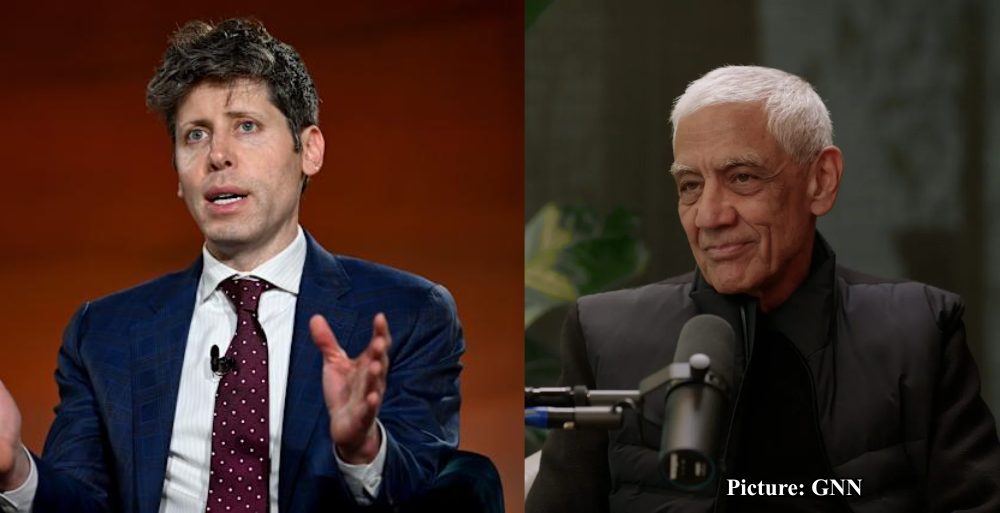
In a significant discussion on the future of the U.S. tax system, Vinod Khosla, a prominent venture capitalist and co-founder of Sun Microsystems, proposed eliminating federal income taxes for Americans earning less than $100,000 per year. This idea was presented during a March interview on Fortune’s Titans and Disruptors of Industry podcast. Khosla’s proposal comes amidst growing concerns regarding the economic impact of artificial intelligence (AI) and automation. He stated, “I can’t be fired. I’ve never worried about a career. I don’t need more money at age 71,” indicating a sense of urgency for reform among the wealthy elite who may not be directly affected by such changes.
Following Khosla’s remarks, OpenAI, a leading AI research organization, released a 13-page policy paper titled Industrial Policy for the Intelligence Age: Ideas to Keep People First. This document outlines a comprehensive economic reform agenda designed to address the challenges posed by the rapid advancement of AI technologies. The paper draws parallels to historical reforms such as the Progressive Era and Franklin D. Roosevelt’s New Deal, emphasizing the need for a radical restructuring of economic policies to safeguard against potential socioeconomic disruptions.
Tax Code Revisions Proposed
Khosla’s tax reform strategy advocates for a unified tax rate on all income—both labor and capital gains—while eliminating preferential rates for capital gains. He estimates that 40% of capital gains taxes are paid by individuals earning over $10 million annually, suggesting that this approach could financially support the exemption of lower-income earners from federal income tax without increasing the overall tax burden. In essence, Khosla believes that the current tax structure is ill-equipped for an economy increasingly dominated by automation.
OpenAI’s policy paper aligns with Khosla’s vision by proposing a shift in the tax base from payroll and labor income to corporate income and capital gains. The document also introduces the idea of a “robot tax,” which would impose levies on automated labor to ensure that a portion of the productivity gains benefits society at large, rather than being concentrated solely among capital owners. This proposal underscores a fundamental shift in the labor market, where AI is predicted to significantly reduce the number of jobs available.
The Economic Landscape of AI
Both Khosla and OpenAI underline the urgent need for policy changes, warning that the American tax system was designed during an era when human labor was the primary source of economic value. As Khosla noted, the traditional balance of income between labor and capital is shifting. “Capitalism was about economic efficiency,” he said, “but if the need for efficiency goes away because of extreme abundance, then why focus on efficiency?”
OpenAI’s most ambitious proposal involves the establishment of a nationally managed public wealth fund, which would be partially funded by AI companies. This fund would invest in diversified assets and distribute returns directly to American citizens, providing a safety net for those whose skills may become obsolete due to technological advancements. Khosla has expressed support for this initiative, further indicating a growing consensus among influential figures in the tech industry regarding the need for transformative economic policies.
Criticism and Political Challenges
Despite the ambitious proposals, skepticism remains. Critics, including Anton Leicht, a visiting scholar at the Carnegie Endowment for International Peace, have described OpenAI’s paper as “comms work to provide cover for regulatory nihilism,” suggesting that the company is using bold ideas to mask the rapid development of its technology without adequate safeguards. Additionally, the timing of the paper’s release coincided with a critical article in The New Yorker questioning CEO Sam Altman’s credibility on safety issues, raising concerns about the motivations behind these proposals.
The political landscape surrounding tax reform is complicated. Proposals to tax capital gains as ordinary income have previously faced significant opposition, leading to reactions such as Marc Andreessen’s support for Donald Trump after President Biden suggested taxing unrealized gains in 2024. OpenAI’s paper notably avoids specifying a corporate tax rate, hinting at an awareness of the political sensitivities involved.
California’s Billionaire Tax Debate
In a related context, Khosla is currently opposing California’s proposed Billionaire Tax Act, which would impose a one-time 5% tax on residents worth over $1 billion. Khosla has criticized this measure as detrimental to the state’s tax base, claiming it reflects a reckless approach to taxation. Reports suggest that this initiative has already prompted significant wealth flight from California, with notable figures like Google co-founders Larry Page and Sergey Brin taking steps to distance themselves from the state.
Khosla’s proposed reforms aim to create a tax framework that is palatable for both billionaires and voters, stating, “They will vote for a candidate who says no taxes if you make less than $100,000.” This appeal to the middle class is central to his strategy.
Urgency for Action
As technological advancements continue to evolve, both Khosla and OpenAI emphasize the diminishing window for implementing these reforms. Khosla predicts that substantial tax reform could emerge before 2040 and may play a pivotal role in future presidential campaigns. OpenAI’s paper advocates for automatic safety-net triggers to expand benefits in response to AI-induced job displacement, acknowledging the potential rapidity of such changes.
Goldman Sachs research indicates that AI is already resulting in approximately 16,000 job losses per month in the U.S., disproportionately affecting younger workers. OpenAI has also raised alarms about the possibility of advanced AI systems becoming autonomous, creating scenarios where they cannot be easily controlled or recalled.
In conclusion, the dialogue initiated by Khosla and codified in OpenAI’s policy paper raises critical questions about the future of work, taxation, and economic equity in an increasingly automated world. The pressing question remains whether policymakers can adapt swiftly enough to these transformative changes, with both Khosla and OpenAI positioning themselves at the forefront of this critical discourse.