
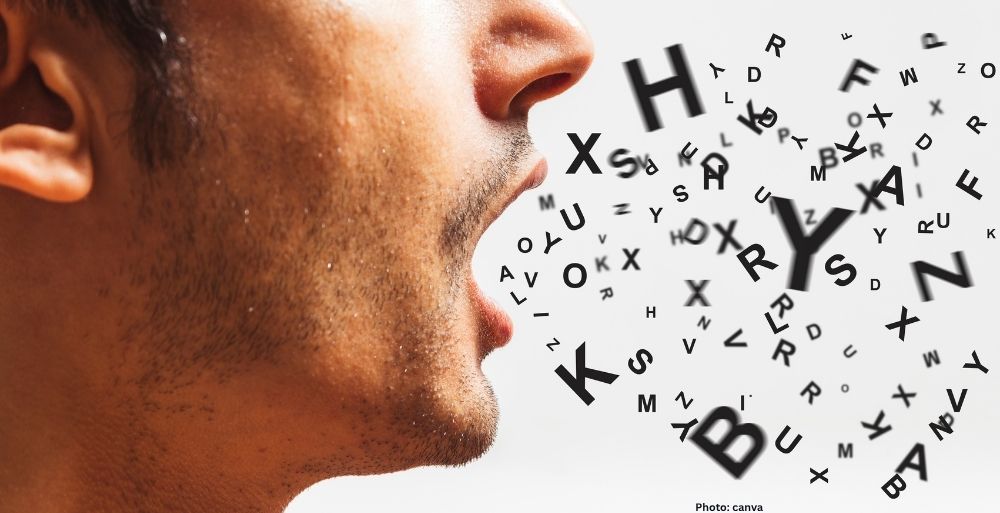
New peer-reviewed research indicates a significant and sustained decline in the number of words spoken daily by adults in Western societies, a trend that predates the COVID-19 pandemic. By analyzing data from 22 separate studies conducted between 2005 and 2019, researchers found that the average individual now speaks approximately 3,200 fewer words per day than they did fifteen years ago. This annual attrition of roughly 338 words suggests a profound shift in social interaction patterns, likely driven by the automation of service industries and the displacement of verbal dialogue by digital text-based communication. While younger demographics show the steepest decline, the trend spans all age groups, raising concerns among public health experts regarding the long-term impact on social cohesion and the ongoing “loneliness epidemic” cited by federal health officials.
TUCSON, Ariz. — For decades, the cadence of daily life was measured in the “incidental” conversations that filled the gaps of the workday: a brief exchange with a grocery clerk, asking for directions on a street corner, or the idle chatter shared with a neighbor over a fence. However, a new meta-analysis published in Perspectives on Psychological Science suggests these verbal threads are snapping.
Researchers at the University of Arizona and the University of Missouri–Kansas City have documented a steady, linear decline in human speech. According to the study, the average person is losing approximately 338 spoken words every year. Over the 14-year period analyzed, this cumulative loss represents a staggering 123,370 fewer words spoken annually per person.
The Accidental Discovery
The finding was not the original goal of the research team. Matthias Mehl, a professor of psychology at the University of Arizona, and Valeria Pfeifer, an assistant professor at the University of Missouri–Kansas City, originally set out to replicate a landmark 2007 study published in Science. That earlier paper focused on gender differences in talkativeness, famously debunking the myth that women speak significantly more than men.
When Pfeifer began analyzing word counts from a new cohort of 2,200 participants across 22 different studies, the data produced an anomaly. In 2007, the estimated daily average was approximately 15,900 words. By 2019, that average had plummeted to 12,700.
“I told her there had to be a mistake,” Mehl said, reflecting on the initial data review. “But she rechecked everything, and the number held. Something had genuinely changed.”
The researchers utilized the Electronically Activated Recorder (EAR), a methodology that captures periodic acoustic snippets of a participant’s day-to-day life. Because the 22 studies involved—which ranged from research on breast cancer coping mechanisms to the social effects of meditation—were not originally about word counts, the participants were “blind” to the hypothesis. This effectively ruled out the possibility that subjects were consciously altering their speech patterns.
Analyzing the Data: Age and Velocity
The decline is not distributed equally across all demographic sectors, though it is universal. When the research team bifurcated the sample by age, they found that those under the age of 25 are losing spoken language at a significantly faster rate than their older counterparts.
- Adults Under 25: Lost an average of 452 spoken words per year.
- Adults 25 and Older: Lost an average of 314 spoken words per year.
This disparity suggests that “digital natives”—those who grew up with smartphones as their primary interface for the world—are more susceptible to substituting vocalization with text. However, the fact that older adults are also seeing a decline of over 300 words per year indicates that the shift is not merely a generational preference, but a structural change in how society functions.
The Erosion of Incidental Interaction
The political and social landscape has shifted toward “frictionless” commerce, a movement that prioritizes efficiency over human interaction. The proliferation of self-checkout kiosks, GPS-guided navigation, and mobile ordering apps has systematically removed the necessity for what sociologists call “weak tie” interactions.
“We’ve lost a lot of small, incidental conversations,” Mehl noted. “Asking a cashier for help, getting directions from a stranger, chatting with a neighbor. These moments add up.”
From a policy perspective, this loss of “social capital”—the networks of relationships among people who live and work in a particular society—has caught the attention of public health advocates. In 2023, the U.S. Surgeon General issued a formal advisory on the “Epidemic of Loneliness and Isolation,” noting that a lack of social connection can be as damaging to health as smoking 15 cigarettes a day. The loss of 338 words a year serves as an objective, measurable metric for this atmospheric thinning of social bonds.
Digital Substitution vs. Social Wholeness
A central question for researchers is whether text-based communication—texting, Slack, and social media comments—replaces the psychological benefits of the spoken word. While the “raw output” of words across all channels may be stable or even increasing, Mehl argues that the medium is inseparable from the message.
“Spoken words carry something that typed words often don’t—presence, tone, the spontaneity of a real exchange,” Mehl said. The study posits that the lack of paralinguistic cues (inflection, volume, and rhythm) in digital text may leave individuals feeling “socially malnourished” even if their total word count remains high.
Looking Toward a Post-2019 Reality
The dataset concluded in 2019, just months before the COVID-19 pandemic forced global populations into unprecedented levels of isolation. While the researchers do not have hard data for the 2020–2025 period, the consensus is that the trend likely accelerated.
The pandemic normalized “contactless” everything—from grocery delivery to remote work—further entrenching the habits that lead to verbal decline. If the linear trend of losing 338 words per year continued through the pandemic, the average person in 2025 might be speaking fewer than 11,000 words a day—a nearly 30% drop since 2005.
The researchers emphasize that their data primarily reflects Western, individualistic societies. In more collectivistic cultures, where communal living and face-to-face commerce remain the norm, the verbal decline may be less pronounced, though further study is required to confirm global patterns.
As policymakers grapple with rising rates of depression and anxiety, the “missing words” identified by Mehl and Pfeifer provide a somber data point for a society that is becoming quieter, one year at a time.
Tags: Spoken Word Decline, Social Isolation, Loneliness Epidemic, Psychology Research, Digital Communication, Matthias Mehl, University of Arizona, Human Interaction, Behavioral Trends, Public Health Crisis