


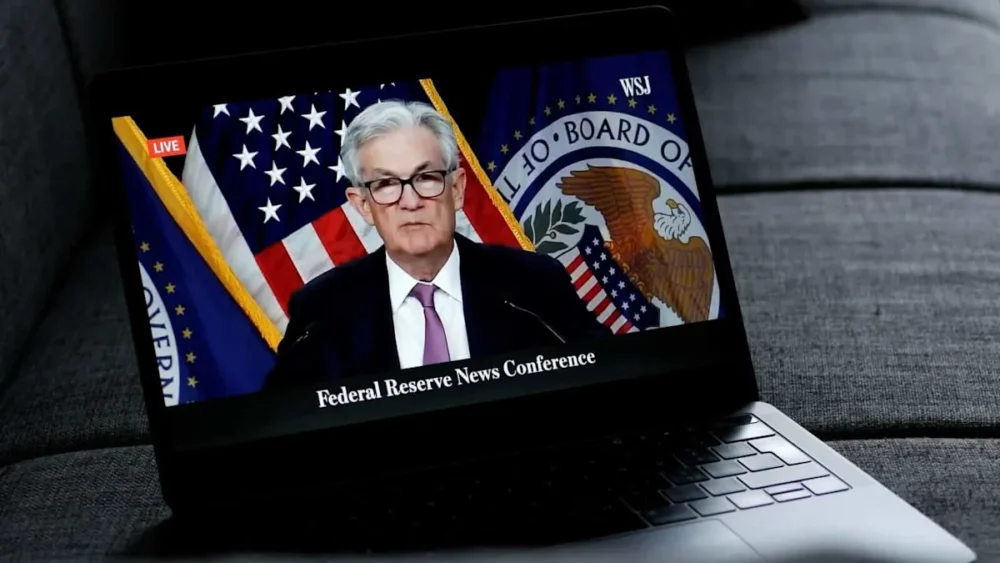
Federal Reserve Chair Jerome Powell struck a cautious tone in his annual Jackson Hole address, highlighting an economy under pressure from tariffs, immigration limits, and policy uncertainty.
Powell noted that U.S. GDP growth has slowed sharply, while job creation has dwindled to around 35,000 per month in recent months, pushing unemployment close to 4.2%. He cautioned that both demand and supply are facing “multiple shocks” — from trade restrictions raising costs to tighter labor supply reducing momentum.
While not declaring a recession, Powell acknowledged the slowdown as significant, with inflation still complicated by tariff-driven price pressures. He emphasized that monetary policy is already restrictive and said the Fed is “much closer to neutral” than a year ago, signaling that future adjustments will be data-driven and measured.
Markets interpreted his remarks as a hint toward rate cuts should labor conditions weaken further. Stocks rallied on expectations of monetary easing, reflecting the classic “bad news is good news” response: softer economic data increasing the likelihood of policy relief that supports equity valuations.
Powell also unveiled the Fed’s updated five-year framework, moving away from the “makeup strategy” adopted in 2020 and reaffirming a flexible inflation-targeting approach. The shift is intended to simplify communication and allow quicker responses to changing economic conditions.
Still, Powell warned that risks remain. If tariffs and supply bottlenecks intensify, the Fed could end up easing policy into an economy constrained by costs — a scenario that might initially boost markets but carry longer-term inflation risks.
In short, Powell’s message was clear: the economy is losing steam, uncertainty is elevated, and while the Fed stands ready to act, the path ahead for growth and inflation remains highly unpredictable. For now, however, investors view the prospect of earlier rate cuts as bullish for equities, even against a darker economic backdrop.