



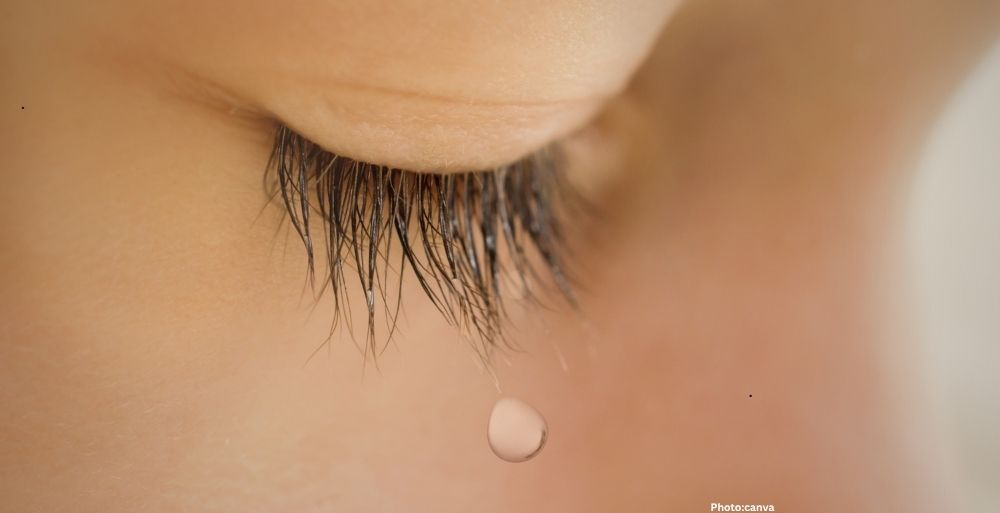
A recent study has revealed that the emotional benefits of crying depend on the underlying reasons for the tears, challenging common perceptions about the immediate relief often associated with a good cry.
A study conducted by researchers from Karl Landsteiner University has shed new light on the emotional impacts of crying, suggesting that the benefits of tears are highly contingent on their triggers. This research, published in the journal Collabra: Psychology, indicates that while many people believe that crying offers instant emotional relief, the reality is more nuanced and depends on various factors.
Historically, much of the research surrounding crying has been confined to controlled laboratory settings or retrospective surveys where participants recall their emotional experiences. Such methods can introduce biases, as individuals may either withhold tears in a lab environment or misremember their feelings over time. Professor Stefan Stieger, who led the study, expressed surprise at the limited research conducted in naturalistic settings, emphasizing the importance of understanding crying as a fundamental human behavior.
Study Methodology
To investigate the effects of crying in real-life contexts, the researchers studied a group of 106 adults over a four-week period. The participants, primarily women from Austria and Germany with an average age of 29, utilized a customized mobile application designed to track their emotional experiences in real-time. Whenever a participant cried, they were prompted to log the event immediately, documenting the trigger, intensity, duration of the crying, and their emotional state.
The app also reminded participants to report their emotional conditions at intervals of 15, 30, and 60 minutes after crying, allowing the researchers to monitor mood changes closely. Additionally, an end-of-day survey was used to capture any crying episodes that might have been overlooked during the day, providing a comprehensive view of the participants’ emotional states.
Findings and Analysis
The results indicated that crying is a common behavior, with nearly 87 percent of participants reporting at least one crying episode during the study. On average, participants cried around five times over the month, with a total of 315 logged events and an additional 300 incidents reported in the end-of-day surveys. Notably, women cried more frequently than men, averaging nearly six episodes compared to just under three for men. Furthermore, women’s crying episodes tended to last longer and occur with greater intensity.
Different emotional triggers led to varying crying patterns between genders. Women were more likely to cry due to personal distress, such as loneliness or conflicts with loved ones, while men often cried in response to feelings of helplessness or emotional reactions to media, such as sad films. The most common trigger for crying across all participants was media consumption, with episodes related to feelings of overwhelm or loneliness lasting the longest, approximately 11 to 13 minutes.
Notably, the study did not find conclusive evidence that crying universally leads to immediate emotional relief. According to Stieger, this finding was unexpected. Instead, the emotional aftermath of crying was closely linked to the specific reasons behind the tears. For instance, individuals who cried due to personal struggles experienced significant drops in positive emotions and marked increases in negative feelings, which often persisted for an extended period. Those who cried from feelings of overwhelm reported diminished positive emotions even one hour later, with their overall mood remaining affected throughout the day; however, by the following morning, their emotions returned to baseline levels.
Conversely, crying triggered by media content resulted in an initial decrease in both positive and negative emotions, but negative feelings tended to lessen within an hour, suggesting that emotional responses to films might eventually lead to soothing effects. Tears of harmony, such as those shed in response to kindness, did not produce immediate emotional changes but led to reduced negative emotions approximately 15 minutes later. Interestingly, crying due to feelings of helplessness caused a rapid decline in positive emotions, with participants returning to their emotional baseline within just 15 minutes.
Limitations and Future Research
While the study offers valuable insights into the emotional nuances of crying, it also presents limitations. The reliance on self-reported data may lead to inaccuracies in participants’ emotional assessments, and some minor or fleeting crying episodes could have been overlooked. Additionally, the study design did not allow for comparisons between crying and experiencing similar strong emotions without shedding tears, leaving questions about whether the observed mood changes were specifically due to crying or the intense emotional experiences themselves.
Looking ahead, Stieger commented that while no further studies on this specific topic are currently planned, the methodology employed—using multiple daily measurements through smartphone applications—holds promise for analyzing human behavior in everyday life. The study was co-authored by Hannah Graf and Sophie Biebl and titled “Effects of Crying on Affect: An Event-based Experience Sampling Study of Adult Emotional Crying.”