


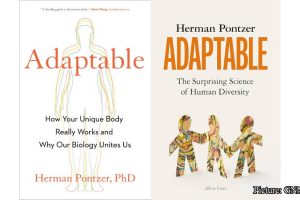







Herman Pontzer’s new book, ‘Adaptable,’ highlights how human adaptability—rooted in both biology and culture—enables our species to thrive across diverse environments, while addressing common misconceptions about health and genetics.
Durham, NC — In his forthcoming book, Adaptable: How Your Unique Body Really Works and Why Our Biology Unites Us, Professor Herman Pontzer of Duke University delves into the remarkable adaptability of humans, a trait that has allowed our species to inhabit nearly every corner of the planet. Scheduled for release on March 31, 2025, the book has already been recognized as a finalist for the prestigious PEN/E.O. Wilson Literary Science Writing Award.
Pontzer, a leading figure in evolutionary anthropology and global health, draws on his extensive research, including work with the Hadza community in Tanzania, to illustrate how our physical and biological traits have evolved in response to environmental challenges. He emphasizes that the unique interplay between genetics and local environments has shaped the incredible diversity observed in human populations today.
Understanding Human Adaptability
According to Pontzer, the capacity for adaptability is a defining characteristic of Homo sapiens. In a recent interview, he explained, “That’s why there’s 9 billion of us and not 9 billion of some other primate.” This adaptability is not solely biological; it extends to cultural innovations like clothing, shelter, and social structures, which have also played crucial roles in human survival.
Pontzer’s previous work, notably Burn, explored metabolic processes, and he notes that misconceptions about human biology can lead to misunderstanding broader health issues. He remarks, “There’s just a lot of misunderstanding and misinformation about just how the body works in general. It’s not just our metabolism.” This highlights the urgent need for clear communication of scientific concepts to the public.
Insights on Human Physiology
In discussing the human body, Pontzer points to often-overlooked organs such as the kidneys, which filter approximately 180 liters (around 47.5 gallons) of water daily. He emphasizes that while many are aware of the importance of hearts and brains, the kidneys are essential for detoxification and water regulation, showcasing the body’s efficient systems that evolved to handle the demands of a dry environment.
Another fascinating example comes from the Sama people of the Philippines, who exhibit larger spleens as a result of their underwater foraging lifestyle. Pontzer explains that certain genetic traits, such as these larger spleens, can become prevalent in specific populations due to natural selection, which favors traits that enhance survival in particular environments.
The Mechanisms of Local Adaptation
Local adaptations occur when specific traits become more common in a population due to environmental pressures that enhance survival and reproductive success. Pontzer clarifies that for a trait to be considered a local adaptation, it must provide a survival advantage in a specific environment over generations.
He cites skin color as a prime example of a trait influenced by local adaptation, shaped by ultraviolet light exposure. Variations in skin tone across different latitudes reflect historical selection pressures faced by human populations. Similarly, high-altitude adaptations in populations residing in the Himalayas illustrate how environmental factors can drive evolutionary changes.
Challenges in Misinterpretation
Pontzer warns against misinterpretations of local adaptations, particularly concerning health disparities. He notes that discussions linking genetics to increased susceptibility to diseases, such as heart disease in Black Americans, do not hold up under scrutiny, as the selection pressures affecting heart health have been consistent across all human populations. He emphasizes that traits beneficial for overall health have been universally selected for, thereby challenging harmful stereotypes and misconceptions.
Nature, Nurture, and Epigenetics
In addressing the complex interplay of genetics and environment, Pontzer discusses the role of epigenetics—how environmental factors can influence gene expression. He describes how stressors can lead to changes in gene function that may persist across generations, potentially impacting offspring. While research in this area is still developing, Pontzer believes it represents a promising frontier in understanding human biology.
Implications for Modern Society
Pontzer highlights that the modern environment stands in stark contrast to the hunter-gatherer lifestyle that shaped our species for millennia. The rapid changes in our living conditions—marked by sedentary lifestyles and processed foods—have led to a mismatch that can contribute to various health issues, including obesity and heart disease.
In his book, Pontzer aims to equip readers with a framework for understanding biological diversity and health-related debates that they may encounter in the media. He encourages critical thinking, urging readers to recognize that diversity is multilayered and that traits like skin color do not encapsulate the entirety of an individual’s biology or health. His hope is that readers will be empowered to engage with scientific discussions, particularly on pressing issues such as vaccination and public health.
A Call to Explore Diversity
Pontzer concludes by emphasizing the richness of human diversity and adaptability, which, he argues, is our greatest strength. By understanding the complexities of how we adapt to our environments—both biologically and culturally—individuals can gain insights that extend beyond personal health to encompass broader societal issues. As the world continues to confront challenges, from health crises to environmental changes, embracing this adaptability will be crucial for our future.