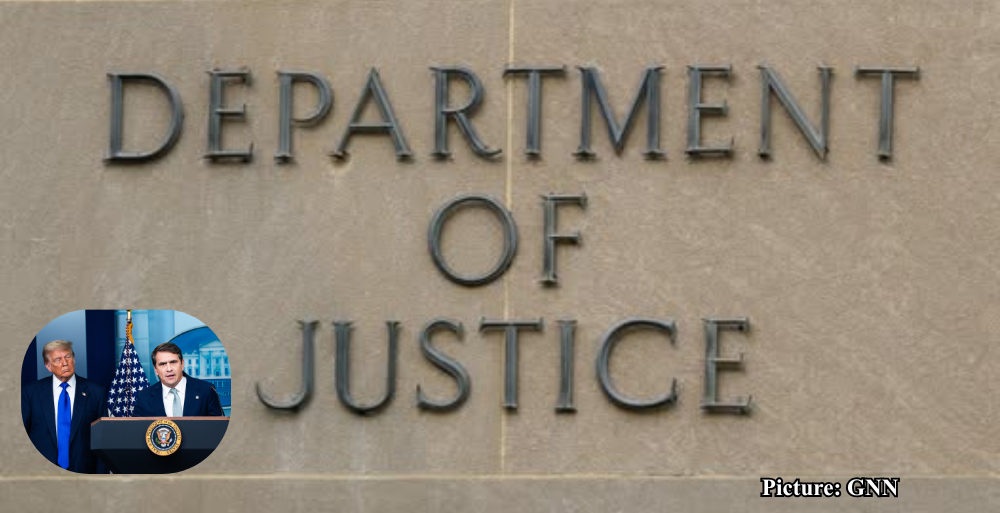
The Justice Department’s recent ruling that the Presidential Records Act is unconstitutional raises critical questions regarding the preservation of presidential documents and the balance of power between Congress and the executive branch.
Washington — On April 2, 2026, the U.S. Department of Justice issued an opinion declaring the Presidential Records Act (PRA) unconstitutional. This law, enacted in the aftermath of the Watergate scandal, mandates that presidents preserve certain documents and transfer them to the National Archives at the conclusion of their administrations. The ruling, articulated by Assistant Attorney General T. Elliot Gaiser, who leads the Office of Legal Counsel, challenges the established norms governing presidential documentation and raises significant implications for future administrations.
Historical Context of the Presidential Records Act
The PRA was enacted in 1978, a response to the fallout from President Richard Nixon’s resignation amid the Watergate scandal, which highlighted the need for greater transparency and accountability in presidential record-keeping. The Act asserts that presidential records are the property of the U.S. government rather than the individual president, requiring outgoing presidents to transfer their records to the National Archives, an agency responsible for preserving and providing access to these materials.
This legislation covers records generated by the president, vice president, and specific components of the Executive Office, such as the National Security Council. It mandates the preservation of documents related to presidential duties, including communications such as emails, text messages, and phone records, while explicitly excluding personal records that are deemed to be of a “purely private or nonpublic character.”
Legal Opinion and Its Findings
In his opinion, Gaiser asserted that the PRA oversteps the constitutional authority granted to Congress, stating it “aggrandizes the legislative branch” at the expense of the executive branch’s independence, as outlined in Article II of the U.S. Constitution. Gaiser argues that the Act does not constitute a valid exercise of Congress’s Article I powers and imposes an onerous regulatory framework without a legitimate legislative purpose.
This determination implies that, according to the Justice Department’s interpretation, former President Donald Trump is not obligated to comply with the PRA. Trump has faced scrutiny following his indictment in 2023 for allegedly mishandling sensitive government records after leaving office in January 2021. Special counsel Jack Smith pursued a case alleging that Trump retained classified documents at his Mar-a-Lago resort in Florida, ignoring repeated requests from the National Archives for their return.
Trump has consistently denied any wrongdoing, asserting that he was entitled to retain the materials under the provisions of the PRA. His legal challenges surrounding these documents have become increasingly complex, culminating in his re-election to the presidency in November 2024, which adds layers to the ongoing discussion regarding presidential documentation.
Implications for Future Administrations
The opinion issued by the Office of Legal Counsel carries both immediate and long-term consequences for the management of presidential records. By deeming the PRA unconstitutional, the Justice Department’s stance may embolden future presidents to overlook record-keeping obligations, potentially undermining the principles of accountability and transparency that the PRA was designed to uphold.
While the Office of Legal Counsel provides critical legal guidance to the president and federal agencies, its opinions do not possess the force of law unless affirmed by a court. If a judicial body interprets the PRA differently, such a ruling would take precedence over the executive branch’s legal interpretations.
Broader Legal and Political Consequences
The ruling not only affects the handling of presidential records but also speaks to broader issues of executive power and congressional authority. The potential for a president to ignore record-keeping laws without legal repercussions could lead to significant changes in how historical documents are preserved and accessed in the future. This shift raises concerns among historians, legal experts, and accountability advocates regarding the potential erosion of democratic oversight mechanisms.
The debate surrounding the PRA and its enforcement is likely to persist, particularly as the political landscape evolves. Critics of the ruling argue that it sets a dangerous precedent that could allow future presidents to operate with less transparency, complicating efforts to hold them accountable for their actions while in office.
Conclusion
The Justice Department’s determination that the Presidential Records Act is unconstitutional has ignited a vital conversation about the preservation of presidential documents and the separation of powers within the U.S. government. As this legal discourse continues, the ramifications of this ruling will likely influence the responsibilities of future presidents with respect to their records and the extent of congressional authority in regulating the executive branch. The evolving understanding of this law will play a crucial role in shaping the future of presidential accountability and transparency.