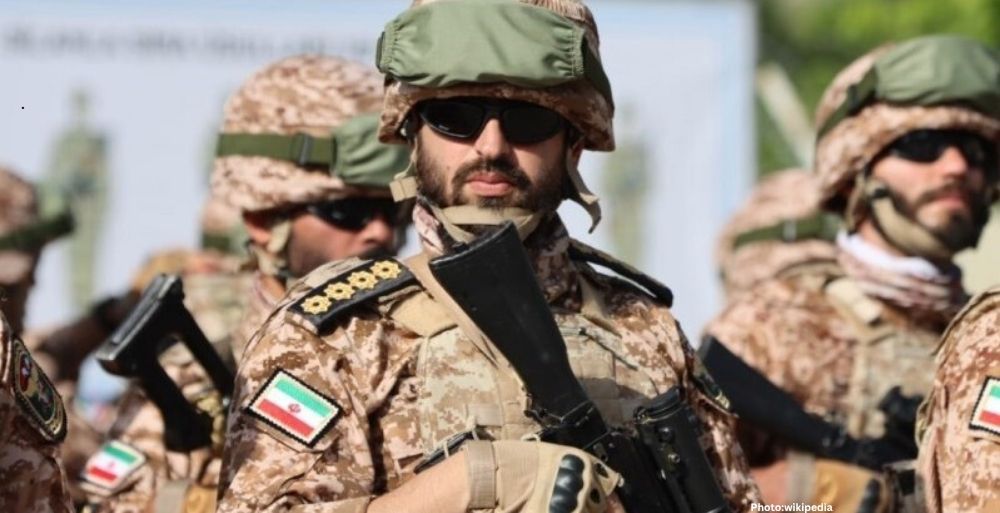
The Islamic Revolutionary Guard Corps (IRGC) has reportedly taken de facto control over critical areas of governance in Iran, resulting in a political stalemate between President Masoud Pezeshkian’s administration and the military establishment.
Tehran, Iran – In a significant shift in Iran’s political landscape, the Islamic Revolutionary Guard Corps (IRGC) is reported to have assumed de facto control over key areas of governance, leading to escalating tensions between President Masoud Pezeshkian and the military establishment. This development has raised serious concerns regarding the functionality of the Iranian government, with sources indicating that the IRGC has systematically obstructed several presidential decisions, including key appointments.
According to a report by Iran International, a Persian-language news channel based in London, the friction between Pezeshkian’s administration and the IRGC has escalated to the point where a “complete political stalemate” has emerged. Officials familiar with the situation revealed that the IRGC has tightened its grip on the central power structure, significantly limiting the government’s ability to execute its executive functions.
Failed Appointments and Military Intervention
One notable instance of this power struggle occurred when President Pezeshkian attempted to appoint a new intelligence minister. This effort reportedly collapsed due to direct intervention from IRGC commander Ahmad Vahidi, who asserted that sensitive leadership positions should remain under IRGC oversight, particularly in light of the ongoing wartime environment in the region.
Traditionally, the President of Iran nominates candidates for the Intelligence Minister position only after securing the Supreme Leader’s approval. However, uncertainty surrounding the condition and location of Supreme Leader Mojtaba Khamenei has complicated this process. Recent reports suggest that Khamenei’s increasing security measures and lack of communication with Pezeshkian have emboldened the IRGC, allowing it to solidify its control over the security apparatus.
Heightened Security Measures
Sources indicate that the tightening security measures surrounding Khamenei are among the reasons for the IRGC’s strengthened grip. A council of senior IRGC officials is now reportedly dominating core decision-making processes, contributing to the growing disconnect between the President and the Supreme Leader’s office. Despite Pezeshkian’s attempts to secure a direct meeting with Khamenei, communications appear to have been effectively severed.
Concerns regarding Khamenei’s health have also become a focal point of speculation regarding the current power dynamics within Iran. Reports suggest that the Supreme Leader’s condition may be influencing the IRGC’s actions and the overall governance structure of the country. The atmosphere of uncertainty surrounding Khamenei has arguably provided the IRGC with the opportunity to extend its influence, as it navigates the evolving political landscape.
Internal Discontent and Power Struggles
In addition to the tensions between the IRGC and the presidency, internal disputes within Khamenei’s inner circle have emerged. According to reports, some insiders are advocating for the removal of Ali Asghar Hejazi, a senior security official in the Supreme Leader’s office. Hejazi has opposed the notion of Mojtaba Khamenei’s succession, arguing against hereditary leadership and cautioning members of the Assembly of Experts regarding the younger Khamenei’s qualifications.
This internal discord reflects deeper divisions within the Iranian leadership and raises questions about the future direction of governance in the country. As the IRGC continues to assert its influence, the implications for democratic processes and civil governance in Iran remain uncertain. The IRGC’s increasing involvement in political affairs could pose significant challenges for Pezeshkian’s efforts to establish authority and implement reforms.
The Historical Context of IRGC’s Power
The situation reflects a broader historical context in which the IRGC has gradually expanded its role beyond military functions to encompass significant political and economic influence in Iran. Established after the 1979 Islamic Revolution, the IRGC has evolved into a powerful institution that not only defends the Islamic Republic but also plays a critical role in national politics and the economy.
Over the years, the IRGC has been accused of undermining democratic processes and exerting control over various spheres of Iranian life, including the media and civil society. This shift raises important questions about the balance of power within the Iranian government and the potential for reform under Pezeshkian’s leadership. Observers note that Pezeshkian, who assumed the presidency in 2025, has tried to position himself as a moderate leader advocating for engagement with the West and economic reforms.
Implications for Governance and International Relations
As the political landscape continues to evolve, observers are closely monitoring how these power dynamics will affect Iran’s domestic policies and its position on the international stage. The IRGC’s control could hinder any efforts by Pezeshkian to reach out to Western powers or address the pressing economic challenges facing Iran, particularly amid ongoing sanctions and international isolation.
The political stalemate and the IRGC’s growing influence present formidable obstacles to governance, potentially leading to a scenario where the military establishment increasingly dictates policy decisions, sidelining civilian leadership. This trend could have far-reaching implications not only for the Iranian populace but also for regional stability and international relations.
In conclusion, the evolving power dynamics between the IRGC and President Pezeshkian underscore the complexities of governance in Iran, where military and civilian authorities must navigate a delicate balance. The implications of these developments are likely to resonate beyond Iran’s borders, affecting geopolitical considerations in the Middle East and challenging efforts toward diplomatic engagement.