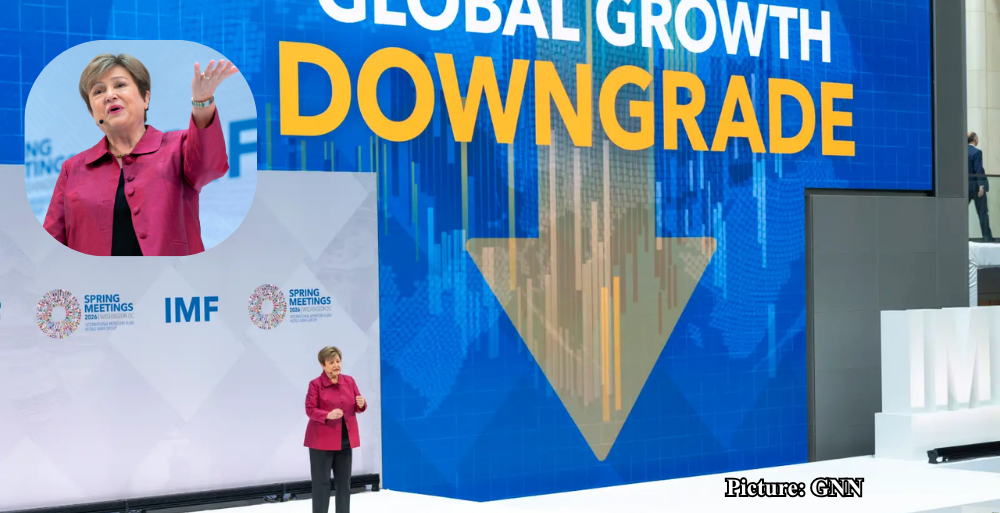
The International Monetary Fund’s Managing Director Kristalina Georgieva has announced a forthcoming downgrade in the global growth forecast due to the ongoing conflict in Iran, emphasizing the significant economic ramifications that could ensue.
WASHINGTON (AP) — The International Monetary Fund (IMF) has raised alarms about the potential impacts of the war in Iran on the global economy, signaling a downgrade in its growth forecasts that will be released next week. In remarks made on Thursday, Kristalina Georgieva, the IMF’s Managing Director, indicated that the ongoing conflict has substantially altered the economic landscape, which had previously shown signs of resilience.
“Had it not been for this shock, we would have been upgrading global growth,” Georgieva stated ahead of the upcoming IMF-World Bank spring meetings. “But now, even our most hopeful scenario involves a growth downgrade.” Her comments reflect a stark change from the more optimistic outlook that the IMF had projected just a few months ago.
Historical Context and Previous Outlook
In January 2026, the IMF had upgraded its global growth forecast to 3.3%, citing resilience against various economic challenges, including the tariffs imposed by former President Donald Trump on imports from numerous nations. This optimism was predicated on a recovery trajectory that appeared sustainable until the onset of the conflict in Iran, which began on February 28, 2026.
The conflict has had immediate and far-reaching effects on global markets. Since the war commenced, disruptions have led to significant increases in oil and natural gas prices. Damage to key energy infrastructures, such as oil refineries and tanker terminals, has further complicated the situation. Additionally, the conflict has disrupted vital shipments of fertilizer, critical for agricultural production worldwide, thereby posing risks to food security and economic stability.
Ceasefire Developments and Economic Implications
On Tuesday, the United States and Iran announced a ceasefire, a development that followed President Trump’s urgent warning about the catastrophic consequences of continued hostilities. Despite this temporary reprieve, Georgieva underscored that the economic repercussions of the war would linger. “Growth will be slower — even if the new peace is durable,” she remarked, indicating that the road to recovery would be fraught with challenges.
The IMF’s assessment highlights that while a ceasefire may alleviate immediate tensions, it does not automatically translate into economic stability. The fallout from the conflict has already shaken business and consumer confidence, leading to uncertainty that could persist even with a cessation of hostilities.
Vulnerabilities in the Global Economy
Georgieva pointed out that regions such as Sub-Saharan Africa and small island countries are particularly vulnerable to the energy shocks stemming from the Iranian conflict. These regions often lack the financial resilience to absorb sudden increases in energy costs, which threaten to exacerbate existing economic challenges.
Many governments globally are constrained in their ability to respond effectively due to historically high levels of public debt. This financial limitation restricts their capacity to implement necessary fiscal measures, such as increasing public spending or enacting tax cuts. As a result, countries may struggle to provide the support needed to buffer their economies against the shocks caused by rising energy prices.
Policy Responses and Recommendations
In response to the energy crisis, various countries have initiated measures aimed at mitigating adverse effects on their economies. These actions include encouraging remote work, promoting the use of public transportation, and limiting travel by public officials to reduce energy consumption. Such initiatives reflect a proactive approach to stabilize local economies amidst rising costs.
Georgieva also urged policymakers to exercise caution in their responses, warning against unilateral actions that could exacerbate the crisis. “Be careful not to make things worse with ‘go-it-alone’ moves such as limiting exports and imposing price controls. Don’t pour gasoline on the fire,” she stated. This cautionary advice underscores a broader concern among economic leaders regarding the potential for protective measures to backfire, leading to increased instability in both local and global markets.
Looking Ahead: IMF Forecasts
As the IMF prepares to release its updated forecasts next week, the global economic community is poised to closely monitor how the ongoing conflict in Iran and the associated energy shocks will shape economic prospects in the near future. The interplay between geopolitical events and economic performance remains a critical focus for both policymakers and analysts.
The ramifications of the Iran war extend beyond immediate economic indicators, affecting global trade dynamics, energy security, and international relations. As nations navigate this complex landscape, the IMF’s forthcoming forecasts will provide essential insights into the potential pathways for recovery and growth in a world increasingly affected by geopolitical tensions.