House Democrats faced a significant setback in their efforts to limit President Donald Trump’s war powers over Iran as a resolution to this effect was blocked by Republican procedural maneuvers. This event underscores the ongoing complexities of U.S. foreign policy amidst a fragile ceasefire in the Middle East.
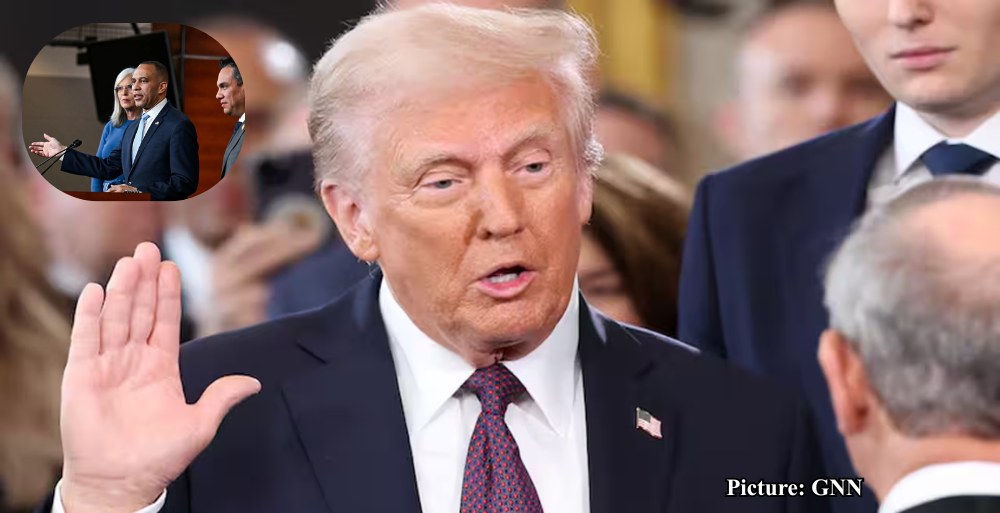
On Thursday, April 6, 2023, House Democrats attempted to advance a resolution aimed at curbing President Donald Trump’s war powers concerning Iran. However, the initiative was thwarted when Republican pro forma speaker Chris Smith did not recognize Democratic lawmakers who sought to address the chamber during the vote. This failure reflects the broader partisan tensions that have characterized Congressional discussions on military engagement in the Middle East.
The resolution was put forward using a unanimous consent procedure, allowing for legislation to pass without formal debate or a recorded tally, provided that no member objects. Unfortunately for the Democrats, it was widely anticipated that Republicans would block the measure, and they did so effectively. Representative Glenn Ivey, a Democrat from Maryland, sought recognition on the floor to discuss the resolution but was met with immediate termination of the session by Smith. This maneuver triggered vocal dissent from several Democratic representatives present in the chamber, who expressed their frustrations over the procedural blockade.
Context of Military Tensions in the Middle East
The timing of this legislative push coincided with a precarious ceasefire in the Middle East, highlighting the urgency many lawmakers feel regarding U.S. military involvement in the region. The ceasefire, which was announced earlier that week, has already demonstrated signs of significant strain. Reports indicate that Israel has continued military operations in Lebanon, asserting that its actions are aimed at targeting Hezbollah. In contrast, Iran has accused Israel of violating the terms of the ceasefire, a claim that both the United States and Israel have rejected.
This ongoing military activity has led to a catastrophic humanitarian situation in Lebanon, with local authorities reporting at least 254 deaths and 837 injuries as a result of recent strikes. Additionally, significant infrastructure has been damaged, leaving parts of central Beirut in ruins. The situation has drawn criticism and concern from various international observers and organizations.
Adding to the tensions, Iran has reportedly halted oil tanker traffic through the Strait of Hormuz, according to Fars News, shortly after some vessels were allowed passage. This decision underscores the volatile nature of the geopolitical landscape in the region. Republican Senator JD Vance has characterized the ceasefire as “fragile,” while UN Secretary-General António Guterres warned that continued Israeli military activities in Lebanon pose a “grave risk” to the ceasefire agreement.
Legislative Challenges and Democratic Response
In light of the deteriorating circumstances in the Middle East, House Minority Leader Hakeem Jeffries expressed the need for immediate Congressional action. In a letter to his colleagues, Jeffries articulated his doubts about the effectiveness of the two-week ceasefire, labeling it “woefully insufficient.” He called for the House to return from its recess to vote on a resolution aimed at permanently ending U.S. military operations in the region.
However, the House is currently on a two-week recess, with formal votes scheduled to resume on April 14. This recess limits the immediate legislative options available to Democrats seeking to address the ongoing conflict and the broader implications of U.S. military policy in the Middle East.
The lack of bipartisan support has emerged as a significant barrier to passing any war powers resolution. Representative Nancy Mace, a Republican who had previously indicated a willingness to support Democratic efforts, is now viewed as unlikely to break ranks with her party. Meanwhile, Representative Don Bacon, a Republican and retired one-star general who had previously backed a war powers measure limiting Trump’s policies regarding Venezuela, stated that he would consider the proposal but emphasized his priority in defeating Iran, which he accused of having “murdered Americans for 47 years.”
Senate Considerations and Implications for U.S. Foreign Policy
As discussions around war powers continue, Senate Minority Leader Chuck Schumer announced that the Senate would also consider a war powers resolution concerning Iran when they reconvene next week. This indicates that the legislative discourse surrounding U.S. military engagement in the Middle East is far from over, even as partisan divisions remain stark.
The failed resolution in the House illuminates the ongoing challenges lawmakers face regarding foreign policy and military engagement, particularly concerning Iran. This situation reflects a broader concern among many members of Congress regarding the implications of prolonged military involvement overseas, especially in regions marked by instability and conflict.
As tensions persist and the geopolitical landscape continues to evolve, the legislative environment in Congress is likely to remain contentious. Lawmakers will need to navigate the complexities of national security considerations while also addressing the concerns of their constituents regarding military engagement and its ramifications.
This incident serves as a reminder of the intricate balance Congress must strike in its role overseeing foreign policy, particularly in relation to military powers granted to the executive branch. As the U.S. grapples with its strategic approach in the Middle East, the questions surrounding war powers and Congressional authority remain more pertinent than ever.