New Device Combines Slow-Release Drug Delivery and Micro-Transducers to Bypass the Blood-Brain Barrier and Destroy Residual Cancer Cells
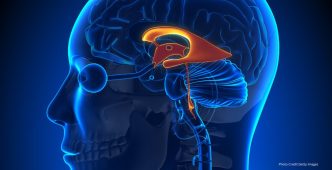
CAMBRIDGE, Mass. — For patients battling glioblastoma, one of the most aggressive and lethal forms of brain cancer, surgical resection is standard practice. Yet even the most skilled neurosurgeons rarely remove every microscopic cancer cell, leading to nearly inevitable tumor recurrence.
Now, a team of researchers at the Massachusetts Institute of Technology (MIT) has engineered a breakthrough implantable device designed to hunt down and destroy those remaining rogue cells. Dubbed LUCID (Long-term Ultrasound-enhanced Convective Injection Device), the flexible, cardstock-thin implant combines prolonged drug delivery with targeted sound waves to push life-saving therapeutics deeper into brain tissue.
The study detailing the technology was published today in the journal Device.
Overcoming the Brain’s Natural Defenses
Glioblastoma is a devastating diagnosis, claiming slightly more than 10,000 cases annually in the United States, with an average post-diagnosis survival rate of just 12 to 15 months. Current post-surgical treatments typically rely on systemic chemotherapy or radiation. However, standard oral or intravenous drugs struggle to reach therapeutic concentrations in the brain due to the blood-brain barrier—a tightly regulated cellular checkpoint that blocks most foreign molecules.
While recent years have seen the development of implantable wafers and hydrogels that bypass systemic side effects through passive diffusion, they lack active control over drug release timing and distribution range.
The MIT team solved this by fusing two pioneering technologies previously designed by the lab of associate professor Canan Dagdeviren: a hair-thin drug delivery cannula and miniature ultrasound transducers.
The resulting LUCID implant features a 3D-printed delivery channel integrated directly onto an array of 24 microscopic ultrasound transducers. Powered by an osmotic pump, the device holds a 100-microliter fluid reservoir, while its wireless, Bluetooth-programmable electronics and rechargeable battery sit safely outside the skull.
The Power of Sound Waves
When activated, the device’s transducers generate mechanical oscillations right at the tip of the delivery needle. This process serves a dual purpose:
- Enhanced Permeability: Sound waves temporarily loosen the tight junctions of the blood-brain barrier.
- Convective Flow: The acoustic energy drives convective currents, forcing drug molecules to disperse significantly farther into surrounding tissue than passive diffusion allows.
“Getting a drug into the brain is only part of the challenge. It also needs to spread through the surrounding tissue,” explained Jason Hou, an MIT PhD graduate and co-lead author of the study alongside MIT graduate student Sarah Ornellas. “We brought a delivery channel and a tiny ultrasound array together in one implant to help molecules reach a larger area, even during slow infusion.”
In preliminary trials utilizing “tissue phantoms”—gel models engineered to simulate human brain tissue—as well as live animal studies in mice, the researchers confirmed that ultrasound activation dramatically expanded the distribution of therapeutic payloads and MRI contrast agents.
“By enhancing that distribution locally and programmably with ultrasound, you can reduce systemic toxicity in nontarget organs,” noted Ornellas, “while the therapy that you’re using has a better chance of reaching whatever tumor cells are within the affected area.”
Expanding Horizons Beyond the Brain
While the initial focus has targeted deadly brain tumors, the research team envisions much broader applications. Because the technology can optimize the delivery of small molecules, immunotherapies, and nucleic acids like gene therapies, it could eventually be adapted for treating other soft-tissue cancers deep within the human body.
“We started with the brain as a follow-up to our ImPULS technology, but eventually this can be used for other soft tissue treatments for different types of drugs, different types of interventions in deep body tissue,” Dagdeviren said. “We are showing that we can make any kind of payload be distributed in a better way.”
Funding for the research was provided by the MIT Media Lab Consortium and the National Institutes of Health.