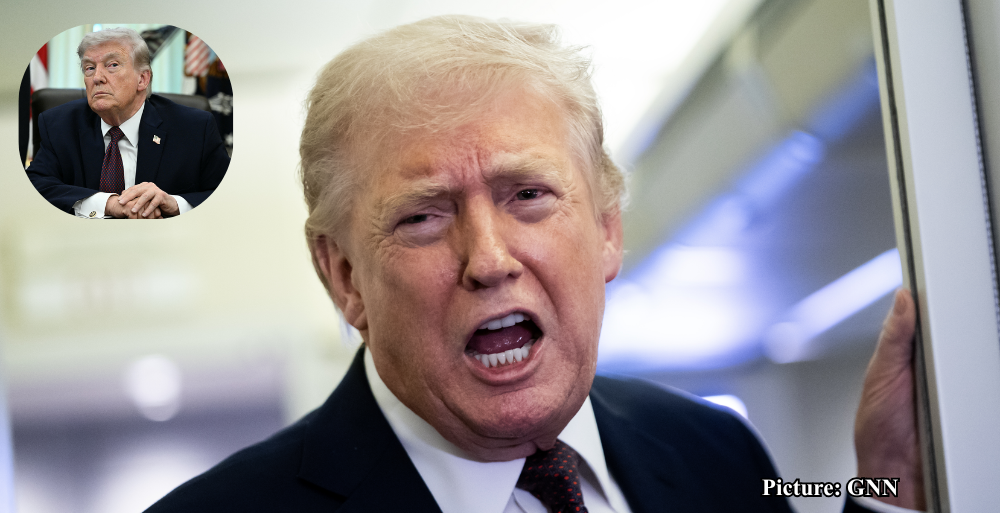
A federal court has ruled that President Trump’s executive order to defund National Public Radio and PBS violates the First Amendment, reaffirming the legal protections afforded to public media against government interference.
On [insert date], a significant legal decision emerged from the U.S. District Court for the District of Columbia, where Judge Randolph D. Moss declared former President Donald Trump’s executive order aimed at defunding National Public Radio (NPR) and the Public Broadcasting Service (PBS) unconstitutional. This ruling has prompted discussions about the future of federal funding for public media in the United States, particularly in the context of the ongoing debates surrounding media bias and government influence.
The executive order, titled “Ending Taxpayer Subsidies for Bias Media,” was issued in May 2020, amid claims from the Trump administration that NPR and PBS presented biased coverage of news events. In his ruling, Judge Moss characterized the order as “unlawful and unenforceable,” asserting that it represented an unlawful use of government power to suppress viewpoints that the administration disfavored.
Legal Foundations of the Ruling
In his legal assessment, Judge Moss emphasized that the First Amendment prohibits the government from using its financial resources to penalize or suppress speech that it deems objectionable. He articulated that, “the First Amendment draws a line, which the government may not cross, at efforts to use government power – including the power of the purse – to punish or suppress disfavored expression by others.” This ruling is significant as it reinforces the constitutional safeguards that ensure media organizations can express diverse viewpoints without fear of government reprisal.
The lawsuit challenging the executive order was initiated by NPR, along with several public radio stations, including Aspen Public Radio, Colorado Public Radio, and KSUT Public Radio in Ignacio, Colorado. These plaintiffs argued that the executive order directly targeted them because of their reporting practices, specifically in light of the accusations of ideological bias levied by the Trump administration against them.
Judge Moss highlighted that the executive order not only singled out NPR and PBS but also overlooked the broad range of services funded by federal dollars, which include crucial safety measures for journalists in conflict zones and educational programming. He underscored the problematic nature of the executive order, stating, “It is difficult to conceive of clearer evidence that a government action is targeted at viewpoints that the President does not like and seeks to squelch.” This judicial interpretation underscores the essential role that federal funding plays in fostering diverse programming across public media platforms.
Political Reactions to the Ruling
The ruling has generated a wave of responses from various political actors. White House spokesperson Abigail Jackson criticized the decision, describing it as the work of “an activist judge attempting to undermine the law.” She reiterated the Trump administration’s position that NPR and PBS should not receive taxpayer funding, asserting that Congress had already voted to defund these organizations. Jackson’s comments reflect the administration’s broader narrative regarding perceived media bias and the need for accountability among public broadcasters.
Conversely, NPR hailed the ruling as a significant victory for press freedom. In a public statement, NPR remarked that the decision represents a “decisive affirmation of the rights of a free and independent press” and stands as a victory for its network of stations and millions of listeners nationwide. Theodore Boutrous, NPR’s legal counsel, noted that the court’s decision effectively prevents the government from enforcing its unconstitutional executive order targeting NPR and PBS due to the President’s discontent with their news coverage and other programming. PBS echoed this sentiment, expressing its excitement regarding the ruling and labeling the executive order as a “textbook unconstitutional viewpoint discrimination and retaliation, in violation of longstanding First Amendment principles.”
Implications for Future Public Broadcasting Funding
The implications of this ruling extend far beyond the legal context, as it may influence the future of public broadcasting funding in the United States. Under the Trump administration, substantial federal funding—approximately $1.1 billion—was earmarked for public media through the Corporation for Public Broadcasting (CPB). However, the executive order effectively dismantled this funding mechanism, ultimately leading to the closure of CPB after decades of facilitating federal support for public broadcasting.
While the recent ruling reinstates critical protections for public media, it simultaneously opens the door for future Congresses to reconsider the allocation of federal funding to NPR and PBS. This possibility is particularly relevant as the political landscape continues to shift and new legislative priorities emerge. The ruling empowers local public media stations to make independent programming decisions devoid of governmental interference, ensuring that they can operate free from ideological constraints and continue to serve their communities effectively.
Moreover, this ruling underscores the ongoing struggle to balance governmental authority and media independence—a fundamental aspect of maintaining a democratic society. As the legal landscape surrounding public broadcasting evolves, there is a growing recognition of the necessity for robust protections for First Amendment rights across all media platforms.
In the wake of this ruling, the future of public broadcasting remains uncertain, but the reaffirmation of constitutional protections may encourage a renewed dialogue on the importance of independent media. As public trust in media continues to be a focal issue, the outcomes of such legal battles serve as crucial reminders of the role that a free press plays in upholding democratic ideals.