







President Donald Trump has signaled an accelerated timeline for the conclusion of military operations in Iran, claiming primary strategic objectives are nearly complete following the death of Supreme Leader Ali Khamenei. The eleven-day campaign, conducted alongside Israel, has shattered regional stability, sent oil prices climbing above $100, and created a profound diplomatic schism between Washington and its traditional European allies.
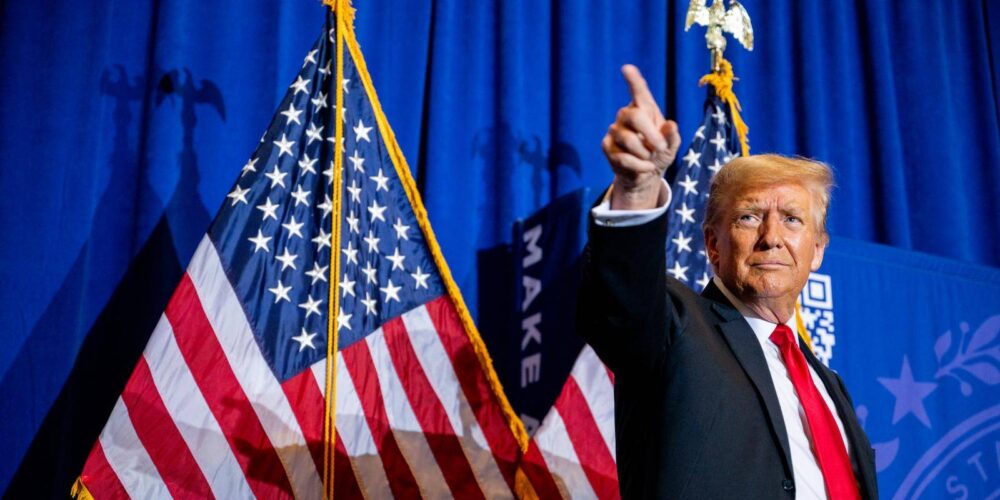
The rapid escalation of Operation Epic Fury has reached a decisive and bloody inflection point, as the Trump administration moves to declare a swift victory in a conflict that has already fundamentally rewritten the geopolitical map of the 21st century. Speaking from the manicured lawns of his Mar-a-Lago estate on Monday, President Donald Trump maintained his signature braggadocio, informing reporters that the joint U.S.-Israeli offensive is running “very far ahead of schedule” and could reach its conclusion “very soon.” The President’s assessment comes less than a fortnight after the initiation of a campaign that has seen the most intensive aerial bombardment in the region since the 2003 invasion of Iraq.
According to the President, the mission’s core goals—the systematic degradation of Iran’s ballistic missile infrastructure and the elimination of the Islamic Republic’s clerical and military command—are now “pretty well complete.” This clinical description belies the sheer scale of the disruption. Since the conflict commenced on February 28, 2026, with a staggering opening salvo of nearly 900 airstrikes, the traditional power structures of Tehran have been effectively decapitated. The confirmed death of Supreme Leader Ali Khamenei, along with dozens of high-ranking members of the Islamic Revolutionary Guard Corps (IRGC), has left the nation in a state of political vertigo. While the hastily announced succession of Mojtaba Khamenei as the new Supreme Leader attempts to project continuity, the reality on the ground suggests a regime fighting for its existential survival against an adversary that has achieved “uncontested control” of its sovereign airspace.
Defense Secretary Pete Hegseth, echoing the President’s confidence, noted that U.S. and Israeli assets are now operating with total impunity over Iranian territory. This air supremacy has allowed for the relentless targeting of hardened, underground command-and-control centers that were previously thought to be impenetrable. Although the White House has meticulously avoided the phrase “regime change” in its official briefings, the nature of the strikes—targeting the very heart of the clerical establishment—suggests a “tear-it-down” philosophy designed to force a total collapse of the existing order rather than a negotiated settlement.
The economic fallout of this “short-term excursion” has been immediate and painful for the global economy. For the first time in four years, benchmark oil prices have surged past $100 a barrel, driven by fears of a total blockade of the Strait of Hormuz. The President has met these market anxieties with characteristic defiance, threatening to escalate military action even further if Tehran attempts to weaponize the world’s most vital energy chokepoint. To mitigate the shock, the administration has floated the possibility of lifting sanctions on other global oil producers—a pragmatic pivot that underscores the transactional nature of the current U.S. foreign policy. However, the more radical prospect of a U.S. military takeover of the Strait remains on the table, a move that would represent an unprecedented expansion of American maritime control.
Regionally, the conflict has placed America’s Gulf partners in an impossible position. Saudi Arabia, the United Arab Emirates, and Qatar, despite their initial pleas for neutrality, have been drawn into the crossfire. Iranian retaliatory strikes—utilizing the remnants of their drone and ballistic missile stockpiles—have struck energy infrastructure and civilian centers within these monarchies, shattering the illusion of a contained conflict. U.S. Ambassador to the U.N. Mike Waltz has signaled a tightening of the screws on these allies, stating that Washington now expects a transition from quiet diplomatic support to active military participation. This demand has sparked quiet panic in Riyadh and Abu Dhabi, where leaders fear that a protracted war will leave their multi-billion-dollar “Vision” projects in ruins.
The diplomatic rift with Europe has perhaps been the most striking collateral damage of the campaign. While NATO leadership has offered a veneer of institutional support, the reality is a continent divided. Spain’s refusal to grant U.S. forces access to its bases triggered a scorched-earth response from President Trump, who threatened to suspend trade with the nation—a move that prompted the European Union to declare “full solidarity” with Madrid. This “with us or against us” rhetoric has marginalized traditional mediators like France, leaving the U.S. to pursue a purely unilateralist path that ignores decades of transatlantic security protocols.
On the humanitarian front, the cost of the “precision” campaign is mounting. Reports indicate over 1,200 Iranian fatalities, including a catastrophic strike on an elementary school that reportedly killed 175 children. While White House Press Secretary Karoline Leavitt maintains that “all options remain open” and the Pentagon is investigating the incident, the images of civilian suffering are fueling a global backlash. Critics argue that while the administration has been successful at destroying Iranian hardware, it has no viable plan for the “day after.” The void left by the decimated Iranian hierarchy is already being eyed by Russia and China. Moscow has reportedly increased intelligence-sharing with Tehran to facilitate strikes on U.S. assets, while Beijing is quietly negotiating its own energy security deals within the chaos.
As President Trump prepares to declare the mission “accomplished,” the world watches to see if this dismantling of a regional power will lead to the promised stability or a generation of renewed insurgency and proxy warfare. The hardware may be broken, but the political vacuum in Tehran remains a volatile unknown.