





The U.S. Supreme Court’s decision not to review a Texas law that permits law enforcement to arrest journalists for soliciting information from government sources raises significant concerns about press freedom and First Amendment rights.
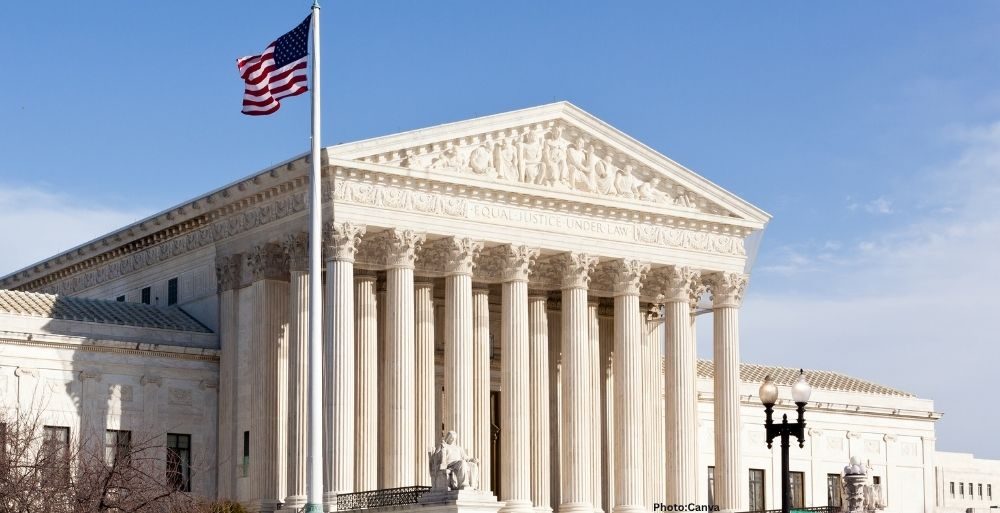
On October 16, 2023, the U.S. Supreme Court declined to hear a pivotal case concerning a Texas law that enables law enforcement to arrest journalists who obtain information from government employees. This decision effectively upholds lower court rulings that have raised critical questions regarding the boundaries of press freedom and the protections afforded under the First Amendment.
The case centers around Priscilla Villarreal, a journalist based in Laredo, Texas, who is better known by her moniker, “La Gordiloca.” In 2017, Villarreal was arrested while reporting on sensitive incidents, including a border agent’s public suicide and a car crash. Her arrest was linked to a Texas law that classifies it as a felony for journalists to solicit information from public officials that has not been previously disclosed to the public. Notably, this law had never been enforced prior to Villarreal’s arrest, which raises significant concerns about its constitutionality and implications for journalistic practices.
Legal Proceedings and Initial Rulings
Justice Sonia Sotomayor, dissenting from the Supreme Court’s decision not to take up the case, characterized Villarreal’s arrest as a blatant violation of the First Amendment. In her dissent, she articulated that no reasonable law enforcement officer would believe that arresting a journalist for asking questions could be justified under constitutional provisions. “This case implicates one of the most basic journalistic practices of them all: asking sources within the government for information,” she stated, emphasizing the fundamental nature of such inquiries in journalism.
Initially, a Texas district court ruled the law was unconstitutionally vague, leading Villarreal to sue both the prosecutors and the police officers involved in her arrest. Following an appeal from law enforcement, a panel of three judges from the 5th Circuit Court of Appeals ruled in favor of Villarreal, asserting, “If the First Amendment means anything, it surely means that a citizen journalist has the right to ask a public official a question, without fear of being imprisoned.” However, this ruling was later overturned by a full panel of the 5th Circuit, which held 9-7 that the officials were entitled to qualified immunity. The court concluded that the officers could have reasonably believed they were acting within the law, especially since Villarreal had received minor advertising revenue and complimentary meals from readers.
Supreme Court’s Response and Implications
The Supreme Court’s decision not to review the case means that the 5th Circuit’s ruling will stand, a development that has left Villarreal and many advocates for press freedom disheartened. Justice Sotomayor expressed deep concern that the 5th Circuit’s interpretation undermines essential constitutional protections. In her dissent, she warned that the court’s stance could potentially sanction arrests of journalists for essential First Amendment activities as long as law enforcement can reference a statute that has not been invalidated by a higher court.
Sotomayor further elaborated on the potential repercussions of this ruling, stating, “This rule creates a perverse scheme in which officials can arrest someone for protected activity, decline to appeal a trial court’s decision declaring the statute unconstitutional, and use qualified immunity to avoid liability by citing back to that statute.” This perspective underscores the chilling effect that such legal interpretations could have on journalistic practices across the country.
The Supreme Court first engaged with Villarreal’s case last year when it instructed the 5th Circuit to reconsider its previous ruling in light of other precedents that support Villarreal’s position. Despite this intervention, the 5th Circuit, recognized as one of the most conservative appellate courts in the U.S., ruled against her once again.
Broader Context of Press Freedom
The implications of this case extend far beyond the individual circumstances of Priscilla Villarreal. They raise broader questions about the protection of journalistic activities in the United States and the interplay between press freedom and law enforcement practices. The law in question, and its enforcement, reflects ongoing tensions regarding the gathering of information from public officials, which is vital for ensuring government accountability and transparency.
Such laws may have a chilling effect on journalistic inquiry, leading to self-censorship among reporters who may fear legal repercussions for seeking information critical to public awareness. The landscape of press freedom in the U.S. continues to evolve, particularly in light of increasing legal challenges and legislative measures that could restrict journalistic activities. This case highlights the pressing need for vigilant protection of First Amendment rights in an era where government accountability is paramount.
The Supreme Court’s refusal to intervene in this instance raises significant concerns regarding the future of press freedom in the United States. As the court continues to grapple with First Amendment issues, the balance between government authority and the rights of journalists to gather information remains a contentious and crucial topic for democratic governance.
In conclusion, Villarreal’s case underscores the critical importance of safeguarding journalistic practices against legal encroachments that threaten to inhibit the free flow of information. As the legal landscape surrounding press freedom develops, this case will likely serve as a pivotal reference point in discussions regarding the rights of journalists and the responsibilities of law enforcement in a democratic society.