








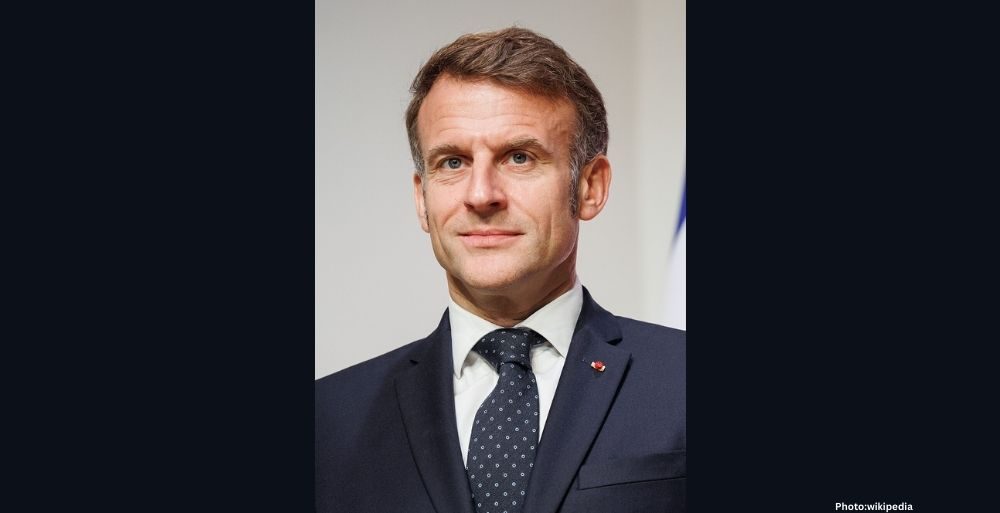
President Emmanuel Macron is poised to elaborate on the role of France’s nuclear deterrent in safeguarding national and European security, underscoring its strategic importance in the current geopolitical climate.
In the intricate tapestry of global security, France’s nuclear capability stands as a formidable thread, woven with both historical significance and contemporary relevance. As President Emmanuel Macron prepares to articulate the nuances of this deterrent, it is crucial to understand not only the numbers that define France’s nuclear arsenal but also the broader geopolitical context that frames its existence.
France’s journey into the nuclear club began in the aftermath of World War II, a period marked by both devastation and a fervent desire for sovereignty. In 1960, France conducted its first successful nuclear test, codenamed ‘Gerboise Bleue’, in the Algerian Sahara, thus becoming the fourth nation to possess nuclear weapons. This move was not merely about joining an exclusive club; it was a declaration of independence, particularly from the United States and NATO, emphasizing France’s autonomous defense policy.
Today, France’s nuclear arsenal is estimated to consist of approximately 290 warheads. These are deployed across a triad of delivery systems, a strategic configuration designed to ensure a credible second-strike capability. The backbone of this deterrent is the submarine-launched ballistic missiles (SLBMs) carried by the four Triomphant-class nuclear-powered submarines. Each submarine can carry 16 M51 missiles, which are capable of delivering multiple warheads over intercontinental ranges. This sea-based component ensures survivability and stealth, crucial elements in maintaining a credible deterrent.
Complementing the SLBMs are the air-launched cruise missiles, notably the ASMP-A (Air-Sol Moyenne Portée-Amélioré), carried by the Rafale fighter jets. These aircraft, capable of low-altitude penetration and high-speed delivery, provide flexibility and rapid response options. The land-based component, however, was phased out in 1996, reflecting a strategic shift towards a more streamlined and modernized force.
President Macron’s forthcoming address is expected to highlight the dual role of France’s nuclear forces: national defense and European security. In an era marked by renewed tensions and an evolving threat landscape, the concept of nuclear deterrence remains as relevant as ever. Macron’s narrative will likely emphasize France’s commitment to NATO while underscoring its independent capability to act as a security guarantor for Europe.
In recent years, the resurgence of great power competition, particularly with Russia’s assertive posture and the rise of China, has rekindled debates around nuclear strategy. France, as the sole nuclear power within the European Union post-Brexit, finds itself in a unique position. Macron’s vision of ‘strategic autonomy’ for Europe is intertwined with this nuclear capability, advocating for a Europe that can defend itself and act independently when necessary.
Moreover, the economic and technological dimensions of maintaining a nuclear arsenal are significant. France invests billions annually to ensure the reliability, safety, and modernization of its nuclear forces. The CEA (Commissariat à l’énergie atomique et aux énergies alternatives) plays a pivotal role in this regard, driving research and development to sustain France’s technological edge. The recent development of the M51.3 missile, expected to enter service in the coming years, exemplifies this ongoing commitment to innovation.
Critics, however, question the morality and necessity of nuclear weapons in the 21st century. The humanitarian impact of nuclear weapons and the risks of proliferation remain pressing concerns. France, while advocating for disarmament, maintains that a credible deterrent is essential until global conditions allow for complete nuclear disarmament. This stance is reflective of a broader international dilemma, where the ideal of a nuclear-free world is tempered by the realities of international security dynamics.
As Macron addresses the nation and the world, his message will likely resonate beyond France’s borders. It is a reminder of the delicate balance between deterrence and diplomacy, between national interests and collective security. In a world where the specter of nuclear conflict, though diminished, still looms, France’s nuclear capability serves as both a shield and a statement of resolve.
Ultimately, the discourse surrounding France’s nuclear deterrent is emblematic of the broader challenges facing global security. It is a dialogue that encompasses history, strategy, and the ever-evolving nature of international relations. As Macron elucidates France’s position, it is an opportunity to reflect on the complexities of power and the enduring quest for peace in an uncertain world.