The four-member crew of NASA’s Artemis II mission has successfully transitioned from Earth’s orbit to a lunar trajectory following a flawless translunar injection (TLI) burn. This maneuver, executed late Thursday, officially commits the Orion spacecraft to a high-stakes, eight-day journey that will carry humans to the vicinity of the moon for the first time since 1972. As the first crewed flight of the Space Launch System (SLS) rocket and the Orion capsule, Artemis II serves as a pivotal stress test for deep-space life-support systems and navigation. By the end of this mission, the crew is expected to set a new record for the farthest distance humans have ever traveled from Earth, surpassing the benchmark set by the Apollo 13 mission over five decades ago.
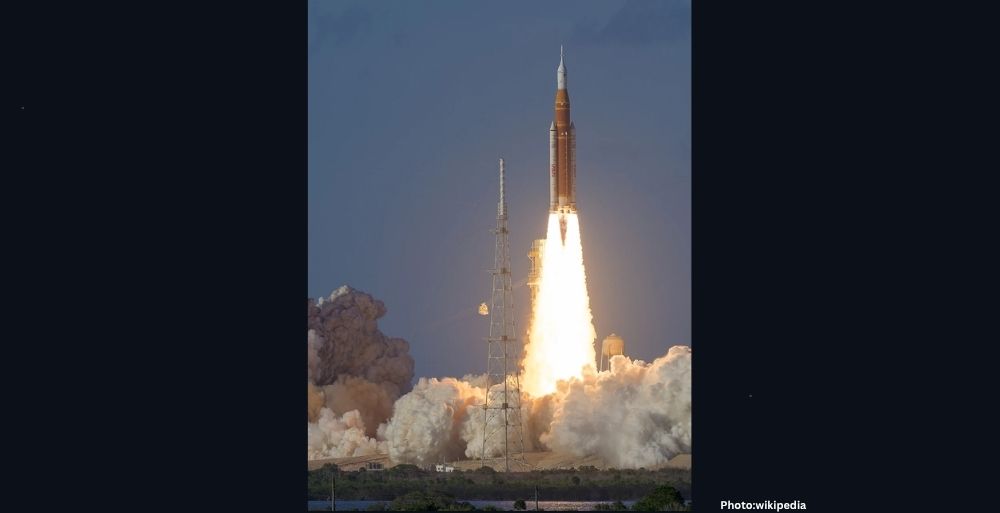
CAPE CANAVERAL, Fla. — NASA’s Artemis II mission entered its most ambitious phase on Thursday evening as the Orion spacecraft’s main engine fired for nearly six minutes, accelerating the vehicle to escape velocity and setting a course for the moon. The maneuver, known as the translunar injection (TLI) burn, took place approximately 25 hours after the mission’s historic liftoff from Kennedy Space Center’s Launch Complex 39B.
With the successful completion of the burn, the crew—Commander Reid Wiseman, Pilot Victor Glover, Mission Specialist Christina Koch, and Canadian Space Agency (CSA) Mission Specialist Jeremy Hansen—is now on a “free-return” trajectory. This orbital path ensures that the moon’s gravity will naturally pull the spacecraft around its far side and sling it back toward Earth for a Pacific Ocean splashdown, currently scheduled for April 10, 2026.
A New Benchmark for Human Distance
The Artemis II mission is designed to push the boundaries of human reach. While the Apollo missions of the late 1960s and early 1970s focused on lunar landings, Artemis II is a “shakedown” flight intended to validate the Orion spacecraft’s performance with a human crew. On the sixth day of the mission, the crew is projected to reach a point roughly 4,600 miles beyond the far side of the moon.
At its maximum distance, Orion will be approximately 230,000 miles from Earth. This will eclipse the standing record of 248,655 miles (400,171 kilometers) from Earth set by the crew of Apollo 13 in 1970, who were forced into a high-altitude lunar loop following an onboard explosion. Unlike the emergency nature of the 1970 record, the Artemis II trajectory is a deliberate test of the Space Launch System’s (SLS) precision and the Orion’s ability to sustain life in the harsh radiation environment of deep space.
“Humanity has once again shown what we are capable of, and it’s your hopes for the future that carry us now on this journey around the moon,” Jeremy Hansen said in his first address to Mission Control following the TLI burn. Hansen’s inclusion marks the first time a non-American has traveled beyond low-Earth orbit, a nod to the international coalition-building that defines the Artemis program.
Technical Precision and Historical Context
The TLI burn utilized an Orbital Maneuvering System (OMS) engine with a storied pedigree. The engine used for this mission was salvaged and refurbished from the Space Shuttle program, having previously flown on 19 different shuttle missions. This hardware evolution underscores NASA’s strategy of blending legacy technology with modern computing power.
The Orion capsule itself offers a stark contrast to the Apollo-era Command Modules. While the Apollo capsules provided 210 cubic feet of habitable volume for three men, Orion provides 331 cubic feet—a 50% increase—to accommodate its four-member crew. This extra space is critical for the mission’s various objectives, which include testing a $23 million waste management system and exercise equipment designed to prevent bone density loss during longer voyages to Mars.
“With this burn to the moon, we do not leave Earth. We choose it,” Mission Specialist Christina Koch noted before the burn, emphasizing the mission’s role in gathering data to protect the home planet and its future explorers. Koch, who already holds the record for the longest single spaceflight by a woman, is now poised to become the first woman to reach the lunar vicinity.
The Political and Economic Landscape
The Artemis program represents a significant shift in U.S. space policy, moving away from the “flags and footprints” approach of the mid-20th century toward a sustainable lunar economy. This mission is the second of several planned phases, following the uncrewed Artemis I in 2022. It sets the stage for Artemis III and IV, which aim to land the first woman and person of color on the lunar surface later this decade.
However, the program faces intense scrutiny regarding its fiscal and temporal milestones. Originally slated for an earlier launch, Artemis II was delayed due to technical refinements and budget reallocations. The SLS rocket, standing 322 feet tall, carries a per-launch price tag estimated at $2.2 billion, part of a broader program that has seen costs climb into the tens of billions.
The geopolitical stakes are equally high. The United States is currently in a de facto space race with China, which has announced plans to land taikonauts on the moon by 2030. The Artemis Accords, a set of non-binding principles for space cooperation, now boast over 40 signatories, positioning Artemis II as a diplomatic tool as much as a scientific one.
Life Aboard Orion: The Path Ahead
As the crew settles into the “coast” phase of the mission, their daily schedule is packed with system checks. They have already addressed minor issues typical of a test flight, including a brief glitch in the communication system and a small leak in the waste management suction line, both of which were resolved by Mission Control in Houston.
Over the next 48 hours, the crew will focus on:
- Optical Navigation: Testing manual seafaring-style navigation techniques using the stars, a backup skill required if primary systems fail.
- Radiation Monitoring: Collecting data on the Van Allen belts as they move further from Earth’s protective magnetic field.
- CO2 Scrubbing: Ensuring the life-support system effectively filters the air for four active adults over a prolonged period.
As Orion moves further away, the Earth will appear as a shrinking marble in the spacecraft’s windows. For Commander Reid Wiseman and his crew, the next eight days are not just a journey through the vacuum of space, but a bridge between the legacy of the 20th century and the aspirations of the 21st.
Tags: NASA, Artemis II, Orion Spacecraft, Moon Mission, Space Exploration, SLS Rocket, Jeremy Hansen, Christina Koch, Lunar Orbit, Deep Space Navigation