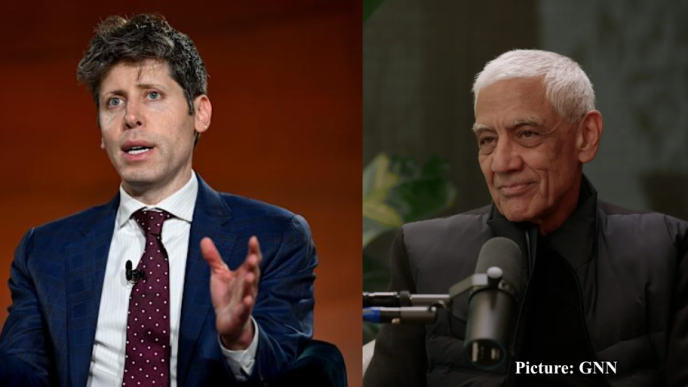
Vinod Khosla, a prominent venture capitalist and early investor in OpenAI, has proposed reforms to the U.S. tax system aimed at alleviating fears of job loss due to artificial intelligence. His suggestions include removing federal income tax for Americans earning under $100,000 and increasing taxes on capital gains to ensure government revenue remains stable.
In a recent forum held in Washington, D.C., Vinod Khosla articulated a vision for a revised U.S. tax system that responds to growing public anxiety regarding job displacement linked to advancements in artificial intelligence (AI). Khosla, who is recognized as a significant figure in the technology investment landscape and has been a major Democratic donor in previous election cycles, has indicated that concerns over AI’s impact on employment will shape the political discourse leading up to the 2028 presidential election.
Proposed Tax Reforms
Khosla’s proposal centers on the elimination of federal income tax for individuals earning less than $100,000 annually. He estimates that approximately 125 million lower- and middle-income Americans would benefit from this change. To compensate for the revenue lost from the abolished income tax, Khosla advocates for an increase in capital gains taxes, suggesting that they should be taxed at the same rate as ordinary income. He argues this approach could preserve government revenues while providing significant financial relief to a large segment of the population.
The Context of AI and Employment
The implications of AI on the workforce have become increasingly urgent as technological advancements accelerate. In his remarks, Khosla noted, “When I talk to people, the biggest thing is fear of AI taking their job by far,” emphasizing that this fear will be a central theme in the upcoming election cycle. As AI technologies continue to permeate various sectors, their potential impact on employment, economic stability, mental health, and warfare has sparked widespread concern.
The call for policymakers to rethink existing tax structures in light of these developments is gaining traction. Khosla’s insights reflect a broader recognition of the need for innovative solutions to address the growing anxiety among workers about the future of their jobs in an AI-driven economy.
Political Landscape and Implications
While Khosla has praised certain aspects of the Trump administration’s approach to AI policy, he has simultaneously expressed serious reservations about the former president’s character and negotiation style. He described Trump as having a “complete lack of values of any sort” and criticized his “negotiating style that destroys credibility.” This duality in Khosla’s political sentiment highlights the complexities of the current political landscape, particularly as it relates to technology and governance.
Khosla acknowledged the contributions of key figures within the Trump administration, such as AI and cryptocurrency advisor David Sacks and State Department official Jacob Helberg. However, he expressed concern over potential Republican candidates for the 2028 election, including Vice President JD Vance and Secretary of State Marco Rubio, suggesting that their alignment with Trump’s values could be problematic.
In addition to critiquing Republican figures, Khosla voiced frustration with the Democratic Party, asserting that its fundraising efforts ahead of the November midterm elections reflect a disconnect with donor sentiments. He observed a growing frustration among donors regarding the party’s perceived shift to the left, suggesting that this direction is alienating key supporters.
Future Prospects and Candidate Support
Khosla is contemplating his options for presidential support as the 2028 election approaches. He has had brief discussions with California Governor Gavin Newsom about AI-related issues but is also on the lookout for a “surprise” presidential candidate who could emerge in the lead-up to the election. Drawing parallels to Barack Obama and Donald Trump, Khosla expressed hope for a candidate who could resonate with voters in unexpected ways.
He articulated a need for a shift in focus among policymakers, arguing that the emphasis should not solely be on job preservation but rather on providing security for individuals displaced by technological advancements. “Democrats are too focused on the wrong thing, which is job preservation, not providing security to those who are displaced. Those are fundamentally different things,” he stated, underscoring the necessity for a more comprehensive approach to the challenges posed by AI.
As discussions surrounding Khosla’s proposals and the broader implications of AI continue to emerge, it is evident that the intersection of technology, employment, and policy will remain a critical area of focus for political leaders and the electorate alike. The ongoing dialogue about the future of work in an AI-influenced economy will likely shape not only campaign strategies but also national policy as the 2028 election approaches.