Earth’s Mars Twin: How a Remote Kutch Village Could Become a Real-Life Red Planet Lab
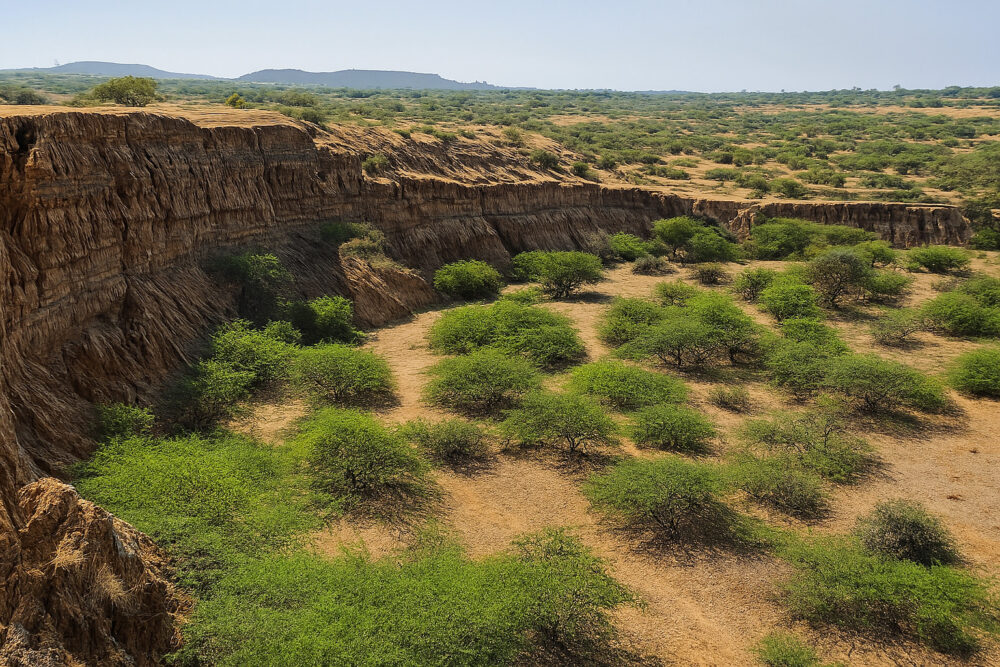
Deep in Gujarat’s rugged Kutch district lies a barren and sparsely populated village that’s capturing the imagination of space scientists. Matanomadh—a landscape of thorny shrubs and dusty plains—might just be India’s most compelling stand-in for Mars.
Why Matanomadh Feels Like the Red Planet
The secret lies beneath the surface: a rare, yellow iron-rich mineral called jarosite, formed over 55 million years ago when volcanic ash met acidic, water-rich conditions. The same mineral has been spotted on Mars, offering strong evidence that ancient Earth and Mars shared strikingly similar chemical and environmental histories.
A Natural Simulator for Mars Missions
Scientists see Matanomadh as more than a geological curiosity—it’s a living, breathing analog for Mars exploration. The terrain offers a controlled yet realistic environment to test rover movements, drilling technologies, and geochemistry instruments before they head to space. Its clay and jarosite mix even expands when wet, mimicking Martian soil in behavior.
A Dual-Approach to Space Prep
India’s space planners aren’t stopping there. In the high peaks of Ladakh, another facility simulates Martian climate—thin air, frigid temperatures, and isolation—to test human endurance and habitat performance. Together, Kutch and Ladakh form a powerful pairing: one for geological testing, the other for environmental and human factors preparation.
Unlocking the Secrets of Life and Planetary History
Jarosite doesn’t just hint at water—it’s a potential trap for organic molecules, making it invaluable for astrobiology. Studying these deposits brings us closer to understanding where and how life could exist (or have existed) on Mars.
Preserving a Planetary Heritage
Despite its scientific promise, Matanomadh faces threats: waterlogging and nearby coal mining could erode its value as a geo-heritage site. Researchers are urging urgent protection to preserve this unique window into Martian analogs.