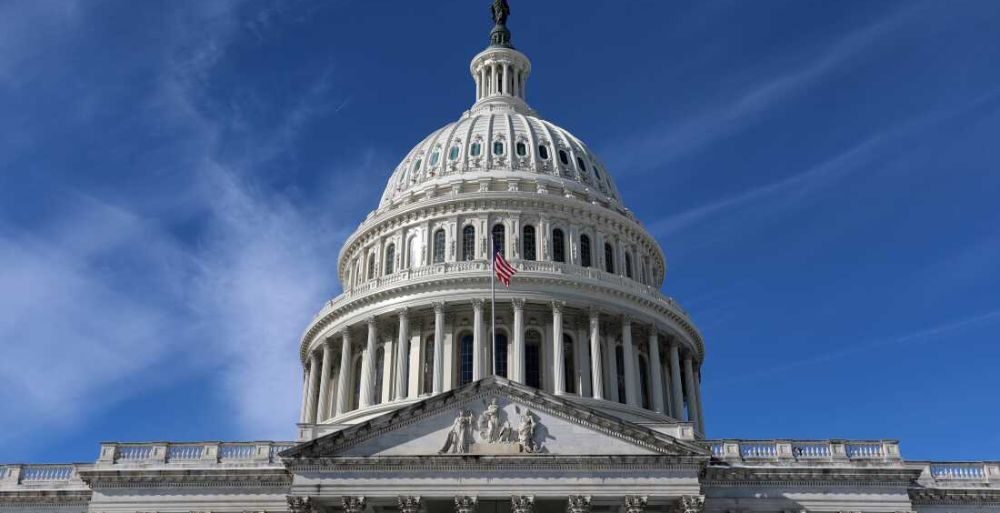
Lawmakers in the United States Senate are facing a narrow window to reach a consensus on funding for the Department of Homeland Security as a February 13 deadline looms over the Capitol. The prospect of a partial government shutdown has intensified partisan finger-pointing, with both Republicans and Democrats appearing deeply entrenched in their respective positions. If an agreement is not reached by the end of the week, critical agencies including the Transportation Security Administration, the Coast Guard, the Federal Emergency Management Agency, and Customs and Border Protection could face a significant disruption in operations.
The current impasse stems from a sharp disagreement over the scope of the funding bill. Senate Democrats, responding to pressure regarding the administration’s immigration enforcement strategies, have insisted that any funding package must include substantive reforms to the nation’s immigration system. These demands have gained renewed urgency following a recent high-profile incident in Minneapolis involving federal immigration officials. Conversely, Republican leadership has signaled a refusal to entertain broad policy changes within what they argue should be a standard appropriations measure.
Negotiations have struggled to gain momentum, with several key lawmakers expressing doubt that a compromise can be brokered in time. Senator John Kennedy of Louisiana characterized the likelihood of a deal as virtually nonexistent, placing the responsibility for the deadlock on the Democratic caucus. Kennedy argued that the window for meaningful discussion is closing and suggested that internal party politics are preventing Democrats from reaching a middle ground. He specifically pointed to what he described as the more progressive wing of the party as a primary obstacle to passing a traditional funding bill.
The friction between the two parties was further illustrated by a formal list of ten demands submitted by Senate Minority Leader Chuck Schumer and House Minority Leader Hakeem Jeffries. The proposal includes requirements for immigration agents to secure judicial warrants and mandates for agents to remain unmasked during field operations. These items were characterized by Democratic leadership as essential responses to recent events, yet they have been met with immediate resistance from Republicans. Senior GOP officials have indicated that these provisions are non-starters, viewing them as overreaches that do not belong in a budgetary discussion.
Republican leaders have expressed frustration with the lack of direct dialogue, claiming that much of the recent communication has occurred through public statements rather than private negotiations. Senate Majority Leader John Thune noted that Republican attempts to engage in substantive talks were met with silence for several days. Thune argued that the expanding list of Democratic demands indicates a lack of serious intent to reach a bipartisan resolution. He emphasized that the focus should remain on the financial requirements of the agencies involved rather than a total overhaul of enforcement protocols.
On the other side of the aisle, Democrats maintain that their proposals reflect public sentiment and are a necessary reaction to recent tragedies involving federal law enforcement. Senator Chris Murphy of Connecticut suggested that the lack of progress is due to confusion regarding who is leading the negotiations for the Republican side. Murphy stated that Democrats are unsure whether they should be coordinating primarily with Senate leadership or the White House. This uncertainty has slowed the exchange of legislative text and counter-proposals as the deadline draws closer.
Senator Katie Britt of Alabama, who was tasked by Republican leadership to lead the conference’s efforts on this matter, pushed back against claims of confusion. Britt argued that any successful deal would require the support of both congressional Republicans and the administration, necessitating a multifaceted approach to the talks. She expressed disappointment that Democrats have focused on social media messaging and press conferences rather than engaging in direct, closed-door discussions. Britt noted that she is actively looking for a pathway forward but requires a willing partner in the negotiation process.
The timeline is further complicated by a scheduled congressional recess. Many senators are slated to depart Washington for the Munich Security Conference, which could leave the chamber empty during the final hours before the funding lapse. While Leader Thune has suggested that the recess could be canceled to facilitate further work, such a move would require broad cooperation. There has also been talk of passing another short-term continuing resolution to keep the Department of Homeland Security open temporarily, but prominent Democrats have expressed a reluctance to support further stopgap measures.
One of the central points of contention is the status of previously negotiated agreements. Republican aides have pointed out that a full-year funding deal for the department had been largely settled before the recent incidents in Minneapolis. That earlier agreement included provisions for body cameras and increased oversight, which Republicans describe as a fair compromise. They argue that Democrats are now attempting to litigate settled issues and move the goalposts in a way that makes a final agreement nearly impossible.
In an effort to break the deadlock, some House Democrats have proposed a strategy to fund the less controversial elements of the Department of Homeland Security while isolating the debate over immigration enforcement. This would involve passing a full-year bill for agencies like the Coast Guard and FEMA while leaving the budget for Immigration and Customs Enforcement for a separate discussion. This proposal has seen little support from Republican leadership, who argue that such a move would effectively result in the defunding of law enforcement by omission.
The impact of a potential shutdown remains a subject of debate. Due to previous legislative actions, such as the One Big Beautiful Bill Act passed last year, some border operations may have sufficient funding to continue for a period even if a new deal is not reached. However, the administrative and logistical burden of a lapse in appropriations would still be felt across the broader department. This has left lawmakers like Senator Peter Welch of Vermont to acknowledge that these negotiations are among the most difficult the chamber has faced in recent years.
As the clock ticks toward Friday, the atmosphere in the Capitol remains tense. The coming days will determine whether the two parties can bridge a widening gap between policy demands and fiscal responsibilities or if the Department of Homeland Security will become the latest casualty of a deeply divided Congress. For now, the prospect of a resolution remains uncertain as both sides wait for the other to make the next move in a high-stakes legislative standoff.