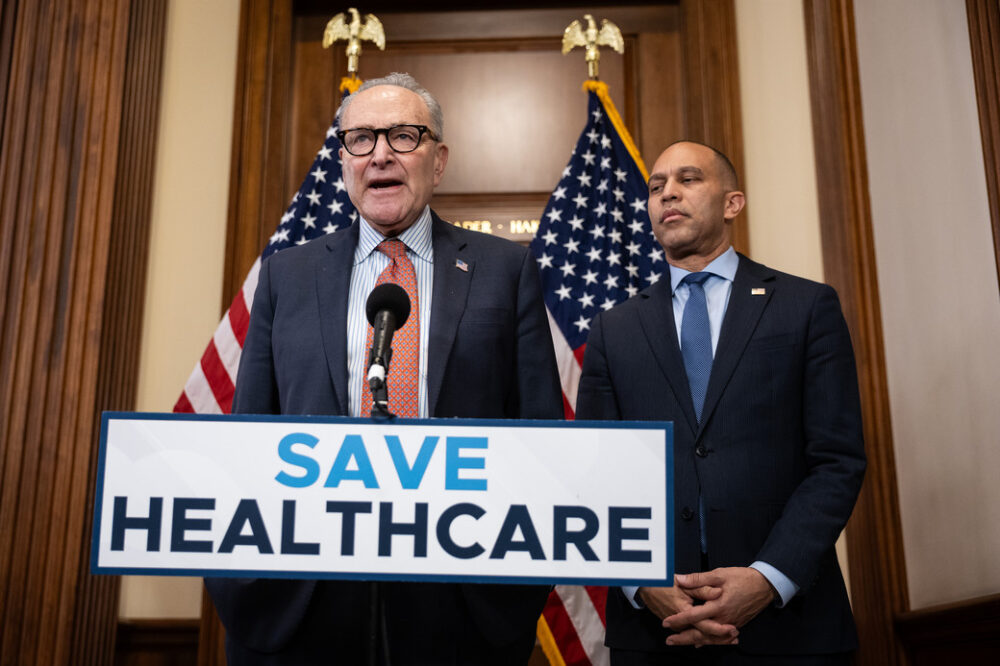
Millions of Americans are starting the new year facing sharply higher health insurance premiums after Congress failed to extend enhanced subsidies under the Affordable Care Act (ACA). But amid growing public backlash and rising financial strain on families, a bipartisan group of lawmakers believes there may still be a narrow path to restore the relief — if President Donald Trump chooses to step in.
At the centre of the renewed push is Peter Welch, a Democrat from Vermont, who says the fallout from Congress’ inaction is already proving too severe for lawmakers to ignore.
“There’s a number of Republican and Democratic senators who are seeing what a disaster this will be for families that they represent,” Welch said in a radio interview this week. “That’s the common ground here, and it’s a doable thing.”
Subsidies Expire, Premiums Surge
The enhanced ACA premium tax credits, first expanded during the pandemic, significantly reduced monthly health insurance costs for millions of Americans. Their expiration has now triggered steep increases in premiums for Obamacare enrollees across the country.
Health policy analysts warn that without congressional action, many families may be forced to drop coverage altogether — a scenario that could ripple through the broader healthcare system.
“A farmer in Vermont, their premium is going to go from $900 a month to $3,200 a month,” Welch said. “That’s real sticker shock. And there’s a secondary impact — rural hospitals are going to lose revenue when people can’t afford insurance.”
According to experts, rural communities are particularly vulnerable, as hospitals already operate on thin margins and rely heavily on insured patients to remain viable.
A Bipartisan Senate Effort Takes Shape
Behind the scenes, Welch says momentum is quietly building. Earlier this week, a small bipartisan group of senators held a private call to explore options for reviving the subsidies, first reported by Punchbowl News.
“We could extend the credits for a couple of years, we could reform it,” Welch explained. “You could put an income cap, you could have a copay, you could have penalties on insurers who commit fraud. There are cost-saving reductions that actually have bipartisan support.”
The goal, according to participants, is to craft a compromise that addresses Republican concerns about cost controls while preventing millions of Americans from being priced out of coverage.
Yet Welch is clear-eyed about the political reality: such a deal is unlikely to move forward without Trump’s endorsement.
“It would require that President Trump play a major role in this,” Welch said. “He has enormous influence over the Republican majority in the House and even in the Senate.”
Trump’s Role Looms Large
So far, Trump has remained largely hands-off on healthcare legislation, even as premiums rise nationwide. His silence stands in contrast to the intense partisan battles over ACA subsidies last fall, when negotiations collapsed into a standoff that ultimately contributed to the longest government shutdown in US history.
Despite that history, Welch believes the real-world consequences now facing voters could force a shift.
“When people see their premiums triple overnight, that changes the politics,” he said. “This isn’t theoretical anymore.”
Pressure Builds in the House
Even if the Senate advances a compromise, the House of Representatives must also act. There, a separate bipartisan effort is already underway.
In mid-December, four House Republicans broke ranks with party leadership and joined Democrats in signing a discharge petition that would force a floor vote on a three-year extension of the ACA subsidies once lawmakers return from recess.
One of them, Brian Fitzpatrick, acknowledged the bill isn’t perfect but said the alternative is far worse.
“I don’t like the clean extension without any income cap,” Fitzpatrick said. “But given the choice between a clean three-year extension and letting them expire, that’s not a hard choice for me.”
Fitzpatrick added that he expects more Republicans to come on board as the financial impact becomes clearer to constituents.
Sources familiar with the discussions say Fitzpatrick has been working closely with Tom Suozzi, a Democrat, to coordinate with moderate senators on a legislative path forward.
A Narrow Window for Action
The timing is tight. The Senate is scheduled to return on January 5, followed by the House on January 6. Lawmakers face mounting pressure from constituents, hospitals, insurers, and advocacy groups warning that delays will only deepen the damage.
Healthcare experts note that restoring subsidies retroactively could prevent coverage losses, but only if Congress acts quickly.
“This is one of those moments where policy meets lived reality,” a senior healthcare analyst said. “The longer Congress waits, the harder it becomes to undo the harm.”
Can Trump Tip the Balance?
Whether Trump chooses to intervene remains the biggest unknown. Supporters of the subsidy extension argue that stepping in could position him as a dealmaker willing to ease the financial burden on working families, particularly in rural and swing districts.
For now, Welch says the opportunity is there — but it won’t last forever.
“This is fixable,” he said. “But it requires leadership. And at this moment, that leadership has to include the president.”
As millions of Americans open insurance bills with higher premiums this month, the pressure on Washington is only set to intensify.