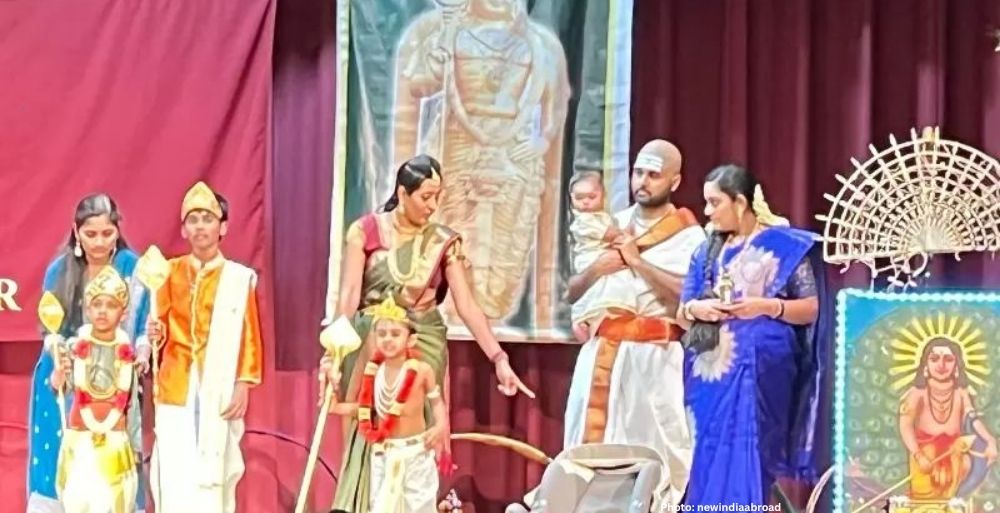
The Hindu Temple of Greater Chicago (HTGC) in Lemont, Illinois, recently served as the epicenter of a massive spiritual and cultural gathering for the 26th annual Thanga Murugan Vizha. Dedicated to Lord Murugan—the deity of victory, youth, and knowledge—the “Golden Murugan Festival” brought together hundreds of devotees from across the Midwest to participate in ancient South Indian rituals and contemporary scholarly discourse. The event underscored the temple’s 40-year legacy as a cornerstone of the Indian American diaspora, blending traditional processions like the Paal Kudam with innovative musical presentations that bridge Eastern and Western classical traditions.
LEMONT, Ill. — Chants of “Vetrivel Muruganukku Arohara” echoed across the 18-acre bluff overlooking the Des Plaines River valley this weekend as the Hindu Temple of Greater Chicago (HTGC) hosted its 26th annual Thanga Murugan Vizha (TMV). The festival, a hallmark event for the regional Indian American community, transformed the Lemont mandir into a vibrant tapestry of saffron robes, floral processions, and traditional percussion. Drawing attendees from as far as Ohio and Michigan, the celebration served as a powerful reminder of the diaspora’s commitment to sustaining Vedic traditions while fostering a unique cultural identity in the heart of the American Midwest.
A Legacy of Devotion in Lemont
The HTGC, inaugurated on July 4, 1986, has long been a pioneer for Hindu practice in the United States. While the temple complex is globally recognized for its Chola-style Rama Temple and Kalinga-style Ganesha-Shiva-Durga (GSD) Temple, the TMV festival focuses specifically on the Murugan shrine located within the GSD structure.
Historically, the temple was founded in 1977 by a group of immigrant professionals who sought to create a spiritual anchor for the estimated 50,000 Hindus now living in the Greater Chicago area. The Thanga Murugan Vizha has grown from a local parish gathering into a premier regional festival. According to Ramsundar Lakshaminarayanan, a member of the TMV organizing committee, the festival’s longevity is a testament to the community’s resilience.
“From its humble beginnings to the milestone 25th anniversary and beyond, Thanga Murugan Vizha continues to light up the Lemont mandir with devotion, color, and joy,” Lakshaminarayanan said. “It stands as a shining example of how the Indian diaspora sustains and enriches ancient traditions in new lands.”
Rituals and the “Golden” Procession
The “Golden Murugan Festival” is defined by its rigorous spiritual observances. The day began in the early morning hours with the Paal Kudam (milk pot) and Kaavadi processions. Devotees carry decorated pots of milk or ornate wooden canopies on their shoulders as a physical manifestation of debt and devotion to Bhagwan Muruga.
Nishant Limbachia, a national convenor for the non-profit organization INDICA, which sponsored the event, described the sensory impact of the morning rites. “TMV was a bit more special for me this year. My wife and I were fortunate to attend the early morning Paal Kudam and Kaavadi,” Limbachia noted, highlighting the spiritual energy of the crowd. He emphasized that INDICA’s sponsorship aligns with their mission to promote the “Indian Knowledge Tradition” on a global stage.
The ritualistic highlight included the abhishekams—the ceremonial bathing of the deity—where priests poured milk, honey, and sandalwood paste over the Murugan idol to the rhythmic accompaniment of the nadaswaram (double-reed wind instrument).
Scholarly Crossroads: The Music of Dikshitar
A significant departure from purely ritualistic activity was this year’s keynote presentation by Dr. Kanniks Kannikeswaran. Based in Cincinnati, Ohio, Kannikeswaran is a renowned composer and scholar often credited with pioneering the Indian American choral movement. His work famously fuses the complex ragas of Indian classical music with Western orchestral arrangements.
Kannikeswaran presented findings from his critically acclaimed book, Anubhuti. The presentation reframed the legacy of Muthusvamy Dikshitar, one of the 18th-century “Trinity” of Carnatic music composers, as a “civilizational visionary.” By detailing how Dikshitar’s compositions were informed by the sacred geography and temple architecture of India, Kannikeswaran provided the Lemont audience with a deeper intellectual context for their own worship practices.
Cultural Education and the Next Generation
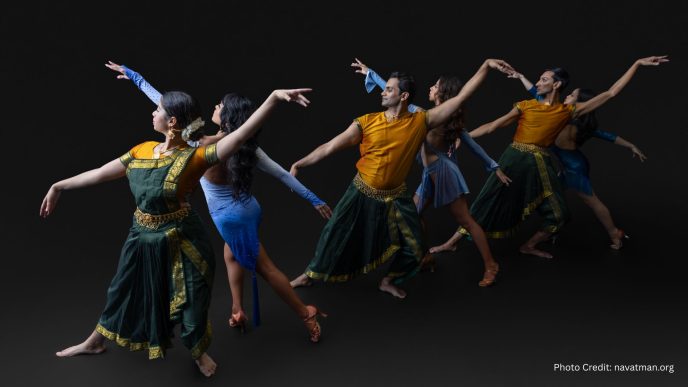
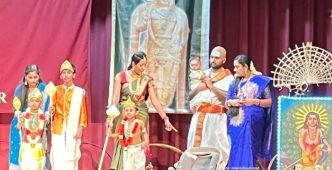
Central to the TMV mission is the “Little Muruga Show,” a dedicated segment for children to showcase their mastery of traditional Indian arts. The festival featured a range of performances, from Bharatnatyam dance to Sanskrit recitations, involving both children and adults.
The temple complex itself supports this educational mission through its Swami Vivekananda Spiritual Center. The center houses the first public statue of Vivekananda in the U.S., commemorating his 1893 speech at the World’s Parliament of Religions in Chicago. By hosting festivals like TMV, the HTGC ensures that the “bridge” Vivekananda built between East and West remains structurally sound for future generations.
As the 26th Thanga Murugan Vizha concluded with a grand evening procession, the atmosphere remained one of festive communal pride. For the devotees in Lemont, the festival is not merely a look backward at heritage, but a forward-looking affirmation of their place in the diverse cultural landscape of 21st-century Illinois.
Tags: Hindu Temple of Greater Chicago, Thanga Murugan Vizha, Lemont IL, Lord Murugan, Dr. Kannikeswaran, Indian American diaspora, Hindu festivals 2026, Carnatic music, Paal Kudam procession, INDICA organization
Thanga Murugan Vizha at Lemont Temple
This video provides a visual overview of the 26th Thanga Murugan Vizha celebrations at the Hindu Temple of Greater Chicago, featuring the processions, rituals, and cultural performances described in the article.