The Artemis II mission has achieved a historic milestone by surpassing the distance record for human travel from Earth, previously set by Apollo 13 in 1970.
NASA’s Artemis II mission, marking the first crewed lunar operation in over 50 years, made a significant leap in space exploration on Monday afternoon. The four-member crew, consisting of NASA commander Reid Wiseman, pilot Victor Glover, mission specialist Christina Koch, and Canadian Space Agency mission specialist Jeremy Hansen, successfully surpassed the record for the farthest distance from Earth traveled by humans. This new benchmark exceeds the previous record of 248,655 statute miles set by Apollo 13 in April 1970.
Historic Milestone Achieved
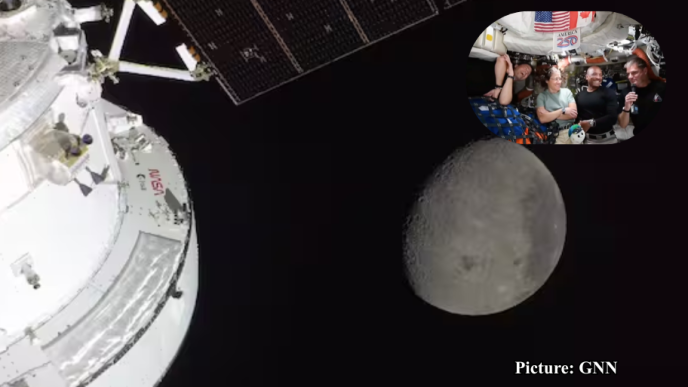
As Artemis II made its lunar flyby, the crew members expressed their excitement and commitment to future generations in space exploration. Hansen addressed mission control, stating, “We will continue our journey even further into space before Mother Earth succeeds in pulling us back to everything that we hold dear. But we, most importantly, choose this moment to challenge this generation and the next to make sure this record is not long-lived.” This statement not only reflects the mission’s accomplishments but also emphasizes the ongoing challenges and aspirations of human spaceflight.
Tribute on the Moon
In a poignant gesture, the crew proposed to name a previously unnamed crater on the moon in honor of Wiseman’s late wife, Carroll Wiseman. Hansen remarked, “It’s a bright spot on the moon, and we would like to call that Carroll.” This tribute highlights the personal connections and sacrifices often experienced by those involved in space exploration.
Mission Details and Observations
During their seven-hour lunar flyby, the astronauts aboard the Orion spacecraft, dubbed Integrity, engaged in various scientific observations and took photographs that could contribute to future lunar missions. Notably, the spacecraft temporarily lost contact with mission control for approximately 40 minutes while it passed behind the moon, a common occurrence during deep space missions due to the lack of direct line-of-sight communication.
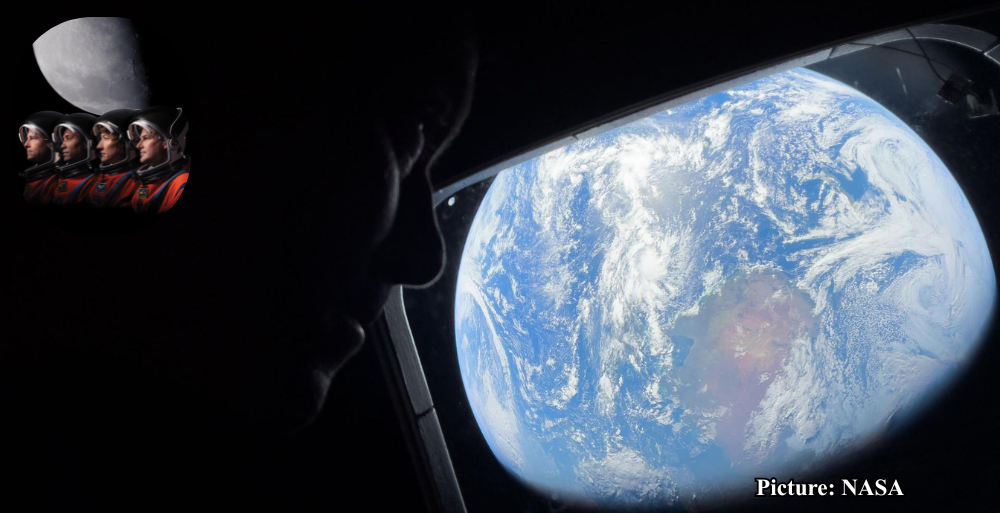
One remarkable experience reported by the astronauts was witnessing the so-called “Earthrise” as they emerged from the far side of the moon. This phenomenon has historically provided profound visual and emotional impact for astronauts, reinforcing the unique perspective gained from space travel.
Return Journey
As of now, Orion is on its trajectory back to Earth, with the 10-day mission expected to conclude on Friday. The spacecraft is scheduled to reenter the Earth’s atmosphere before a splashdown in the Pacific Ocean off the coast of San Diego. This phase of the mission is critical for evaluating the spacecraft’s performance and ensuring the safety of future crewed missions to the moon and beyond.
Looking Ahead
The successful completion of Artemis II is a pivotal step in NASA’s broader Artemis program, which aims to establish a sustainable human presence on the lunar surface by the end of the decade. The program also seeks to prepare for future manned missions to Mars. The achievements of Artemis II not only serve as a testament to the progress made since the Apollo era but also lay the groundwork for ambitious plans in human space exploration.
Broader Context and Future Implications
The Artemis program, initiated in 2017, represents a significant shift in U.S. space policy, focusing on long-term lunar exploration and eventual human missions to Mars. The Artemis II mission is crucial for testing the capabilities of the Orion spacecraft and the Space Launch System (SLS), which are integral components of NASA’s efforts to return humans to the moon and explore deeper into space.
NASA Administrator Bill Nelson highlighted the importance of this mission in a recent statement, noting that “Artemis II is not just about the moon; it’s about the future of human exploration in our solar system.” The agency’s goal is to not only return to the lunar surface but to establish a sustainable presence that could support scientific research and international collaboration.
The Artemis program is also seen as a catalyst for innovation in the aerospace industry, providing opportunities for private companies to engage in lunar exploration and technology development. As NASA collaborates with commercial partners, the mission aims to create a robust ecosystem for space exploration that extends beyond government-led initiatives.
Public Engagement and Education
The Artemis II mission has garnered significant public interest, inspiring a new generation of scientists, engineers, and space enthusiasts. Educational initiatives tied to the mission aim to promote STEM (science, technology, engineering, and mathematics) fields among students, encouraging them to pursue careers in aerospace and related industries. Hansen’s call to challenge future generations underscores this educational aspect of the mission, as NASA seeks to cultivate interest in space exploration.
As the Artemis II mission draws to a close, updates will continue to be provided on its outcomes, including the analysis of data collected during the lunar flyby and the performance of the Orion spacecraft upon reentry. This mission not only marks a historic achievement but also sets the stage for future explorations that may one day lead humans to Mars and beyond.
In conclusion, Artemis II stands as a testament to human ingenuity and perseverance in the face of challenges. The mission’s success reflects decades of advances in space technology and the unwavering spirit of exploration that has characterized humanity’s quest to understand the cosmos.