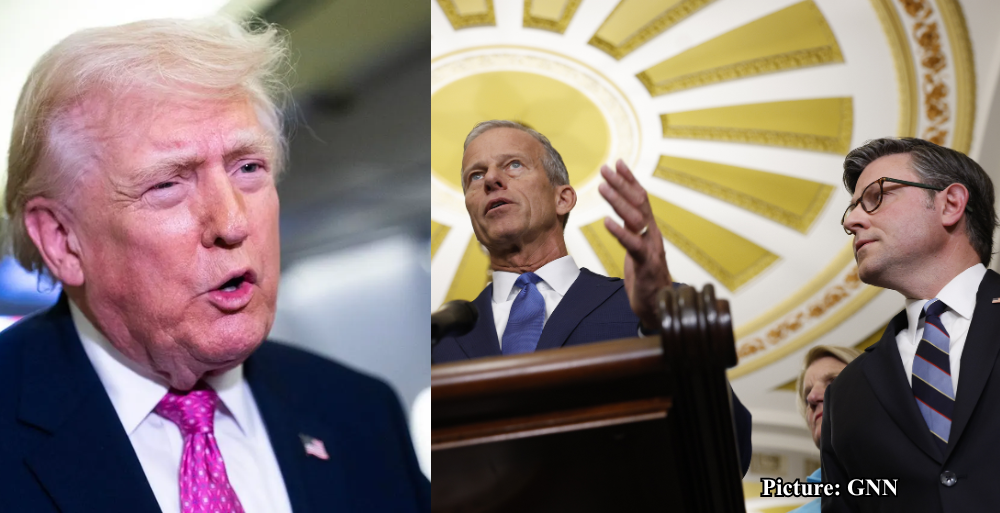
Speaker Mike Johnson and Senate Majority Leader John Thune announced a new agreement to fund the Department of Homeland Security, seeking to end a prolonged funding deadlock amid substantial political divisions.
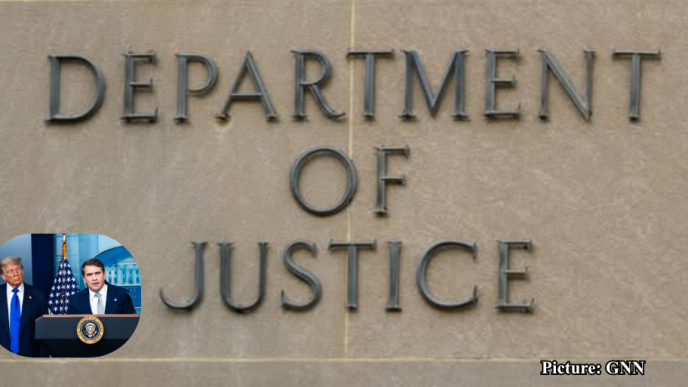
On Wednesday, Speaker of the House Mike Johnson (R-La.) and Senate Majority Leader John Thune (R-S.D.) unveiled a proposed agreement aimed at resolving the ongoing funding impasse at the Department of Homeland Security (DHS). This announcement comes on the heels of a record 47 days of shutdown that has left various divisions of the DHS without a budget.
The two Republican leaders have committed to a two-track funding strategy that has received the backing of former President Donald Trump. This plan is designed to ensure continued financial support for immigration and border enforcement agencies, primarily through a GOP-only reconciliation bill. This marks a significant shift for House Republicans, who had previously expressed skepticism about separating DHS funding into distinct components.
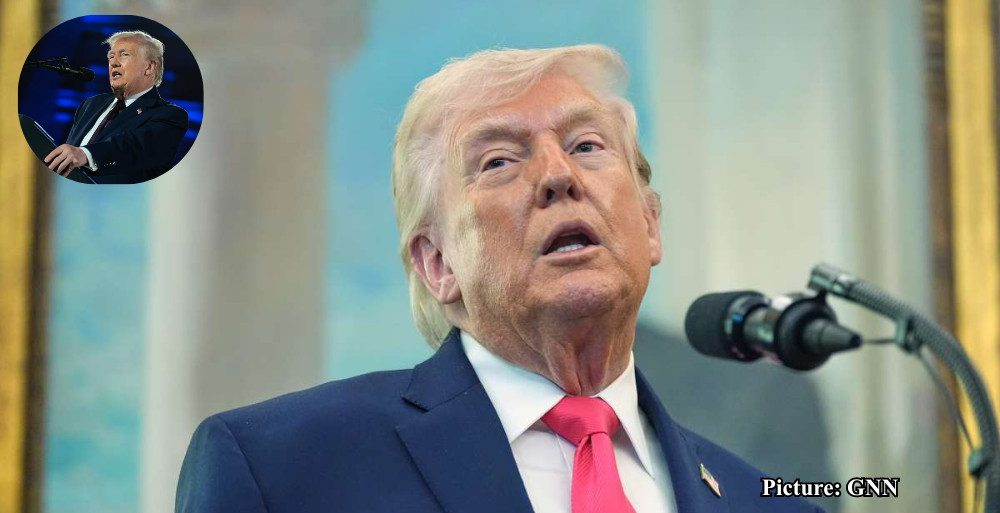
Initially, Trump remained on the sidelines of the ongoing debate within the GOP; however, on Wednesday, he publicly endorsed the funding of Immigration and Customs Enforcement (ICE) and Border Patrol through the reconciliation process. This method enables Republicans to secure funding without requiring votes from Democratic lawmakers. Trump has set a deadline of June 1 for Congress to pass the proposed legislation.
Trump’s endorsement effectively aligned him with Thune’s approach, which had recently garnered unanimous support in the Senate. The Senate’s proposal, however, faced immediate backlash from House Republicans, who perceived it as an unexpected maneuver that could fragment DHS funding.
In a joint statement released after the announcement, Johnson and Thune confirmed their commitment to partially fund the DHS through standard appropriations, while utilizing reconciliation to address border security and immigration funding over the next three years. Just prior to this, Trump made a post on the social platform Truth Social, emphasizing the necessity of a GOP-only funding process.
“We are going forward to fund our incredible ICE Agents and Border Patrol through a process that doesn’t need Radical Left Democrat votes, and bypasses the Senate Filibuster,” Trump stated. He urged for the legislation to be finalized and sent to him “NO LATER than June 1,” claiming that Republicans could unify to achieve this without Democratic assistance.
Despite the optimism expressed in the joint statement, House Republicans previously rejected similar legislation on Friday, calling it a “joke.” The House GOP, in response to the Senate’s actions, passed a stopgap measure to sustain DHS funding for eight weeks; however, this legislation is unlikely to overcome a Democratic filibuster.
In their joint statement, Johnson and Thune criticized Democrats for their refusal to accept the stopgap measure and suggested that such resistance reflects a prioritization of partisan allegiance over practical governance. “It is now abundantly clear that Democrats place allegiance to their radical left-wing base above all else,” they stated.
Democratic leaders have long advocated for reforms to immigration enforcement as a prerequisite for funding the DHS. However, they appear willing to support a limited funding bill for specific DHS agencies, such as the Coast Guard and Transportation Security Administration (TSA), without a comprehensive agreement on immigration enforcement reforms.
Senate Minority Leader Chuck Schumer (D-N.Y.) characterized the agreement as evidence that House Republicans had “caved.” House Minority Leader Hakeem Jeffries (D-N.Y.) echoed this sentiment, asserting that it is crucial to fully fund essential DHS operations while criticizing any association with Trump’s policies regarding immigration enforcement.
Johnson faces considerable challenges in rallying Republican support for the newly proposed agreement. Concerns have been voiced by members of the House Freedom Caucus regarding the separation of ICE and Customs and Border Protection (CBP) funding from DHS funding. Andy Harris (R-Md.), Chair of the Freedom Caucus, previously labeled the Senate bill as “bad for America.”
Representative Keith Self (R-Texas), another member of the Freedom Caucus, expressed apprehension on social media, stating that separating funding risks compromising border security and ICE operations. “If Republicans isolate it, they’re handing our border and ICE agents straight to the radicals,” he asserted.
The reconciliation process is also being discussed as a potential avenue for funding various Republican priorities beyond DHS, including military funding and measures to combat fraud in federal programs. However, the specifics of what will be included in the reconciliation bill proposed by Trump remain unclear as the June 1 deadline approaches.
According to the joint statement issued by Johnson and Thune, Senator Lindsey Graham (R-S.C.), chair of the Senate Budget Committee, has already initiated the development of a budget resolution to ensure the funding of border security and immigration enforcement through the remainder of Trump’s presidency.
During the ongoing shutdown, ICE and CBP personnel continue to receive pay through the One Big Beautiful Bill Act, which was passed last year using the reconciliation process. Trump emphasized that this funding would allow for timely payments to border agents while ensuring that immigration enforcement remains intact.
In his Truth Social post, Trump criticized Democrats for their stance on immigration enforcement, suggesting they aim to weaken border security significantly. He urged Americans to reflect on immigration issues as the midterm elections approach, framing it as a critical point for the Republican Party.