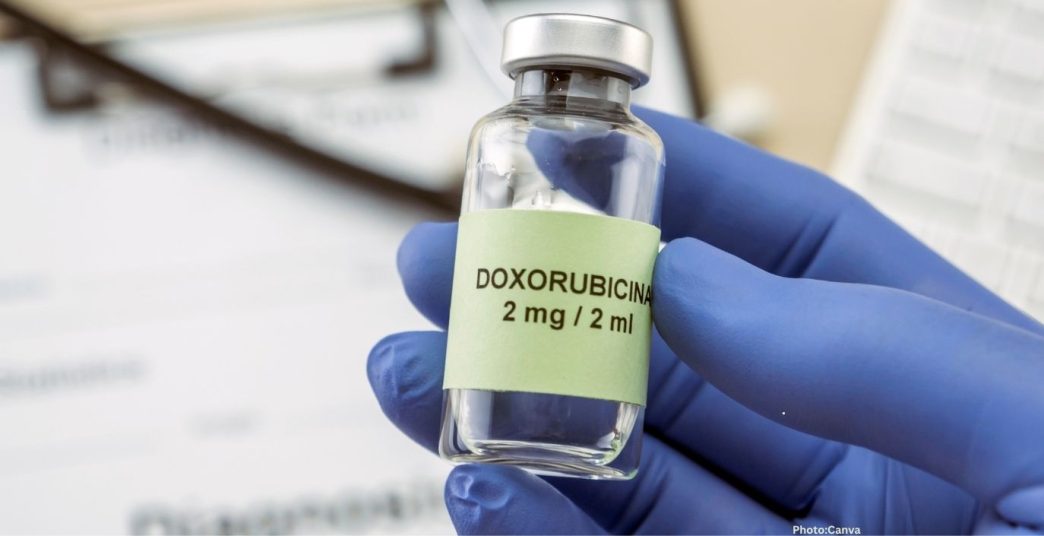
A significant breakthrough in the production of doxorubicin, a critical chemotherapy drug, has been achieved by an international team of researchers who have identified and addressed long-standing molecular bottlenecks.
An international collaboration of scientists has reported a transformative advancement in the production of doxorubicin, a key chemotherapy agent that has been in clinical use since the 1970s. This development, which tackles longstanding production challenges, could significantly enhance the availability of this essential cancer treatment.
Doxorubicin is widely utilized in the treatment of various cancers, including breast cancer, bladder cancer, lymphomas, and carcinomas, with over one million patients treated annually worldwide. Despite its critical role in oncology, the natural bacteria that produce doxorubicin do so with considerable inefficiency, compelling pharmaceutical manufacturers to rely on costly semi-synthetic production methods that involve multiple steps.
Identifying and Overcoming Production Barriers
According to Dr. Keith Yamada, a lead researcher from the University of Turku in Finland, the team has successfully pinpointed several independent factors that limit doxorubicin production. “By addressing these bottlenecks, we have harnessed rational strain engineering to pave the way for cost-effective manufacturing that can meet growing global demand,” he stated. This collaborative effort involved six laboratories across three countries, highlighting the international scope of the research.
The research team identified three primary factors that inhibit high-yield production of doxorubicin. The first discovery involved recognizing the need for a “biological power supply” for the enzyme responsible for doxorubicin synthesis. The researchers identified redox partners, specifically Fdx4 and FdR3, which are crucial for maintaining the electron flow necessary for the production process.
Secondly, the team discovered the role of a protein named DnrV, which acts as a drug-binding “molecular sponge.” This protein sequesters doxorubicin, preventing it from interrupting the enzyme’s function during production. Finally, the team utilized X-ray crystallography to create a structural map of the enzyme for the first time, revealing that doxorubicin binds in a position that hinders effective production.
Enhanced Production Capabilities
By integrating these findings, the researchers engineered a new strain of bacteria capable of producing doxorubicin at a yield 180% higher than current industrial standards. This significant enhancement not only marks a milestone in biopharmaceutical manufacturing but also suggests a pathway towards more sustainable production methods for essential medicines.
The implications of this research are profound, especially considering the rising global demand for effective cancer therapies. As the production of doxorubicin and potentially other essential drugs becomes more efficient, it could lead to improved access for patients who rely on these treatments. The ability to produce higher yields could reduce costs associated with drug manufacturing, ultimately benefiting healthcare systems and patients alike.
From Discovery to Application
To move the technology from the laboratory to practical application, the researchers established a spin-out company, Meta-Cells Oy, at the University of Turku last year. This new venture aims to develop these innovative methods not only for doxorubicin but also for the sustainable production of critical antibiotics and other anti-cancer drugs. The shift towards fully biosynthetic manufacturing methods could result in cleaner and more reliable supplies of vital medications, addressing both economic and health-related challenges in drug production.
Historical Context and Future Implications
Since its approval by the U.S. Food and Drug Administration (FDA) in 1974, doxorubicin has been a cornerstone in chemotherapy regimens. However, its production has remained largely unchanged, relying on traditional methods that are both labor-intensive and costly. As a result, advancements in the production technology for doxorubicin are not just timely but necessary to meet the increasing patient population and the demand for effective cancer treatments.
The study detailing these findings has been published in *Nature Communications*, titled “Metabolic engineering of doxorubicin biosynthesis through P450-redox partner optimization and structural analysis of DoxA.” This publication underscores the collaborative nature of scientific progress in addressing complex medical challenges and the importance of international cooperation in advancing healthcare technologies.
Conclusion
The work of Dr. Yamada and his team represents a significant leap forward in the field of biopharmaceutical manufacturing, providing a promising outlook for the future of cancer treatment. As the healthcare community continues to grapple with the complexities of cancer treatment and drug supply chains, advancements like those reported in this study provide hope for more effective and accessible therapies in the future. The integration of advanced molecular techniques and biomanufacturing could not only revolutionize the production of doxorubicin but also pave the way for the development of other critical medications, ultimately enhancing patient outcomes and healthcare efficiency.